
Napoleon Built In Grill Review: Worth It?
A built-in grill is not a casual patio purchase. It becomes the working centerpiece of an outdoor kitchen, setting the standard for how your cabinetry, counter space, ventilation, and entertaining flow together. This napoleon built in grill review looks at why the brand remains a compelling choice for homeowners who want a polished cooking space with serious day-to-day capability.
Napoleon occupies an appealing position in the premium grill market. Its built-in models deliver substantial stainless-steel construction, high-heat cooking performance, and thoughtful features without asking every buyer to step into the highest price tier. The result is a grill that can feel appropriately tailored to a refined backyard retreat while still being practical enough for Tuesday-night chicken, weekend burgers, and a full patio dinner party.
Our Napoleon Built In Grill Review
The strongest argument for a Napoleon built-in grill is balance. These grills are designed for people who care about the visual finish of an outdoor kitchen but do not want design to come at the expense of cooking control. A well-selected model can provide the broad, even heat needed for a crowd, a searing zone for steakhouse-style crust, and enough durable material to make outdoor cooking feel like a permanent part of home life.
The brand offers more than one built-in platform, so the right answer depends on how you cook and how much room your island allows. Napoleon's built-in 500 and 700 Series options are common starting points for luxury residential kitchens. The 500 Series suits homeowners seeking premium performance in a more measured footprint, while the 700 Series is designed to make a larger visual and culinary statement.
Neither is automatically better. A larger grill is valuable when you routinely cook several courses or host extended family, but it can feel excessive in a compact courtyard kitchen. The best choice is the one that gives you useful landing space and comfortable traffic flow around the island, not simply the most burners.
What Stands Out in Daily Use
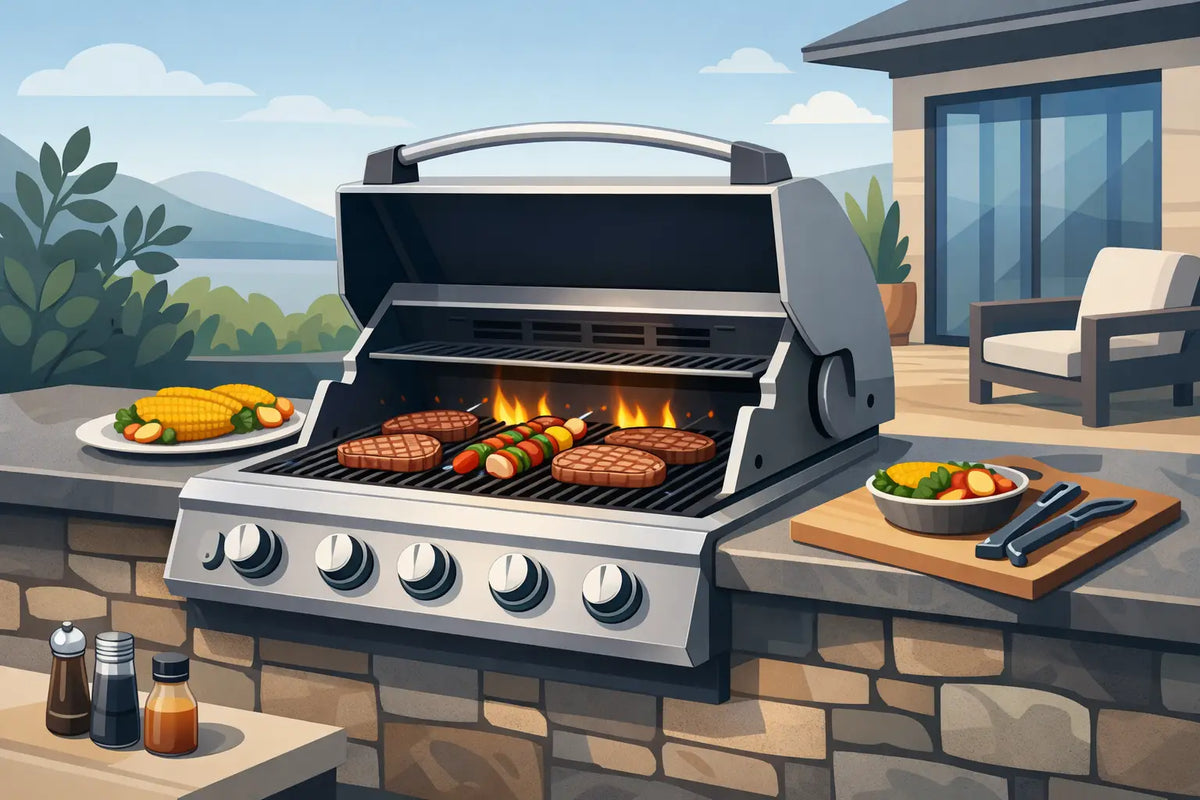
Napoleon's cooking systems are built around direct, dependable heat. On many models, stainless-steel burners and heat diffusers work together to distribute heat across the grill surface while helping shield burners from drippings. That matters when you are cooking multiple foods at once: sausages can stay over moderate heat while vegetables roast and steaks take a hotter section of the grate.
The distinctive wave-shaped cooking grids are another recognizable Napoleon detail. Beyond their visual signature, the shape helps hold smaller foods in place and creates appealing grill marks. On premium built-in models, stainless-steel grids add the weight and heat retention that discerning cooks expect. They take a little longer to warm fully than thinner grates, but they reward patience with more consistent searing and better durability over time.
Ignition is often overlooked until it fails. Napoleon's JETFIRE ignition system is designed to light burners quickly and independently, which is useful when you are only preparing a quick dinner and do not need the entire grill running. Independent control also makes two-zone cooking easier. You can brown proteins over direct heat, then shift them to a lower-temperature area to finish without sacrificing moisture.
Many Napoleon built-in configurations also offer options that expand what the kitchen can do. An infrared rear burner can make a rotisserie genuinely worthwhile for whole chickens, prime rib, and pork loin, while an infrared SIZZLE ZONE side burner can be an excellent addition for homeowners who prioritize steak. These features are not essential for everyone. If your outdoor meals are mostly grilled fish, vegetables, and casual burgers, investing in more counter space or refrigerated storage may serve your lifestyle better.
Construction That Belongs in a Permanent Kitchen
A built-in grill needs to handle more than heat. It must also live through sun, rain, grease, temperature swings, and the occasional busy gathering when no one is treating the outdoor kitchen gently. Napoleon's premium built-in grills use stainless-steel construction that feels substantial, with clean lines that pair naturally with stone, stucco, porcelain slab, and contemporary cabinetry.
Stainless steel is durable, not maintenance-free. Coastal homes, poolside settings, and regions with persistent humidity can leave salt, minerals, and airborne residue on any metal surface. Routine cleaning with a soft cloth and appropriate stainless-steel cleaner helps preserve the finish and prevents small marks from becoming visual distractions. A fitted cover is equally worthwhile when the grill is not in use, especially if the kitchen is exposed to debris or seasonal weather.
For an elevated outdoor space, the visual benefit is clear. Napoleon grills have a tailored, architectural appearance rather than the bulky look of a freestanding appliance. Their polished control panel, integrated thermometer, and substantial hood create a finished focal point within the island. The grill looks considered even when it is not in use, which matters for patios designed as extensions of the home.
Sizing and Layout Matter More Than Extra Features
Before choosing a grill head, begin with the island plan. Measure the cutout requirement for the exact model, then allow space for counter landing zones, access doors, drawers, utility runs, and safe clearance around the appliance. Do not design the cabinetry around a general width listed in a product name. The manufacturer’s current cutout dimensions should guide fabrication.
A 32-inch class grill often works beautifully for couples, smaller households, and secondary outdoor kitchens. It can still manage a generous meal, while leaving valuable counter space for serving. A 38- or 44-inch class grill makes more sense for frequent entertainers, large families, or households where outdoor cooking replaces indoor cooking for much of the year.
There is also a practical distinction between grilling area and usable workspace. A very large grill surrounded by narrow counters can make hosting feel cramped. For most entertaining spaces, ample prep room beside the grill, a clear path to the dining area, and a dedicated spot for platters and tools create more comfort than adding burners that rarely get used.
Professional installation is especially important with a built-in gas grill. Fuel type, gas-line capacity, enclosure ventilation, electrical needs for lighting or rotisserie components, and local code requirements all deserve attention before cabinetry is finalized. Natural gas offers the convenience of an always-ready connection, while propane can suit properties where a gas line is impractical. Either way, plan the utility details early rather than trying to conceal them later.
The Trade-Offs to Consider
Napoleon built-in grills are premium appliances, and they should be evaluated that way. Their stainless-steel build, multiple burners, and optional infrared features bring meaningful value, but they also require a larger initial investment than an entry-level grill. Buyers should budget for the entire kitchen, including cabinetry, countertop material, installation, gas work, storage, and protective accessories, not just the grill head.
The brand's feature set can also be more than a simple cook needs. Infrared burners, rotisserie kits, and integrated lighting are enjoyable when they align with your habits. They are less valuable when the goal is simply a clean, reliable grill for occasional meals. In that case, a straightforward Napoleon configuration with quality burners and a practical cooking surface may be the most satisfying choice.
Like any premium outdoor appliance, performance also depends on care. Cleaning grates, managing grease, checking burners periodically, and protecting the grill between uses are part of ownership. The upside is that these are manageable rituals, not complicated maintenance, and they help retain the appearance and performance that justified the investment.
Who Will Appreciate a Napoleon Built-In Grill Most?
This is an especially strong choice for homeowners creating a permanent outdoor kitchen where grilling is central to entertaining. It suits the host who wants enough control to cook for a full table, the design-minded buyer who wants stainless steel to complement upscale materials, and the family that plans to use its patio as often as its indoor dining room.
It is also a sensible fit for buyers who prefer a modular approach. Start with a correctly sized grill head and thoughtful counter space, then add complementary pieces such as a side burner, access storage, refrigeration, or a beverage center as the kitchen takes shape. That approach often creates a more useful, visually balanced retreat than trying to include every possible feature at once.
For homeowners seeking expert guidance on building a cohesive outdoor kitchen, Nokoluxe Living can help narrow the decision to the grill size, configuration, and supporting components that suit the way you actually gather. Choose the Napoleon built-in grill that leaves room for preparation, conversation, and the meals your home will be remembered for.