
Best Coastal Outdoor Furniture for Salt Air
A waterfront patio asks more of its furnishings than a typical backyard. Salt settles on every surface, sunlight fades lesser materials, and humid air finds weak hardware quickly. The best coastal outdoor furniture is designed for this reality, pairing resort-level comfort with materials that can hold their beauty through long summers, sea breezes, afternoon storms, and frequent gatherings.
For a home near the shore, outdoor furniture should feel like a considered extension of the interior: relaxed but tailored, welcoming but never disposable. The right pieces make it easy to linger over morning coffee, host sunset dinners, or create a quiet poolside retreat without worrying that your investment will look tired after one season.
What Makes the Best Coastal Outdoor Furniture Different?
Coastal furniture is not simply furniture in white and blue. A convincing coastal outdoor space starts with performance. Salt-laden air is corrosive, UV exposure can bleach finishes and fabrics, and wind-driven sand can scratch surfaces that would perform well in a sheltered suburban setting.
This is why material selection matters more than a trend-driven silhouette. Look for furniture made with marine-friendly materials, corrosion-resistant hardware, quality joinery, and upholstery engineered for outdoor exposure. Even the most beautiful collection should earn its place by being comfortable, stable, easy to care for, and appropriate for the exact conditions around your home.
There is also a meaningful difference between a covered porch a few miles inland and an open terrace directly facing the water. The closer you are to salt spray, the more valuable it becomes to choose non-corrosive frames and commit to a simple rinse-and-care routine. Premium furniture does not need to be precious, but coastal conditions reward thoughtful ownership.
Choose Materials That Belong Near the Water
HDPE lumber for low-maintenance luxury
High-density polyethylene, often called HDPE or recycled poly lumber, is one of the strongest choices for coastal living. It will not rot, splinter, crack, or absorb moisture like natural wood. Quality HDPE furniture also resists insects and stands up exceptionally well to salt air, making it ideal for Adirondack chairs, deep seating, dining sets, and loungers that remain outdoors year-round.
The best versions have substantial weight, cleanly finished edges, and color that runs through the material rather than sitting on top as a coating. This gives the furniture a reassuringly solid presence and makes small surface marks less conspicuous. HDPE does have a more tailored, architectural look than natural teak, so it is especially appealing for homeowners who prefer crisp lines and easy upkeep.
Teak for warmth and enduring character
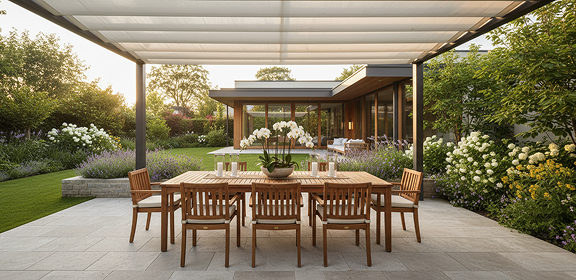
Teak remains a favorite for luxury coastal settings because its natural oils help it resist moisture and decay. It brings an organic warmth that balances stone patios, white stucco, shingled exteriors, and modern pool decks. A well-made teak dining table or lounge collection can feel at home by the coast for decades.
The trade-off is maintenance and color expectation. Left untreated, teak will gradually weather from honey brown to a soft silver-gray. Many homeowners love this patina, while others prefer to preserve the original golden tone with regular cleaning and protective treatments. Neither approach is wrong, but it is worth deciding before you buy. Teak is at its best when you appreciate its natural evolution rather than expect it to behave like a synthetic material.
Powder-coated aluminum for versatile seating
Aluminum frames offer a lighter, more contemporary option for coastal entertaining. They are easy to move, naturally resistant to rust, and available in refined finishes from warm bronze to matte white, charcoal, and sandy neutrals. A high-quality powder-coated finish provides an added layer of protection and creates a polished visual foundation for plush cushions.
Not all aluminum is equal. For exposed locations, prioritize substantial frames, fully welded construction where appropriate, and stainless steel or marine-grade hardware. Lightweight, thin-frame pieces may be convenient, but they can feel unstable in wind and are less likely to deliver the long-term presence expected in a premium outdoor setting.
Woven materials that stay sophisticated
Outdoor wicker can be beautiful by the coast when it is made from premium synthetic fibers over an aluminum frame. The most convincing woven collections have varied tones and texture that resemble natural rattan while offering far better resistance to rain, UV exposure, and moisture.
Avoid natural wicker, cane, and rattan for uncovered coastal areas. They have a place on screened porches or protected sunrooms, but direct exposure to wet weather and salt air will shorten their life considerably. Synthetic wicker offers the same relaxed, layered look with much less concern.
Design a Coastal Setting That Feels Collected, Not Themed
The most successful coastal spaces reference their setting without becoming overly literal. Instead of relying on anchors, stripes, and obvious nautical motifs, use a palette drawn from the landscape: sun-washed ivory, driftwood, flax, soft gray, deep navy, sea glass, and muted green. These shades remain elegant across seasons and allow the view to do the visual work.
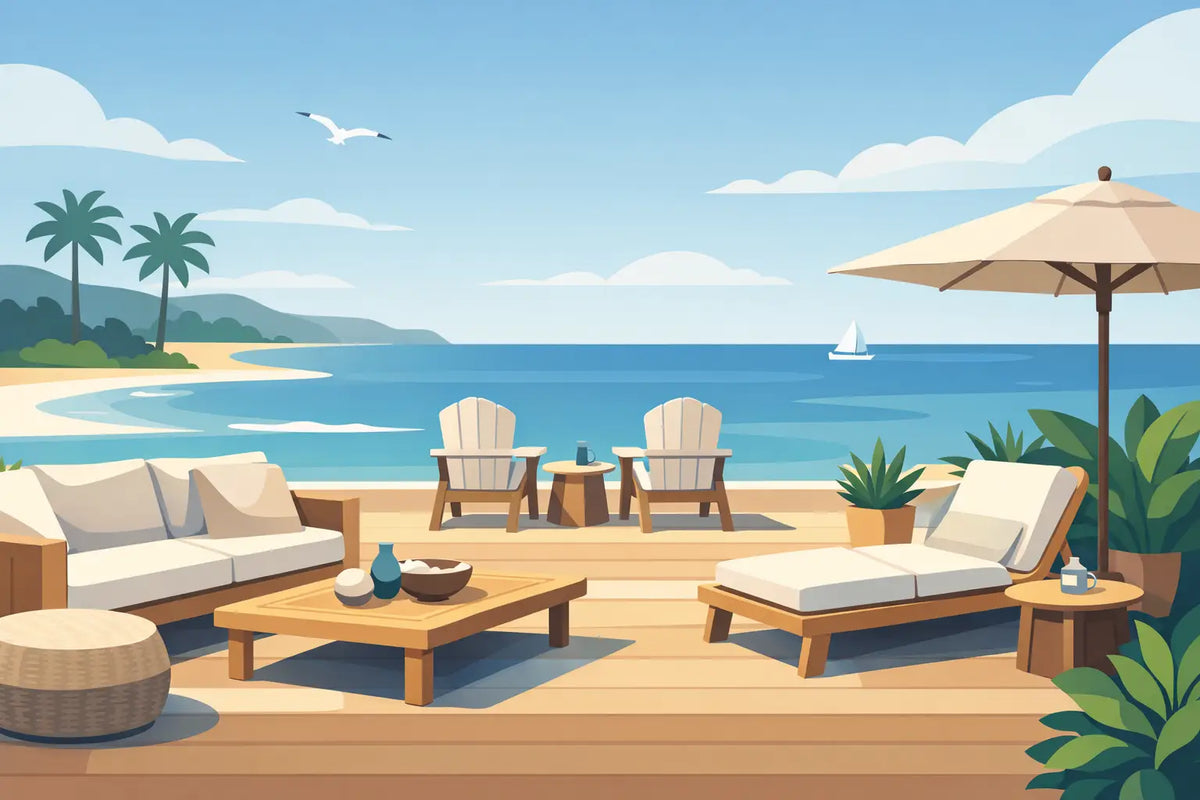
Start by defining the purpose of each zone. A pair of Adirondack chairs angled toward the water creates a natural conversation spot. Deep seating around a fire table extends the patio into cooler evenings. A generous dining table makes holiday weekends and impromptu seafood dinners feel effortless. On a pool deck, adjustable chaise lounges with small drink tables provide the comfort of a private resort.
Scale matters as much as color. Oversized sectionals can overwhelm a narrow balcony, while undersized dining chairs can make a broad terrace feel sparse. Leave enough circulation space for guests to move comfortably, especially around grills, fire features, and sliding doors. If your view is the main event, choose lower-profile seating that keeps sightlines open.
Cushions and Fabrics Are a Long-Term Decision
A beautiful frame is only half the experience. Outdoor cushions determine whether a space feels inviting for twenty minutes or comfortable enough for an entire evening. Look for quick-drying foam or drainage-friendly cushion construction, removable covers, and solution-dyed acrylic fabrics engineered to resist fading, mildew, and stains.
Light cushions create an airy coastal look, but they can require more frequent cleaning in areas with pollen, sunscreen, pets, or young children. Mid-tone oatmeal, stone, and heathered gray often provide the same relaxed effect with more everyday forgiveness. Navy and charcoal bring contrast and can ground a bright poolside setting, though darker fabrics may feel warmer in direct sun.
For the most polished result, repeat one or two accent colors across pillows, umbrellas, and accessories instead of introducing a different shade in every seating area. This creates cohesion without making the setting feel overly coordinated.
Details That Separate Lasting Furniture From Temporary Furniture
Before purchasing, look beyond the product photography. Check how cushions attach in wind, whether dining chairs stack or tuck neatly beneath the table, and how adjustable loungers operate. Measure doorways, gates, elevators, and pathways as carefully as the patio itself. Large luxury pieces should fit the route to their final destination, not merely the space where they will sit.
Hardware deserves close attention in coastal climates. Marine-grade stainless steel is an excellent choice, though even corrosion-resistant metals benefit from rinsing and occasional inspection. Avoid furniture with exposed untreated steel components, particularly if it will live near open water.
Weight is another practical consideration. Heavy furniture is reassuring in breezy locations, but it may be difficult to reposition without help. Lighter aluminum seating can be a better fit for flexible entertaining spaces, provided it has a stable design and can be secured or stored ahead of severe weather.
Care That Preserves a Refined Outdoor Retreat
The best coastal furniture is designed to be enjoyed, not constantly maintained. Still, a modest care routine protects its finish and extends its life. Rinse frames periodically with fresh water to remove salt residue, especially after windy days or storms. Clean cushions according to the fabric guidance, allow them to dry fully before covering or storing, and brush sand from moving parts before it has a chance to wear on mechanisms.
Furniture covers are useful during extended periods away from home, but they should be breathable and properly fitted. A cover that traps moisture can create its own problems. In hurricane-prone regions, have a plan for storing or securing cushions, umbrellas, and lightweight pieces before severe weather arrives.
When selecting a premium collection, it helps to work with a retailer that understands both the materials and the way you plan to use the space. Nokoluxe Living curates outdoor furnishings from established brands so homeowners can bring together durable seating, dining, fire features, and finishing pieces with a more confident sense of scale and style.
Frequently Asked Questions
Is teak or HDPE better for a coastal home?
It depends on the look and maintenance level you prefer. Teak delivers natural warmth and can last beautifully with appropriate care, while HDPE offers exceptional resistance to moisture and salt with very little maintenance. For a highly exposed, full-time waterfront setting, HDPE is often the easier choice. For a covered terrace or a homeowner who values natural patina, teak can be unmatched.
Can aluminum furniture rust near the ocean?
Aluminum does not rust in the same way as steel, but coastal exposure can still affect finishes and hardware over time. Choose premium powder-coated aluminum, rinse it periodically with fresh water, and inspect connections regularly. Quality construction makes a substantial difference.
What color outdoor furniture works best by the coast?
Soft neutrals are the most versatile foundation because they complement changing light and natural surroundings. White, sand, gray, weathered teak, and muted blue all work well. Add personality through cushions, pillows, planters, and rugs rather than committing the entire furniture collection to a strong coastal theme.
Choose furniture that can meet the coastline on its own terms, then let comfort, proportion, and a few thoughtful finishing layers turn that durable foundation into the place everyone wants to gather.