
Choosing Grills and Outdoor Kitchens
A beautiful patio can look finished on paper and still feel incomplete the first time you host dinner outside. The missing piece is often function. Grills and outdoor kitchens turn a seating area into a true living space - one that supports weeknight cooking, weekend entertaining, and the kind of easy outdoor routine that makes home feel more expansive.
For homeowners investing in a refined backyard, the goal is rarely just adding a grill. It is creating an outdoor cooking space that feels considered, performs reliably, and complements the architecture of the home. That means balancing aesthetics with everyday practicality, because the best outdoor kitchen is not the one with the longest feature list. It is the one you will actually enjoy using.
What makes grills and outdoor kitchens worth the investment
A premium outdoor setup changes how the space functions. Instead of cooking indoors and carrying trays back and forth, you stay part of the conversation. Instead of treating the patio as a place you visit occasionally, you begin to use it as naturally as the kitchen or living room.
There is also a design advantage. Well-chosen grills and outdoor kitchens give structure to an open backyard and help define zones for dining, lounging, and gathering. In larger spaces, they create a visual anchor. In smaller ones, they make the layout feel intentional rather than improvised.
The financial side matters too, but value depends on how the space is planned. A well-built grill island with durable finishes and thoughtful storage can support daily use for years. A poorly planned setup, even an expensive one, can feel awkward from the start. That is why layout, materials, and appliance selection matter just as much as brand prestige.
Start with how you actually cook and entertain
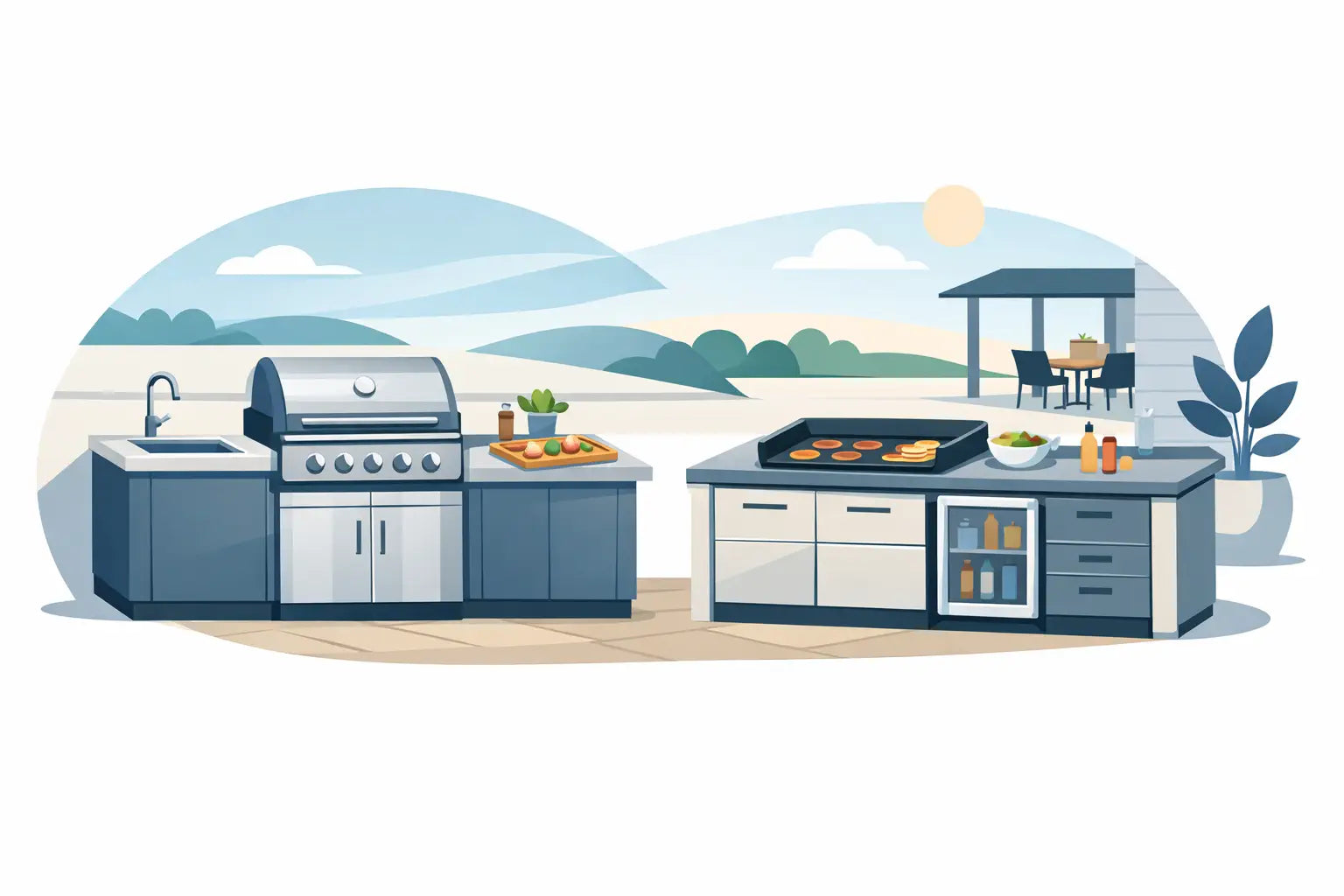
Before choosing finishes or accessories, think about habits. Some households want a powerful grill for quick family dinners and occasional guests. Others want a complete outdoor kitchen with refrigeration, prep space, side burners, and storage because they host often and prefer to keep everything outside once the evening begins.
This is where many projects become overbuilt or underbuilt. If you love simple grilling and low maintenance, a premium built-in grill with generous counter space may be enough. If you entertain regularly, a more complete setup can make hosting feel effortless. The right answer depends on your pace of life, not someone elses checklist.
Size should follow use. A larger island can look impressive, but it needs clear circulation around it and enough patio depth to avoid crowding the dining area. In a compact yard, a smaller footprint with excellent appliance choices often feels more luxurious than forcing in too much.
Planning the layout of grills and outdoor kitchens
A good layout saves steps, reduces clutter, and makes cooking outside feel intuitive. The grill should have comfortable landing space on both sides. Prep areas should be close enough to the cooking surface to be useful, but not so tight that two people cannot move around each other.
Think in activity zones. Cooking, prep, serving, and storage each deserve their own place, even in a smaller design. If refrigeration is included, it should be convenient without interrupting the grill zone. Trash storage is rarely glamorous, but it makes a major difference in keeping the space clean while entertaining.
Ventilation and clearance deserve close attention, especially in covered patios or partially enclosed structures. Heat, smoke, and local code requirements can influence appliance placement more than many homeowners expect. It is one of those areas where design ambition has to meet real-world safety.
If your backyard includes a pool, fire feature, or lounge area, the outdoor kitchen should connect to those spaces rather than compete with them. A polished backyard feels cohesive when each zone has a purpose and the transitions between them feel natural.
Fuel type, performance, and the cooking experience
Fuel choice is not only about taste. It affects convenience, installation, and the overall rhythm of cooking outside.
Gas grills are often the easiest fit for daily use. They heat quickly, offer precise control, and suit homeowners who want reliable performance without extra effort. For frequent weeknight cooking, gas is hard to beat.
Charcoal appeals to those who enjoy a more traditional grilling ritual and deeper smoky flavor. The trade-off is time and cleanup. For some buyers, that is part of the pleasure. For others, it means the grill gets used less often.
Pellet and hybrid options can be compelling if versatility matters. They can support smoking, roasting, and more nuanced temperature control. Still, they tend to make the most sense for homeowners who truly want that range of cooking styles, not just the idea of it.
In premium outdoor kitchens, performance is not just about BTUs or burner count. Heat consistency, ignition reliability, construction quality, and ease of cleaning all shape the ownership experience. A grill that performs beautifully in a showroom but feels frustrating after a season outside is not a luxury product in any meaningful sense.
Materials that look refined and hold up beautifully
Outdoor kitchens live in sun, moisture, temperature swings, and airborne debris. Materials need to do more than look good at installation. They need to retain their finish, resist corrosion, and stay easy to maintain.
Stainless steel remains a strong choice for grills and many appliance components because it offers durability and a clean, architectural look. Quality matters here. Higher-grade stainless steel generally performs better in demanding conditions, especially in coastal or humid environments.
For cabinetry, countertops, and island finishes, the best material depends on climate and design goals. Powder-coated aluminum, marine-grade polymer, and weather-resistant composite materials can offer excellent durability with a tailored appearance. Natural stone can be striking, but it may require more upkeep depending on the type and local weather.
This is where thoughtful curation matters. A luxury outdoor space should feel elevated, but it should also be realistic about maintenance. There is no benefit in choosing a beautiful finish that makes ownership feel delicate or demanding.
The features that add real convenience
Some upgrades earn their space. Others simply sound impressive.
Refrigeration is one of the most useful additions for homeowners who entertain often. Keeping ingredients, chilled beverages, and serving essentials outdoors reduces trips inside and keeps gatherings flowing. Storage is equally valuable. Drawers, enclosed cabinets, and access doors help maintain a clean, composed look while protecting tools and supplies.
Side burners can be worthwhile if you regularly cook complete meals outdoors. Sinks are helpful in larger installations, especially where plumbing access is straightforward. Task lighting becomes essential if evening use is part of the plan.
On the other hand, not every kitchen needs every add-on. A streamlined setup with the right grill, strong counter space, and well-planned storage can feel far more polished than a crowded design full of rarely used features.
Design cohesion matters as much as appliance quality
The most successful outdoor kitchens do not feel dropped into the yard. They feel connected to the homes architecture, furnishings, and overall atmosphere.
Color palette, material texture, and silhouette all play a role. A contemporary home may call for crisp lines, restrained finishes, and a more integrated built-in look. A warmer, more traditional property may benefit from richer textures and a softer visual profile. In either case, the kitchen should support the broader outdoor environment rather than becoming a disconnected focal point.
This is particularly important when pairing the kitchen with dining furniture, lounge seating, and fire features. When those elements work together, the space feels elevated and intentional. For homeowners who want both style and confidence in performance, a curated approach is often more valuable than endless options. That is part of what makes a premium retailer such as Nokoluxe Living useful - the selection is designed to help create a cohesive result, not a patchwork one.
When to keep it simple and when to go bigger
A full outdoor kitchen is not automatically the best choice. If you grill a few times a month and prefer minimal upkeep, a high-quality freestanding or built-in grill may deliver everything you need. You still get the pleasure of cooking outside without committing square footage and budget to features that may go underused.
A more complete kitchen makes sense when outdoor entertaining is central to how you live. If your patio regularly hosts family dinners, poolside afternoons, or larger gatherings, added prep surfaces, cold storage, and integrated cabinetry can make the space easier and more enjoyable to use.
The distinction is less about luxury and more about fit. True luxury is having a space that supports your lifestyle with ease.
Choosing among grills and outdoor kitchens should feel exciting, not overwhelming. Start with how you want to live outside, choose materials and features that respect both climate and routine, and let the design serve the experience. The right setup does more than cook dinner - it makes your backyard feel like the best room in the house.