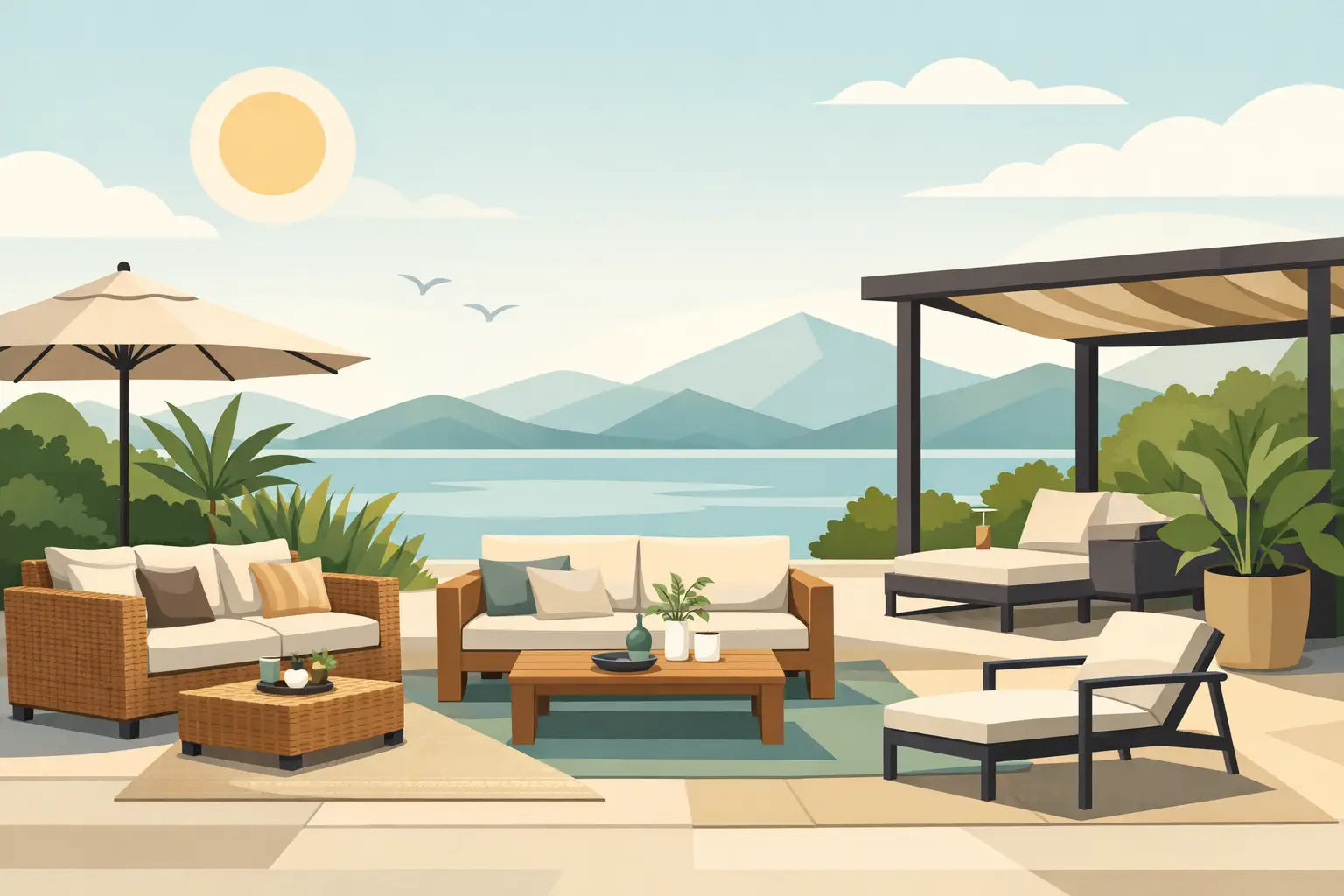


What Are the Best Outdoor Furniture Picks?
A beautiful patio can look finished at a glance and still feel wrong the moment you sit down. Cushions slide, frames heat up, dining chairs wobble, and suddenly the space that looked polished in photos is not where anyone wants to linger. If you are asking what are the best outdoor furniture options for a home that feels elevated and lived in, the answer starts with how you want the space to perform, not just how you want it to look.
For some homes, the best choice is a deep seating collection that turns a terrace into an open-air living room. For others, it is a dining set that can handle long dinners, poolside traffic, and changing weather without constant upkeep. The best outdoor furniture is the kind that balances design, comfort, durability, and proportion with enough intention that your backyard feels like a true extension of your home.
What Are the Best Outdoor Furniture Materials?
Material is where quality reveals itself first. It affects appearance, maintenance, heat retention, longevity, and how gracefully furniture ages over time. There is no single best material for every climate or every household, but there are clear front-runners when performance matters.
Teak remains one of the strongest answers to the question, what are the best outdoor furniture materials for long-term value? It is naturally rich in oils, resists moisture well, and develops a distinguished silver-gray patina if left untreated. For homeowners who appreciate organic texture and timeless lines, teak offers a refined look that rarely feels trendy. It does require some patience. If you want to preserve the original golden tone, regular care is part of ownership. If you are comfortable letting it weather naturally, maintenance becomes simpler.
Marine-grade polymer and high-performance recycled plastic are also excellent choices, especially in coastal areas, hot climates, and homes that see frequent use. These materials resist fading, cracking, splintering, and moisture damage with very little upkeep. They have become far more design-forward in recent years, which matters for buyers who want clean silhouettes without sacrificing practicality. If your priority is easy ownership with upscale appeal, this category deserves serious attention.
Powder-coated aluminum is another premium staple. It is lightweight, rust-resistant, and easy to move around a patio or pool deck. It works especially well in contemporary spaces where crisp profiles and a lighter visual footprint matter. The trade-off is temperature. In direct sun, some metal surfaces can become warm, so cushion quality and placement become more important.
Wicker still has a place, but only when it is genuinely weather-resistant and built over a quality frame, typically aluminum. Well-made all-weather wicker softens a space visually and feels relaxed without losing sophistication. Lower-end wicker, however, tends to show its weaknesses quickly. This is one of those categories where buying better usually means buying once.
The Best Outdoor Furniture Depends on How You Live
A patio that hosts twelve guests on weekends has different needs than a quiet side porch designed for morning coffee. The best outdoor furniture is not simply the most expensive set or the most striking silhouette. It is the collection that supports your routine with ease.
If entertaining is central to your home, start with seating depth and flexibility. A modular sectional, a generous sofa paired with lounge chairs, or a dining set with substantial chairs creates a sense of invitation. Guests stay longer when furniture feels grounded and comfortable. A beautiful chair that encourages people to stand up after twenty minutes is not doing the job.
For households with pools, durability and dry-off practicality matter just as much as style. Chaise lounges, sling seating, and easy-clean surfaces often perform better than heavily upholstered pieces in splash-prone zones. This does not mean sacrificing luxury. It means choosing finishes and fabrics that still look composed after a full day outside.
For smaller patios, scale becomes everything. Oversized pieces can make a compact space feel crowded and awkward, even if each item is attractive on its own. In these settings, the best outdoor furniture often includes slimmer frames, stackable or swivel dining chairs, and multifunctional tables that serve both casual lounging and entertaining.
Comfort Is a Luxury Feature, Not a Bonus
There is a difference between furniture that photographs well and furniture that earns daily use. Premium outdoor living is not just about visual impact. It is about how naturally the space draws you outside.
Seat height, back pitch, cushion density, and arm placement all shape that experience. Deep seating feels indulgent, but if the frame is too low or the cushion too soft, it may be difficult for some guests to get in and out of. Upright dining chairs can be elegant, but without proper support, long meals become less enjoyable than they should be.
This is why curated shopping matters. The best outdoor furniture collections tend to get the fundamentals right without looking overbuilt. They offer enough support for everyday use while still creating that relaxed, resort-like feeling homeowners want from an outdoor retreat.
Cushion fabric matters too. High-performance textiles are worth the investment because they hold color, resist mildew, and stand up to regular use far better than standard outdoor fabrics. They also tend to feel better against the skin, which is not a small detail when you are furnishing spaces meant for genuine relaxation.
Style Should Match the Architecture of the Home
The most convincing outdoor spaces feel connected to the house rather than styled as a separate afterthought. That does not mean matching every finish exactly. It means choosing furniture that speaks the same design language.
Traditional homes often pair beautifully with teak, woven textures, and tailored cushions in classic neutrals. Contemporary homes usually benefit from aluminum frames, sharper lines, and restrained palettes. Coastal properties may lean into lighter finishes, breezier forms, and materials that thrive in salt air. Mountain and second-home settings often welcome warmer woods and more substantial silhouettes that feel grounded in the landscape.
The best outdoor furniture does not compete with its surroundings. It complements architecture, softens hardscape, and gives the space a sense of intention. When the proportions are right and the materials feel coherent, even a simple arrangement can look exceptionally polished.
How to Choose Pieces That Last
Longevity comes from construction as much as material. Look for frames that feel stable, hardware that resists corrosion, and finishes that are made for sustained outdoor exposure. A premium product should feel reassuring in use, not delicate.
It is also wise to think in layers. A dining set may solve one part of the patio, but an outdoor room often needs more to feel complete. Lounge seating, accent tables, umbrellas, and fire features create rhythm and usefulness throughout the day. Still, restraint matters. Buying fewer, better pieces usually creates a more luxurious result than filling every corner.
Maintenance expectations should be honest from the start. Teak ages beautifully but changes over time. Cushions should be stored or protected during severe weather. Even the most weather-resistant furniture benefits from occasional cleaning. The goal is not zero care. The goal is choosing furniture whose upkeep matches the way you actually live.
So, What Are the Best Outdoor Furniture Choices?
The best outdoor furniture is durable enough for the climate, comfortable enough for daily use, and refined enough to elevate the entire property. For many homeowners, that means teak for warmth and permanence, marine-grade polymer for low-maintenance luxury, powder-coated aluminum for modern versatility, and high-quality all-weather wicker for softness and texture.
More specifically, the best choice is often a combination rather than a single material. A teak dining set can coexist beautifully with aluminum lounge seating. Polymer Adirondack chairs can complement a more formal seating area near the house. The most successful spaces are usually layered with purpose, balancing visual richness with practical performance.
For buyers investing in a premium outdoor setting, this is where a curated approach makes all the difference. Rather than sorting through endless options, it helps to choose from brands and collections that have already proven their quality, comfort, and design integrity. That is how outdoor spaces begin to feel less like shopping projects and more like finished environments.
The right furniture changes more than the patio. It changes how often you step outside, how easily you host, and how fully your home supports the life you want to live there. Choose pieces that make staying outside feel effortless, and the space will reward you every day.