How to Pick a Fire Table for a Refined Patio
A fire table can change the way a patio feels after sunset. It gives guests a natural place to gather, adds warmth without interrupting the view, and makes a carefully furnished outdoor space feel complete. But knowing how to pick a fire table goes beyond choosing a shape that looks good online. The right piece needs to suit your seating layout, your entertaining style, your climate, and the practical realities of installation.
For a refined outdoor retreat, think of a fire table as both a heat source and a central furnishing. Its proportions, material, flame presentation, and tabletop function all affect how comfortably your patio works from a quiet weeknight to a full evening of hosting.
Start With How You Want the Space to Feel
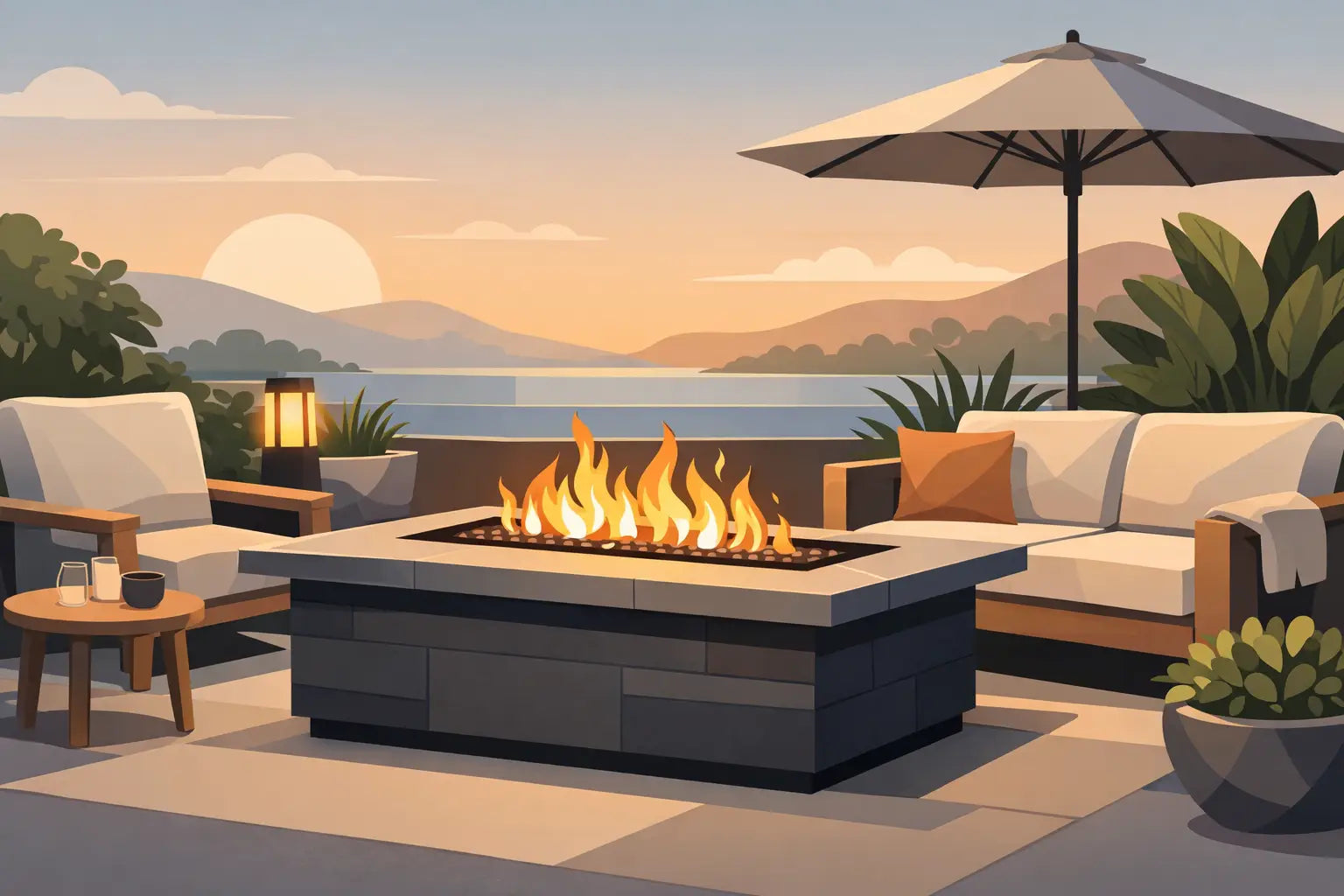
Before comparing finishes or burner sizes, decide what role the fire table will play. A low, generous coffee-table-style fire table creates an intimate lounge setting, especially when paired with deep seating or swivel chairs. It invites people to settle in with a drink and stay awhile.
A taller dining-height fire table serves a different purpose. It can anchor an outdoor dining area while bringing gentle warmth and atmosphere to dinner. This option is particularly appealing on smaller patios, where one well-chosen piece needs to do more than one job.
If your backyard already has a strong focal point, such as a pool, outdoor kitchen, or fireplace, a fire table may work best as a secondary gathering point. In a more open setting, it can become the visual center of the entire arrangement. Consider the sightlines from inside the home as well. A beautiful flame viewed through patio doors gives the outdoor space presence even when no one is outside.
How to Pick a Fire Table in the Right Size
The best fire table is scaled to the furniture around it, not selected in isolation. It should feel generous enough to serve the group without making the seating area cramped or difficult to navigate.
For a lounge arrangement, allow roughly 16 to 18 inches between the edge of the fire table and the surrounding seating. That distance gives people room for their legs while keeping the warmth within reach. A coffee-height model usually pairs best with chairs and sofas that sit low to the ground. When a table is too tall, it can block conversation and make the flame feel visually disconnected from the seating.
Rectangular fire tables are excellent for longer sofas and linear seating arrangements. They provide flame visibility across more seats and often offer usable ledge space for drinks. Square models feel balanced in a four-chair conversation area, while round fire tables soften patios with curved architecture or more relaxed furniture groupings.
Measure the full zone, not just the empty patch where the table will sit. Account for walkways, door swings, pool access, and the path to the grill or outdoor kitchen. On a compact patio, a narrower rectangular table can provide a better fit than a large square model, even if both have similar overall surface area.
Choose a Fuel Type That Fits Your Routine
Fuel choice affects convenience, installation, heat output, and the finished look of the space. For most homeowners seeking a polished, low-effort experience, gas fire tables are the natural choice.
Propane offers flexibility
Propane fire tables are self-contained and generally easier to place because they do not require a permanent gas connection. Many designs conceal a standard propane tank in the base, preserving a clean, furniture-like appearance. This makes propane especially practical for patios where running a gas line would be inconvenient or for second homes where flexibility matters.
The trade-off is tank management. A spare filled tank is wise before a gathering, particularly during cooler months when the table may run longer. Confirm where the tank is stored, how easily it can be accessed, and whether the base is proportioned to conceal it gracefully.
Natural gas is built for effortless entertaining
A natural gas fire table connects to a dedicated line, so there is no tank to refill or move. For homeowners who expect to use their fire feature frequently, this is often the most convenient long-term option. The flame can be available at the turn of a control knob, which suits an outdoor room designed for spontaneous evenings outside.
Natural gas installation requires professional planning. The line must be sized correctly for the table, and the placement should be finalized before the patio is fully furnished. If you are building or renovating an outdoor living area, this is the ideal time to include it.
Wood-burning fire features offer a traditional crackle and aroma, but they bring smoke, ash, wood storage, and more cleanup. They are better suited to homeowners who value the ritual of a campfire over the ease and refined finish of a gas table.
Look Beyond BTUs When Evaluating Warmth
BTU ratings are useful, but they do not tell the whole story. A higher BTU rating generally means more potential heat, yet the comfort of a fire table also depends on wind exposure, seating distance, burner design, and outdoor temperature.
For a sheltered patio in a mild climate, moderate output may be more than enough to create an inviting gathering area. In a breezy coastal setting, mountain home, or exposed poolside space, a more powerful burner can make a meaningful difference. Wind guards are worth considering when the table sits in an open area. They help protect the flame, create a more consistent burn, and can make the feature feel more composed on gusty evenings.
Also pay attention to the burner pan and media. Fire glass delivers a crisp, contemporary look with reflective sparkle. Lava rock feels more organic and textured. Ceramic logs can create the visual character of a fireplace. None is inherently better, but each should support the larger material palette of your patio.
Select Materials for Both Design and Climate
A luxury fire table should look considered on day one and remain appealing after years of weather exposure. Material quality matters because these pieces live outside through sun, moisture, temperature shifts, and frequent use.
Concrete and GFRC, or glass-fiber-reinforced concrete, are popular for their architectural presence. They can feel substantial and sculptural, with finishes ranging from soft limestone tones to dark charcoal. High-quality versions are engineered for outdoor performance, but they are still heavy and benefit from a stable, level surface.
Powder-coated aluminum offers a lighter, more tailored option. It resists rust and often coordinates beautifully with modern outdoor furniture. Stainless steel can provide a sleek, contemporary expression, though its grade and finish matter in salty or humid environments. In coastal areas, choose materials specifically suited to salt-air exposure and maintain them as recommended by the manufacturer.
A protective cover is not an afterthought. It helps preserve the finish, keeps the burner area clear of debris, and reduces the time spent preparing the table for use. If your fire table includes a burner lid, it can convert the surface into additional tabletop space when the flame is off, a practical advantage for cocktail service or casual meals.
Put Safety and Placement at the Center of the Plan
Fire tables are designed for outdoor use, and proper placement protects both the experience and the investment. Set the table on a stable, noncombustible surface such as concrete, stone, pavers, or a properly rated deck surface. Keep it away from low branches, umbrellas, overhangs, screens, and loose fabrics.
Every model has specific clearance requirements, so follow the owner's manual rather than relying on a general rule. Local codes, HOA requirements, and deck specifications may also affect where and how the table can be installed. If you are connecting natural gas, use a qualified professional.
Avoid treating a fire table like a heater that can be tucked into a corner. It needs open space around it for safe operation and for people to move comfortably. The most successful layouts feel easy rather than crowded: chairs pulled close enough for warmth, pathways left open, and flame visible from the seats that matter most.
Let the Fire Table Complete the Outdoor Room
The right fire table should relate to the rest of the patio in the same way a coffee table or dining table relates to an interior room. Match undertones rather than chasing exact color. Warm teak, sandy stone, and bronze metals create a relaxed, resort-inspired setting. Black aluminum, pale concrete, and clean-lined upholstery feel more modern and architectural.
Consider the table after the flame is off, too. A well-designed model should still look like a purposeful piece of outdoor furniture during daylight hours. At Nokoluxe Living, the strongest choices are often the ones that balance that visual presence with reliable everyday performance, so the patio remains ready for a quiet glass of wine or an impromptu gathering.
Choose the fire table that makes people want to linger, while fitting your space so naturally that it feels as though the patio was designed around it from the beginning.