BBQ Outdoor Kitchens That Elevate Hosting
A grill on a patio can handle dinner. A thoughtfully planned outdoor kitchen can change how a home is enjoyed. The best bbq outdoor kitchens create a natural place to gather, giving the cook room to prepare, guests a reason to linger, and the entire backyard the polished feeling of an extension of the home.
For homeowners who entertain often, the appeal goes beyond the grill itself. It is the ease of moving from a pool afternoon to dinner outdoors without carrying trays through the house. It is having chilled drinks within reach, a proper surface for serving, and seating that keeps conversation close to the action. Done well, an outdoor kitchen makes hosting feel relaxed rather than improvised.
Start With How You Actually Host
Before choosing appliances or finishes, consider the rhythm of your outdoor life. A couple who enjoys quiet weeknight grilling needs something different from a household that hosts ten people around the pool. The most successful design is not necessarily the largest one. It is the one that supports the way you use the space.
Think about where people naturally enter the yard, where the sun is strongest in late afternoon, and where guests tend to congregate. A grill placed far from seating can leave the cook isolated. A compact cooking station positioned near a dining area can feel far more inviting, provided heat, smoke, and traffic flow are managed properly.
Also be realistic about your menu. If you regularly prepare full meals outdoors, counter space and cold storage deserve priority. If your ideal evening is cocktails, steaks, and an easy dessert, a high-performance grill, ice maker or beverage center, and elegant bar seating may deliver more value than a long run of cabinetry.
Choose a Layout That Supports Movement
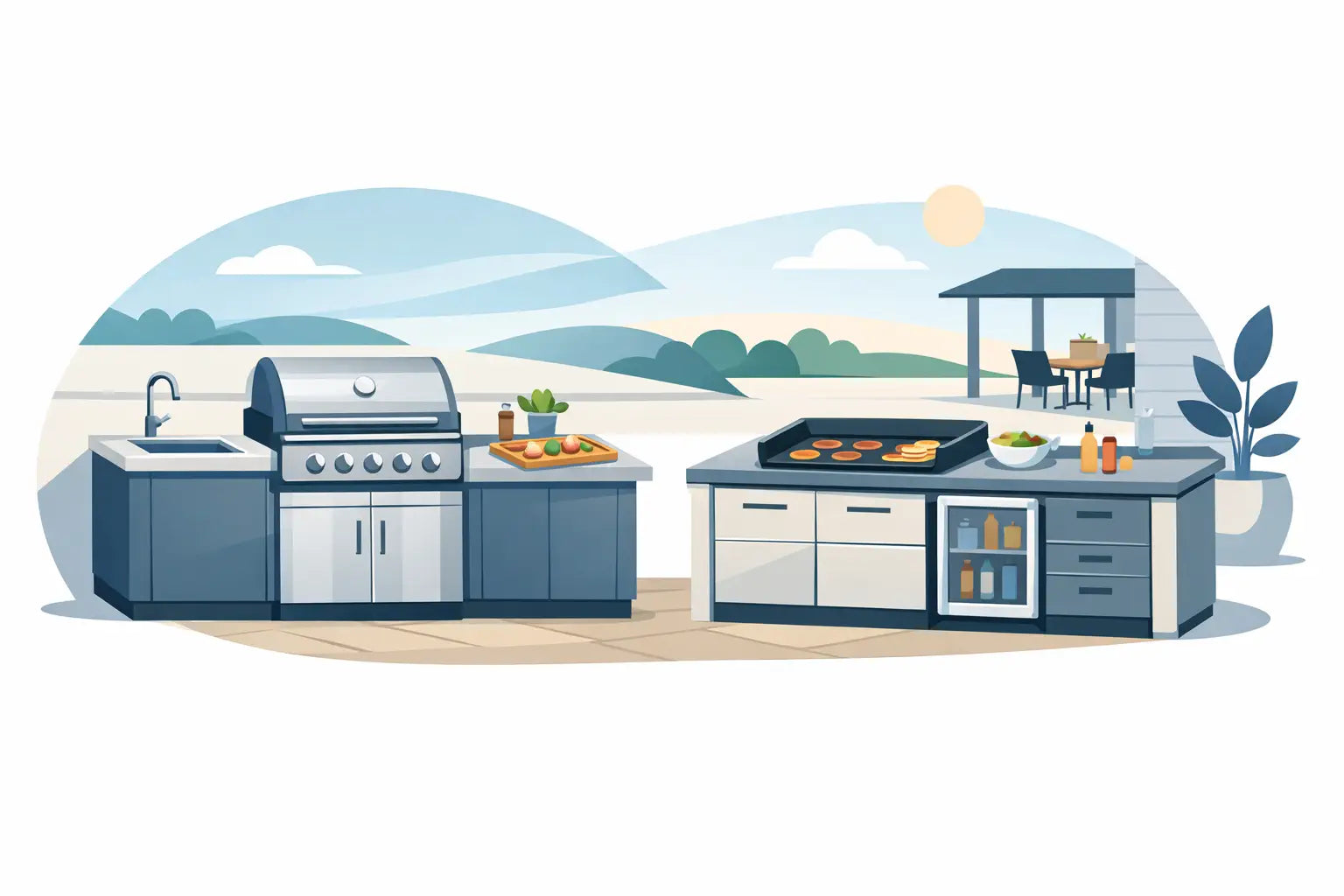
Most outdoor kitchens begin with a straight run, an L-shape, or a U-shape. A straight configuration works beautifully along a wall or fence line and is often the right choice for smaller patios. It keeps the investment focused while still providing a grill, preparation surface, and storage.
An L-shape creates more useful counter area and naturally defines a cooking zone. It is especially effective near a dining terrace, where one side can serve as a buffet or landing space. A U-shaped layout offers the most workstation separation, but it requires generous clearance. If walkways become tight, guests will feel as though they are standing in the cook’s workspace.
For larger entertaining areas, an island facing the seating or pool zone offers a welcoming social advantage. The chef can stay part of the conversation, while guests have a comfortable place to gather without crowding the grill. Leave sufficient room behind the cooking line for doors, drawers, and safe passage. Beautiful proportions are only valuable when the kitchen remains easy to use.
The Essential Elements of BBQ Outdoor Kitchens
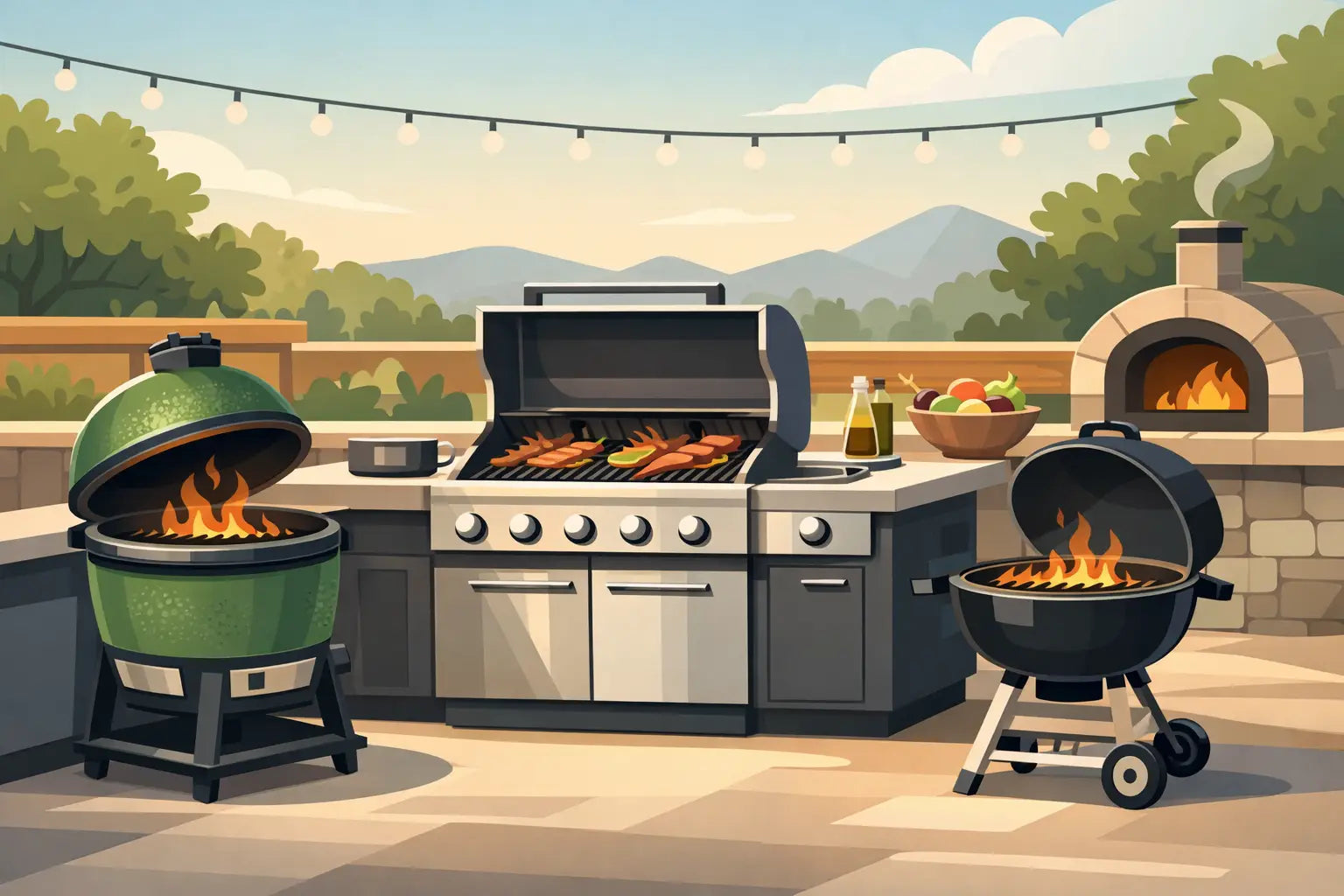
A premium grill is the heart of the installation, but it should not be asked to do every job. Select a grill size based on typical use rather than the occasional holiday crowd. A larger grill gives you flexibility for entertaining, yet it also requires more fuel, more cleaning, and more visual space. Quality construction, dependable heat control, and durable cooking grates matter more than unnecessary features.
Counter space is often the detail homeowners wish they had added. Plan for an uninterrupted preparation zone beside the grill, plus a separate area where finished food can be plated or served. Heat-resistant stone, porcelain, concrete, and properly specified outdoor-rated surfaces can all perform well. The right material depends on local climate, maintenance preferences, and the visual language of the home.
Storage should be purposeful. Deep drawers are useful for grilling tools and serving pieces, while enclosed cabinets keep supplies protected and the patio looking composed between gatherings. A pull-out trash bin is a modest feature that makes a significant difference during meal prep and cleanup.
Refrigeration can further reduce trips indoors. An outdoor-rated refrigerator is ideal for ingredients and chilled beverages, but it must be designed for exterior conditions, not simply adapted from an indoor kitchen. In warmer climates, cooling performance and proper ventilation are particularly important. For homes where entertaining centers on cocktails and casual snacks, a dedicated beverage refrigerator may be the better choice.
Materials Should Earn Their Place Outdoors
Luxury outdoors is not about choosing the most delicate finish. It is about selecting materials that hold their beauty through sun, rain, temperature shifts, and frequent use. Marine-grade stainless steel is a strong choice for cabinetry and appliance surrounds, particularly in coastal locations where salt air can be unforgiving. Powder-coated aluminum can also offer a clean, contemporary profile with excellent weather resistance.
For countertops, consider both appearance and daily care. Natural stone delivers depth and individuality, but some varieties need sealing and may develop a lived-in patina over time. Sintered stone and porcelain surfaces can provide a refined, architectural look with strong resistance to staining, heat, and UV exposure. Concrete feels tailored and substantial, though it requires thoughtful finishing and maintenance.
Cabinet color deserves the same consideration as interior millwork. Soft charcoal, warm taupe, deep navy, and natural wood-inspired finishes can help the kitchen relate to surrounding furniture and architecture. Bright white can look crisp in the right setting, but in high-sun environments it may show dust, pollen, and grill residue more readily.
Plan for the Climate, Not Just the Reveal
A kitchen in Arizona faces a different set of demands than one in coastal Florida or the Northeast. Intense sunlight calls for UV-stable finishes and shade planning. Freeze-thaw conditions may affect countertop choices, plumbing, and winterization requirements. Coastal regions benefit from corrosion-resistant materials and regular care.
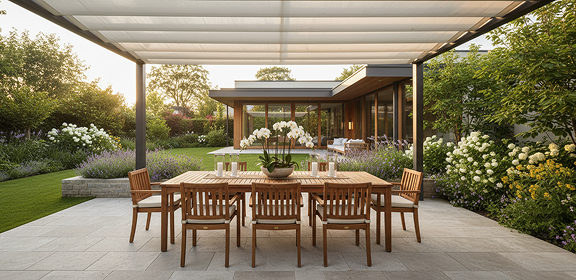
A pergola, roof extension, or well-positioned umbrella can make cooking more comfortable and protect finishes, but ventilation remains essential. Never place a grill in an enclosed or poorly ventilated area. Confirm local building codes, clearances, gas-line requirements, and electrical needs before finalizing a layout. Professional installation is not a luxury add-on here. It is a practical step toward safety, performance, and a finished result that feels considered.
Make the Kitchen Part of a Complete Retreat
An outdoor kitchen should relate to the rest of the backyard rather than read as a standalone appliance wall. Repeat one or two materials from the home, pool coping, or patio furniture to create continuity. If the kitchen has sleek stainless appliances and pale stone counters, pair them with dining chairs and lounge pieces that bring warmth through texture, performance fabric, or teak accents.
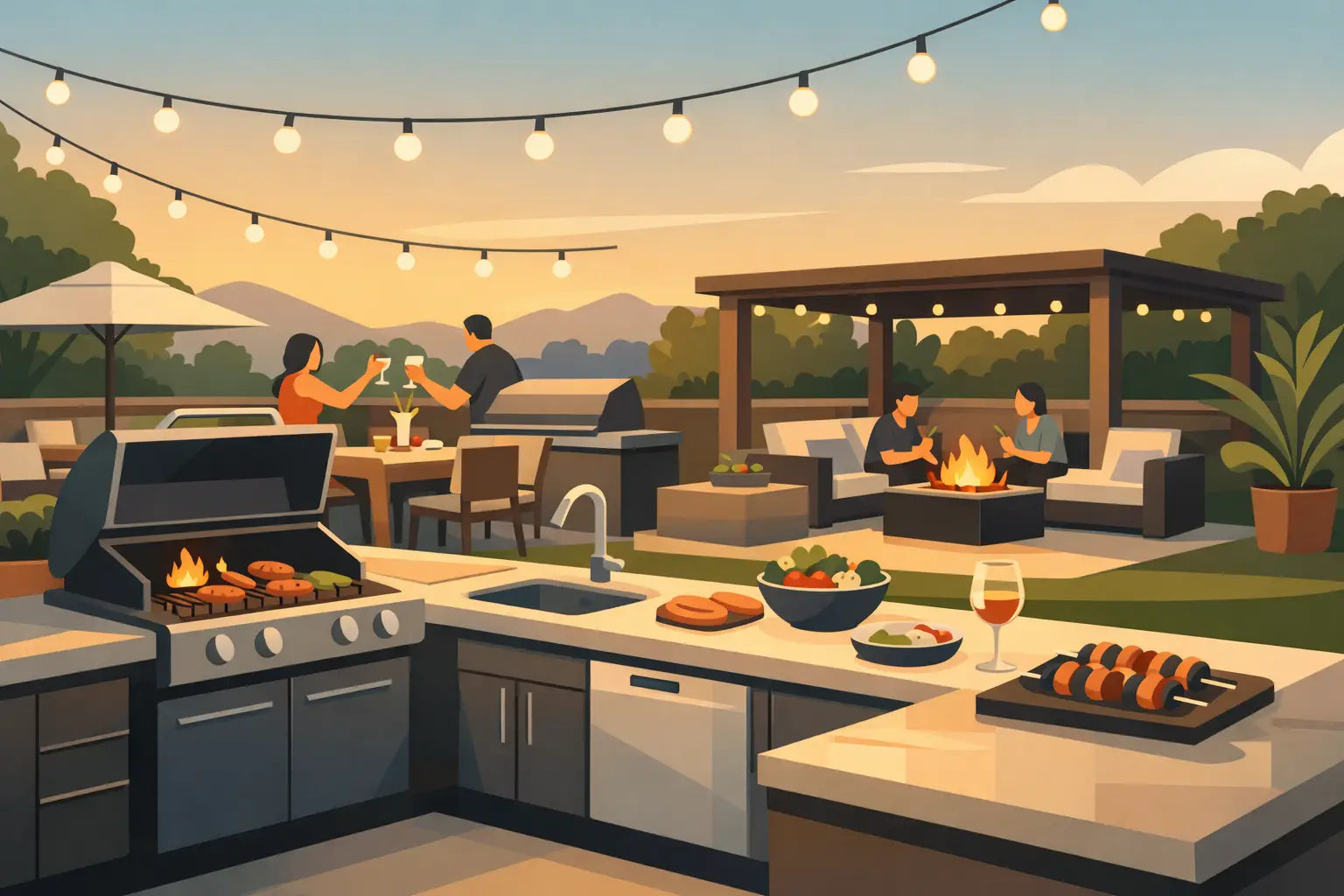
Lighting carries the space from daytime utility to evening atmosphere. Task lighting near the grill improves visibility, while low, warm ambient lighting at pathways, counters, and dining areas creates a more inviting setting. Avoid relying on a single overhead fixture. Layered lighting is more flattering, more functional, and better suited to lingering after dinner.
Do not overlook comfort. Dining seating should be genuinely comfortable enough for a long meal, and nearby lounge seating gives guests a place to settle once the plates are cleared. A fire table or fire pit can extend the season and provide a natural focal point that balances the functional nature of the kitchen with a sense of retreat.
At Nokoluxe Living, the goal is not simply to fill a patio with premium pieces. It is to help create an outdoor environment where materials, performance, and hospitality work together with ease.
Spend Where It Changes the Experience
When setting a budget, prioritize the elements that are difficult or expensive to change later: the grill, built-in structure, utilities, countertop material, and professional installation. Decorative accessories, additional stools, and seasonal tableware can be refined over time. This approach protects the core investment while leaving room for your outdoor space to evolve.
It also helps to distinguish between features that look impressive and those that simplify every gathering. A side burner is valuable for someone who regularly cooks sauces or seafood outdoors. A pizza oven can become a favorite family ritual, but only if it suits your cooking style and available space. Specialty appliances should earn their footprint.
The most memorable outdoor kitchens do not feel like showrooms. They feel ready: ready for a spontaneous lunch, a birthday dinner, or a quiet evening when grilling is simply the nicest way to end the day. Begin with the moments you want to create, then choose every material and feature to make those moments feel effortless.