What Is the Best Grill for Outdoor Kitchen?
A built-in grill is more than a place to sear steaks. It sets the pace for dinner parties, quiet Sunday lunches, and those easy evenings when the patio becomes everyone’s favorite room. When homeowners ask, what is the best grill for outdoor kitchen, the answer is rarely one model or one fuel type. The best choice is the grill that suits how you cook, fits your layout precisely, and performs beautifully through years of real outdoor use.
For a refined outdoor retreat, start with the grill as the anchor of the kitchen rather than a standalone appliance. Its width, finish, heat output, and ventilation needs influence the cabinetry, countertop, storage, and seating that surround it. Choosing well at this stage creates an outdoor space that feels considered, inviting, and ready for every occasion.
What Is the Best Grill for an Outdoor Kitchen?
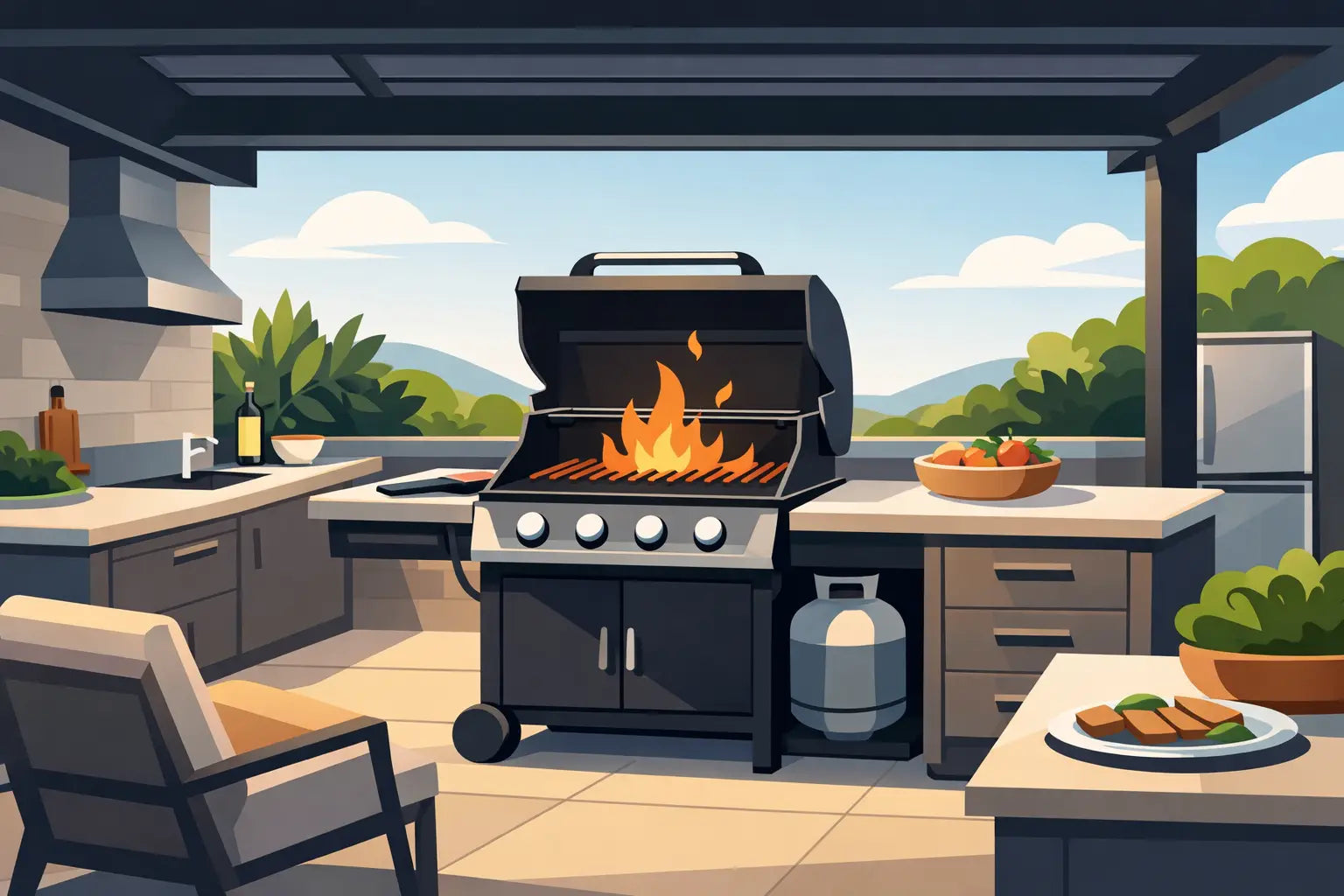
For many established outdoor kitchens, a premium built-in gas grill is the most versatile answer. It offers quick ignition, responsive heat control, ample cooking space, and the polished integrated appearance homeowners expect from a permanent entertaining area. A quality stainless steel built-in grill also pairs naturally with stone, tile, concrete, and marine-grade polymer cabinetry.
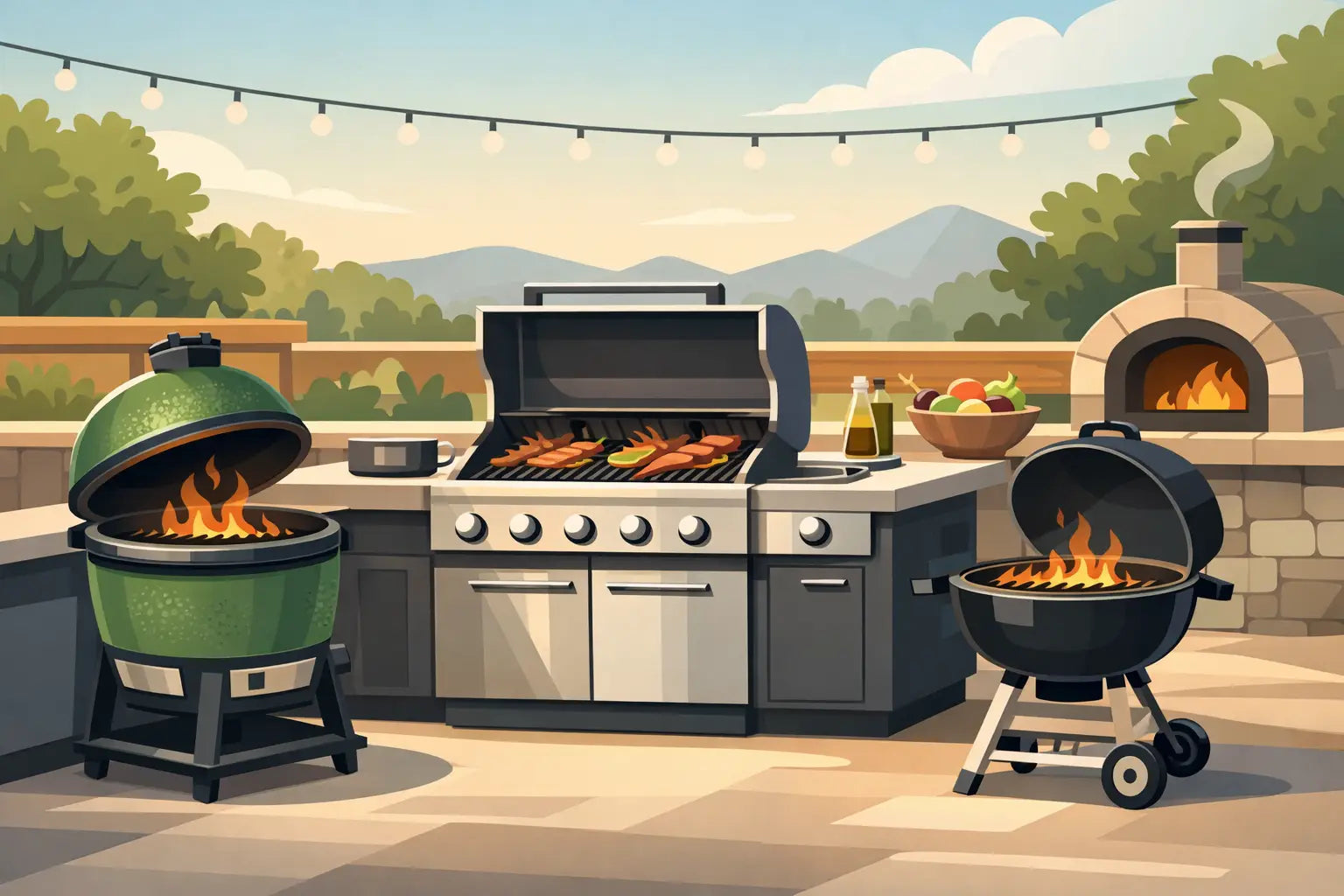
That said, best does not automatically mean largest or most feature-filled. A 32-inch grill can be ideal for a couple who hosts friends occasionally, while a 42- or 44-inch model makes more sense for a family that regularly cooks for a crowd. If wood-fired pizza and live-fire flavor are central to your vision, a gas grill may be only one part of the kitchen, complemented by a pizza oven or charcoal cooker elsewhere in the plan.
A premium grill from a recognized outdoor cooking brand such as Napoleon can offer the balance many homeowners want: high-performance burners, durable materials, thoughtful cooking features, and a finish worthy of a design-forward patio. The right model should feel effortless to use, not like another complicated appliance to manage.
Start With How You Actually Cook
Before comparing specifications, picture your most common outdoor meal. Are you preparing weeknight chicken and vegetables for four? Cooking burgers for a poolside gathering of 15? Building a menu around slow-roasted rib roast, seafood, or rotisserie chicken? Your routine will tell you more than a long feature list.
A compact built-in grill is often sufficient for everyday cooking and occasional hosting. Larger grills provide valuable breathing room when you are cooking proteins and sides at once, especially if guests gather around the island. But added width also consumes counter space, may require more fuel, and can make a smaller patio feel visually heavy. Proportion matters as much as capacity.
Consider whether a rotisserie is a genuine part of your cooking style. It is an exceptional feature for entertaining, producing evenly roasted poultry and richly caramelized meats while freeing the main grates for other dishes. An infrared rear burner supports this style of cooking particularly well. For grill owners who prefer fast, straightforward meals, excellent primary burners and a dependable ignition system may matter more than a rotisserie kit.
Choose the Fuel That Fits Your Kitchen
Natural gas: the effortless permanent choice
Natural gas is often the preferred fuel for a fixed outdoor kitchen because it is connected directly to the home’s gas line. There are no propane tanks to lift, store, or discover empty just as guests arrive. It is a practical choice for frequent grillers and for homeowners who want the outdoor kitchen to function with the same ease as an indoor appliance.
The trade-off is planning. A qualified professional should confirm that the gas line has adequate capacity and that the grill is configured for natural gas from the start. Conversion options vary by manufacturer, so never assume a propane grill can be changed safely after installation.
Propane: flexible and powerful
Propane delivers strong heat and gives more freedom where a natural gas line is unavailable or impractical. It can be a smart solution for second homes, detached pool pavilions, or projects where extending a gas line would be disruptive. A built-in propane installation should include discreet, code-appropriate tank storage with proper ventilation.
The key consideration is logistics. Keep a filled backup tank on hand, especially before a holiday weekend or a larger gathering. For many homeowners, that small routine is worthwhile for the flexibility propane provides.
Charcoal, pellet, and wood-fired cooking: exceptional, but specialized
Charcoal and wood-fired grills create an unmistakable depth of flavor and invite a slower, more hands-on approach. Pellet grills add temperature control for smoking, roasting, and low-and-slow cooking. These are wonderful choices for enthusiasts, but they require more space, cleaning, and attention than a built-in gas grill.
In a luxury outdoor kitchen, these cookers often work best as a companion rather than a replacement for gas. Gas handles quick dinners and reliable high-heat searing; live-fire equipment brings character to weekends and special menus. If you want one primary appliance that can accommodate almost any gathering, gas is usually the more practical foundation.
Construction Matters More Than Shiny Stainless Steel
Outdoor appliances live with heat, rain, wind, pollen, grease, and changing temperatures. Stainless steel is a standard for good reason, but grade, thickness, finish, and overall build quality determine how it will look and perform over time.
Look for heavy-duty stainless steel construction, well-fitted lids, solid cooking grids, and components that feel substantial in hand. Stainless steel grades designed for outdoor environments provide stronger resistance to corrosion, which is especially valuable in coastal areas, humid climates, and homes with saltwater pools. Even premium materials need routine care, but a well-built grill starts with a far better margin of durability.
Do not overlook the hood. A well-insulated, properly balanced hood holds heat more effectively for roasting and indirect cooking. It should open smoothly without needing excessive clearance behind the grill, a detail that can affect cabinet placement and backsplash design.
Heat distribution is another mark of quality. More BTUs do not always equal better grilling. Burner design, grill-box construction, heat diffusers, and lid design all affect whether the grill produces even, controllable heat across the cooking surface. A grill that excels at both low-temperature cooking and a confident sear is more useful than one built only for maximum output.
Size the Grill Around the Whole Outdoor Kitchen
A grill should not crowd out the space that makes cooking outdoors enjoyable. As a general starting point, 32-inch built-in grills suit everyday meals and moderate entertaining. A 36-inch grill offers a comfortable middle ground for many households. At 42 inches and above, you enter a category designed for frequent large-scale hosting and multi-zone cooking.
Leave usable landing space on both sides of the grill for platters, tools, and ingredients. Nearby drawers for utensils, dry storage for seasonings, and a pull-out trash receptacle can make a greater difference to your experience than another specialty burner. If the layout permits, a separate prep area or island allows one person to cook while guests can gather without interrupting the work zone.
For a fully integrated appearance, coordinate the grill with compatible access doors, drawers, refrigeration, and side burners. Matching components create a clean architectural rhythm, while mixed finishes can look accidental. This is where a curated outdoor-kitchen plan saves time and helps the space feel like a natural extension of the home.
Features Worth Choosing and Features to Question
Interior grill lights are genuinely useful for evening cooking, while illuminated control knobs add both visibility and a tailored finishing touch. A dedicated infrared sear zone can be valuable for steaks, chops, and restaurant-style crust. Side burners are useful if you regularly prepare sauces, sauté vegetables, or boil seafood outdoors, though they may be unnecessary when the indoor kitchen is only steps away.
Smart connectivity, integrated thermometers, and multiple cooking zones can be helpful, but they should serve your habits rather than complicate them. Prioritize features that you will use repeatedly. Reliability, intuitive controls, and easy cleaning remain the luxuries that matter most on a busy evening.
Also plan for safety and installation requirements before purchasing. Built-in grills require the correct cutout dimensions, clearances, ventilation, and utility connections. A beautiful cabinet surround cannot compensate for an appliance installed without proper airflow or access for service. Confirm all specifications with your installer and local code requirements before fabrication begins.
The Best Choice Feels Natural Every Time You Host
The best grill for an outdoor kitchen is the one that brings confidence to the cook and ease to the gathering. It should be sized for your real life, built for your climate, and integrated into a layout where preparation, cooking, and conversation can happen comfortably at once.
Choose a grill with lasting construction and the performance you will use often, then give it the counter space, storage, and thoughtful placement it deserves. The result is not simply a better meal outdoors. It is a backyard that invites you to linger, host generously, and elevate every moment at home.