Can You Use a Regular Grill in an Outdoor Kitchen?
A beautiful outdoor kitchen can make a familiar backyard grill feel like part of a considered, well-furnished retreat. But can you use a regular grill in an outdoor kitchen? Often, yes - provided the grill remains in the setting it was designed for and has the clearance, ventilation, and access it needs to operate safely. The mistake is treating a freestanding grill as though it were a built-in appliance simply because it fits the opening.
For homeowners creating an outdoor space meant for long lunches, relaxed evenings, and effortless entertaining, the decision comes down to more than appearance. It affects safety, maintenance, longevity, and how polished the finished kitchen feels day after day.
Can You Use a Regular Grill in an Outdoor Kitchen?
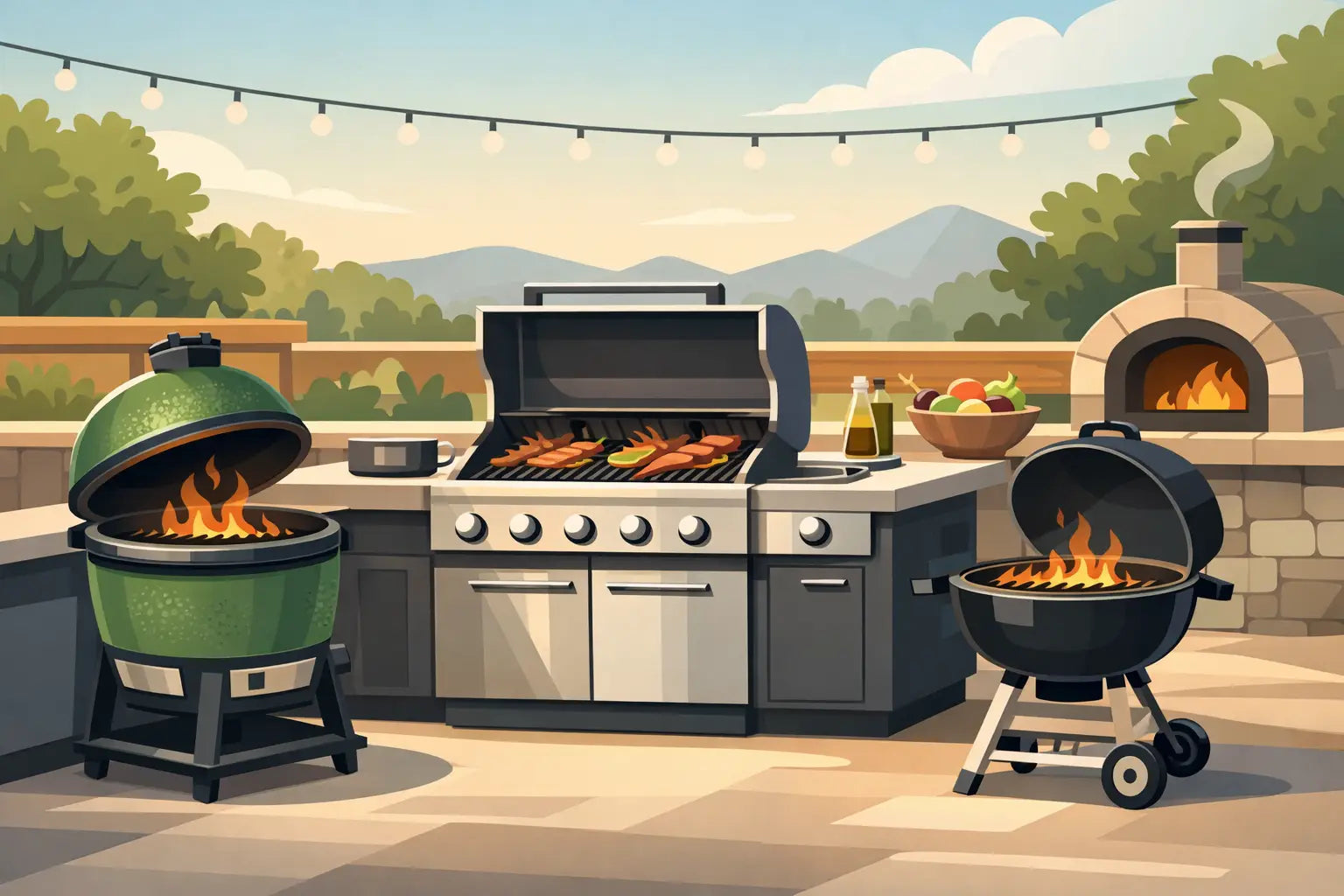
A regular grill can work very well beside an outdoor kitchen, particularly when it is a quality freestanding cart grill with wheels, a finished rear panel, and enough room around it to breathe. It offers flexibility, often costs less than a built-in model, and can be moved for cleaning, seasonal storage, or a change in layout.
What generally does not work is enclosing that grill within cabinetry, stonework, or a countertop cutout unless its manufacturer specifically says it is approved for built-in installation. Freestanding grills are engineered with particular airflow patterns and clearance requirements. Surrounding the firebox too closely can trap heat, damage cabinetry, discolor finishes, create grease buildup, and in serious cases increase fire risk.
A thoughtful outdoor kitchen can absolutely include a regular grill. It simply needs to be designed around the grill rather than built tightly around it.
The Difference Between Freestanding and Built-In Grills
The distinction is more than a matter of style. A built-in grill head is designed to sit within a noncombustible island or approved cabinet system. Its controls, venting, insulation, and access points are configured for that installation. Many premium built-in units are also available with insulated jackets, which allow safe placement closer to certain combustible construction materials when required by the manufacturer.
A freestanding grill is a complete appliance. The cart supports the grill, houses the fuel supply or accessories, and preserves the air space intended by its design. Removing the grill from its cart or boxing in the cart can void its warranty and compromise safe performance.
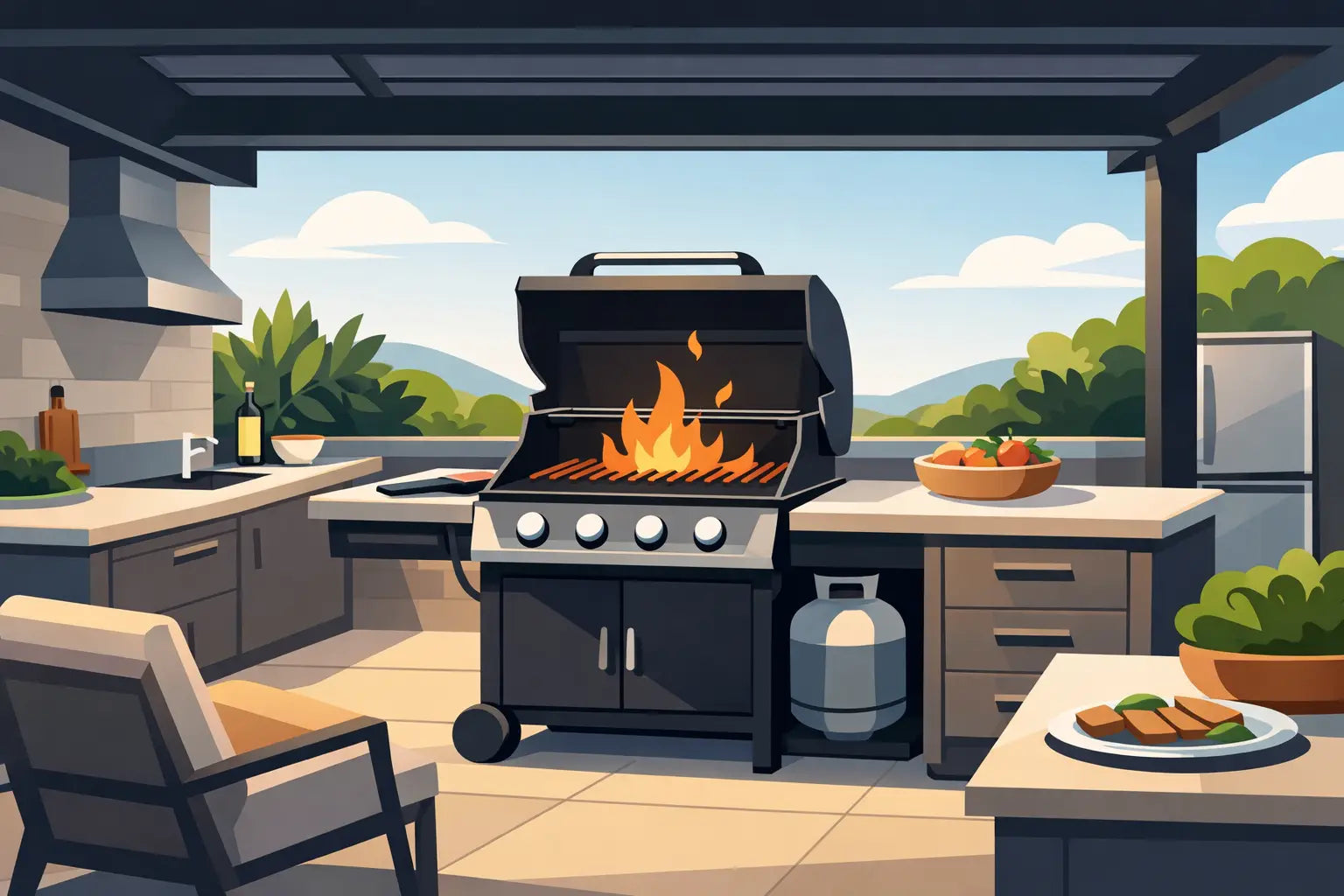
This does not mean a regular grill looks out of place in a refined backyard. A well-planned kitchen can place a freestanding grill at the end of a counter run, on a dedicated grill pad, or in an open bay with generous side and rear clearance. The key is to make the placement intentional rather than trying to disguise a cart grill as a built-in.
A regular grill is often the right choice when
A freestanding model makes particular sense when you value flexibility, are working with an existing grill you already enjoy, or want to phase your outdoor kitchen investment over time. It is also a practical choice for homeowners who may relocate, redesign, or use the grill in more than one area of the property.
For a compact patio, a cart grill paired with a generous prep counter, outdoor storage, and comfortable seating can deliver an elevated entertaining experience without the footprint or construction commitment of a full masonry island. The grill remains easy to service, and the space still feels cohesive when finishes, materials, and proportions are selected with care.
Safety Details That Should Shape the Design
Before selecting cabinetry, countertops, or cladding, begin with the grill manual. Every model has its own required clearances from combustible and noncombustible surfaces, instructions for propane tank placement or natural gas connections, and guidance for operation under covered structures. Those specifications should lead the plan, not be checked after the stone has been installed.
Heat is only one concern. Grease management matters just as much. A grill needs room for the lid to open fully, for drip trays to slide out, and for you to reach burners, igniters, and interior surfaces during routine maintenance. If cleaning the grill requires moving furniture, squeezing between cabinets, or lifting components around a counter edge, the design will become frustrating quickly.
Ventilation deserves special attention. Never operate a grill in an enclosed room, garage, or poorly ventilated screened structure. Even in a covered outdoor kitchen, overhead clearance and adequate open-air circulation are essential. If your kitchen uses an overhead hood or is located beneath a roof, local building codes and the grill manufacturer’s instructions may require specific ventilation equipment, materials, and installation methods.
For gas grills, use the correct fuel type and connection. A propane grill should not be connected to a natural gas line without an approved conversion kit and professional guidance. Likewise, a propane cylinder should not be stored inside a sealed island compartment. Gas leaks can collect in enclosed spaces, which is why purpose-built propane cabinets include required ventilation openings.
How to Create a Polished Layout Around a Cart Grill
The most successful layouts give the cook a usable work zone rather than making the grill an isolated appliance. Plan a heat-safe landing area near the grill for platters, tools, and finished food. A prep counter on at least one side makes hosting far more relaxed, while a nearby outdoor refrigerator or beverage station keeps guests from crossing through the cooking area.
Think about traffic, too. The grill should be convenient for the person cooking without becoming a bottleneck between the house, pool, seating area, and dining table. In larger backyards, it often helps to position the cooking zone near the home for easy access to the indoor kitchen, then let the dining and lounge areas extend outward into the landscape.
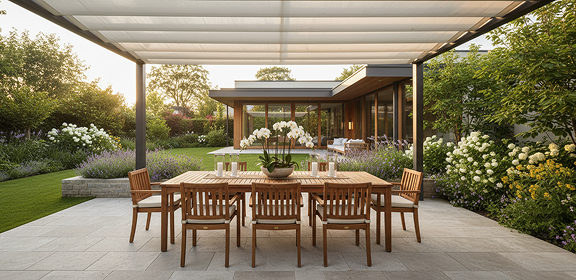
Material choices can bring a freestanding grill into visual harmony with the rest of the space. Powder-coated cabinetry, stainless steel accents, porcelain or stone countertops, and weather-resistant seating create a composed look that feels intentional. Repeating a finish - perhaps black stainless details, warm teak tones, or a clean neutral palette - helps the grill read as part of the overall design.
Leave room for the practical moments
Outdoor kitchens are judged during a busy Saturday evening, not only when they are photographed empty. Leave enough space to change a propane tank, sweep behind the grill, remove a grease tray, and cover the unit when weather moves in. If the grill has side shelves, account for their open position rather than measuring only its closed footprint.
It is also wise to consider sun, wind, and rain exposure. Even durable grills benefit from a fitted cover and regular care. Positioning the cooking area away from persistent wind can improve burner performance and make grilling more comfortable. At the same time, avoid locating the grill where smoke will consistently drift toward seating, open windows, or a neighbor’s property.
When a Built-In Grill Is Worth the Investment
A built-in grill is usually the better choice when the outdoor kitchen itself is a permanent architectural feature. If you are installing custom cabinetry, a stone island, fixed utilities, and a substantial countertop, a purpose-built grill head creates a cleaner fit and removes many of the limitations associated with a freestanding cart.
Built-in models also offer a more integrated visual line. They can be paired with matching access doors, drawers, side burners, refrigerators, and storage components, creating a cooking suite that feels as considered as an indoor kitchen. For homeowners who entertain often, that added organization can make a meaningful difference.
The investment is not only aesthetic. Premium built-in grills are designed for frequent use, long-term installation, and service access within an outdoor kitchen environment. They can be especially compelling for natural gas setups, where a permanent fuel connection eliminates the interruption of replacing propane cylinders.
Still, built-in is not automatically better for every home. It requires more planning, a larger upfront budget, and careful coordination among designers, installers, electricians, gas professionals, and local permitting requirements. A high-quality freestanding grill beside beautifully designed counters may be the smarter, more flexible choice for your lifestyle.
Avoid These Common Installation Mistakes
The most common error is building a tight enclosure around a freestanding grill because the dimensions appear to fit. A few inches of visual space are not necessarily enough for safe operation. Follow the manufacturer’s specified clearances exactly, including those at the back, sides, above the lid, and below the unit.
Another mistake is overlooking the materials around the grill. Wood framing, composite panels, decorative slats, and some countertop supports may be combustible even when the exterior surface looks like stone or metal. Ask the installer what lies beneath the finish and whether an insulated jacket or additional protective construction is necessary.
Finally, do not assume an outdoor kitchen project is exempt from local code requirements. Gas lines, electrical outlets, roof structures, vent hoods, and permanent islands may all require permits or inspections. Qualified professionals can help ensure the finished space is as safe and durable as it is inviting.
A regular grill can be the beginning of a beautifully functional outdoor kitchen, not a compromise. Give it the open space, service access, and safety provisions it deserves, then build the surrounding kitchen around the way you actually gather, cook, and enjoy time at home.