What Is the Longest Lasting Outdoor Furniture?
A beautiful patio should not begin to look tired after two summers. For homeowners asking what is the longest lasting outdoor furniture, the best answer is not a single material. It is a thoughtful match between material, climate, construction, and the level of care you want to give your outdoor retreat.
For sheer long-term performance, premium HDPE lumber, high-quality teak, and powder-coated aluminum are the leading choices. Each can serve a backyard beautifully for decades when it is well made and used in the right setting. The distinction lies in how each material ages, how much maintenance it asks of you, and the look you want your outdoor space to carry.
What Is the Longest Lasting Outdoor Furniture?
If minimal maintenance is the priority, high-density polyethylene, or HDPE, outdoor furniture is often the longest-lasting choice. This dense, recycled plastic lumber resists moisture, insects, salt air, splintering, cracking, and fading far better than ordinary plastic furniture. Premium HDPE pieces can remain in service for 20 years or longer, even in demanding climates.
If you prefer the warmth and character of natural wood, grade-A teak is the longest-lasting wood for outdoor furniture. Its natural oils help it resist rot, insects, and moisture, giving well-crafted teak a potential lifespan of 25 years or more. Teak does require more considered care if you wish to preserve its original honey-brown color, but its enduring appeal is difficult to replicate.
Powder-coated aluminum also deserves a place at the top of the list. It is lightweight, rust-resistant, and well suited to modern lounges, dining sets, and poolside seating. A thoughtfully engineered aluminum frame can last 15 to 20 years or longer, particularly when its finish is high quality and any scratches are addressed promptly.
The material alone does not make furniture long lasting. A substantial frame, reinforced joinery, marine-grade hardware, UV-resistant cushions, and a manufacturer with exacting quality standards all matter. Luxury outdoor furniture is an investment in the details you may not notice at first glance, but will appreciate many seasons later.
HDPE: The Easiest Route to Decades of Use
HDPE furniture is a practical favorite for families, second homes, waterfront properties, and anyone who wants a polished outdoor setting without a demanding maintenance routine. It is typically made from color-through lumber, meaning the color runs throughout the material rather than sitting as a surface coating. Minor marks can often be cleaned away without revealing a different color beneath.
Unlike wood, HDPE will not absorb water, and unlike steel, it will not rust. It handles intense sun, rain, snow, and coastal air with remarkable confidence. This makes it especially appealing in climates with freeze-thaw cycles, humid summers, or salty breezes.
The trade-off is aesthetic. Even exceptional HDPE does not have the natural grain and evolving patina of teak. It has a clean, tailored presence that works beautifully in classic Adirondack chairs, deep seating, and relaxed dining collections, but it is a different visual experience from fine wood. Its weight can also be significant, which is a benefit in windy locations but less convenient if you frequently rearrange your patio.
Teak: The Longest-Lasting Natural Wood
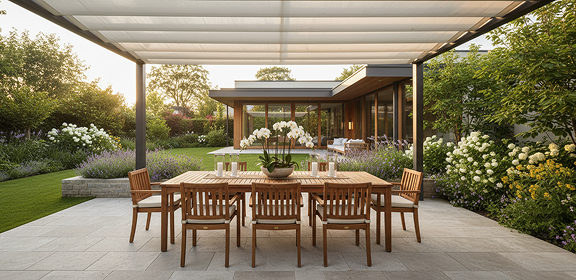
Teak has earned its reputation over centuries, not through trend cycles. Its dense grain and naturally occurring oils allow it to withstand moisture and resist decay in ways most woods cannot. When sourced and constructed well, teak furniture brings a sense of permanence to an outdoor room.
Look for grade-A teak with heartwood-rich boards, smooth finishing, and strong joinery. Mortise-and-tenon construction, durable stainless steel hardware, and properly shaped legs that avoid holding water are signs of furniture designed for a long life. Lower-grade teak may still look attractive at delivery, but it is more likely to contain sapwood and inconsistencies that affect weather performance over time.
Teak’s most visible change is cosmetic. Left untreated, it naturally softens from golden brown to an elegant silvery gray. Many homeowners love that weathered finish, particularly around pools, coastal homes, and gardens with a more organic design point of view. If you prefer to maintain teak’s warm original tone, periodic cleaning and a protective teak treatment will be part of your routine.
Teak is also heavier and more expensive than many alternatives. Yet for a dining table meant to anchor years of family celebrations or a pair of lounge chairs by the pool, its longevity and natural beauty can make the investment feel especially well judged.
Powder-Coated Aluminum: Long Life With a Lighter Profile
Aluminum is one of the most versatile materials in premium outdoor furniture. It does not rust, which gives it an advantage over iron and standard steel, and it can be shaped into refined silhouettes ranging from crisp contemporary frames to more traditional dining designs.
The key phrase is powder-coated. This factory-applied finish creates a protective layer that helps aluminum resist UV exposure, moisture, and everyday wear. Better manufacturers use multi-step finishing processes and carefully engineered frame construction, helping the furniture retain its color and structure through years of use.
Aluminum is an excellent choice for homeowners who want to move furniture easily for entertaining, chase the sun around a pool deck, or create a more streamlined visual effect. Its main vulnerability is surface damage. Deep scratches can expose the metal underneath, so it is wise to use touch-up paint when needed and avoid dragging pieces across abrasive stone or concrete.
For most residential settings, high-quality aluminum offers an outstanding balance of longevity, comfort, and design flexibility. It is particularly compelling when paired with performance cushions in solution-dyed acrylic fabrics, which resist fading and are made for regular outdoor living.
Materials That Need More Caution
Wrought iron can last for generations structurally, but it requires regular vigilance against rust. In dry climates, it can be a handsome, enduring choice. In humid or coastal environments, it often demands more maintenance than homeowners expect, especially around joints, feet, and chipped finishes.
Stainless steel can be remarkably durable, but quality matters greatly. Marine-grade stainless steel performs well near the coast, while lower grades can develop tea staining or corrosion when exposed to salt. It also becomes hot in direct sun, a detail worth considering for uncovered patios.
Synthetic wicker can be a smart choice when it uses premium, UV-stabilized resin woven over an aluminum frame. Its lifespan varies more than HDPE, teak, or aluminum because woven fibers can eventually become brittle after years of hard sun exposure. It remains a lovely option for cushioned lounge seating, but it is not usually the longest-lasting material category.
Lower-cost plastics, untreated woods, and thin steel frames tend to have the shortest useful life outdoors. They can be appropriate for temporary needs or lightly used spaces, but they rarely deliver the lasting value expected from a refined residential retreat.
Climate Changes the Best Answer
The longest-lasting furniture for a covered Arizona terrace may not be the same as the best choice for a beachfront home in Florida. Strong sun tests color stability and fabrics. Salt air tests metal finishes and hardware. Snow and repeated freezing test moisture resistance and structural integrity.
For coastal locations, HDPE, teak, and marine-grade stainless steel are especially reliable choices. For hot, sunny regions, HDPE and powder-coated aluminum offer excellent UV resistance, while teak brings natural warmth without feeling overly formal. In areas with heavy snow, HDPE is exceptionally forgiving, though covering or storing cushions remains advisable.
A covered porch offers more protection, but it should not be used to justify lower-quality materials. Wind-driven rain, humidity, pollen, and temperature shifts still affect outdoor pieces. Buying for your actual climate is one of the clearest ways to protect both your investment and your enjoyment of it.
Construction and Cushions Matter as Much as Material
A durable frame deserves equally durable finishing details. Check that table legs sit level, chair joints feel solid, and hardware is corrosion-resistant. For wood, look for precise joinery rather than an overreliance on visible screws. For metal, inspect welds and make sure drainage points are built into frames so water cannot collect inside.
Cushions should use quick-drying foam or a similar outdoor-rated fill, with breathable construction that allows moisture to escape. Solution-dyed acrylic fabrics are a premium standard because their color is integrated into the fiber, helping them resist fading while remaining soft enough for everyday lounging.
Furniture covers can extend the life of nearly any collection, but they should be breathable and properly fitted. A cover that traps moisture can create the very problems it is meant to prevent. During extended periods of disuse, clean the furniture first, allow it to dry completely, then cover it or store it according to the manufacturer’s recommendations.
Choosing for Lasting Value, Not Just the Longest Lifespan
The best outdoor furniture is the piece you will use often, maintain comfortably, and still enjoy seeing from inside your home years from now. A teak dining set may be the right heirloom purchase for one patio, while an HDPE Adirondack collection may be the smarter choice for a windswept lake house. Aluminum may be ideal for a sleek poolside layout where flexibility matters.
At Nokoluxe Living, a curated approach makes that decision easier: begin with the climate, define how you host and relax, then choose materials that support that lifestyle without asking for more upkeep than you want to give. When material quality, construction, and design work together, your backyard becomes less of a seasonal setup and more of a refined outdoor retreat you can return to year after year.