
How to Choose Luxury Outdoor Furniture Well
A beautifully furnished patio can make a home feel larger, more welcoming, and far more personal. But knowing how to choose luxury outdoor furniture means looking beyond a striking silhouette or a perfect product photo. The right pieces should invite long dinners, quiet morning coffee, poolside lounging, and easy entertaining while standing up to the conditions where you live.
Luxury is not simply a higher price point. It is the confidence that thoughtful design, substantial construction, and enduring materials will continue to serve your home season after season. Begin with how you want to live outdoors, then choose the pieces that make those moments feel natural.
Start With the Life You Want to Create Outside
Before comparing finishes or fabrics, consider the purpose of the space. A compact balcony designed for two has different needs than a pool terrace that regularly hosts family and friends. The best outdoor furniture plan begins with honest answers: Will you dine outside often? Do you need a place for afternoon reading? Will children, pets, or guests use the area regularly? Is this a primary residence, a second home, or a vacation property?
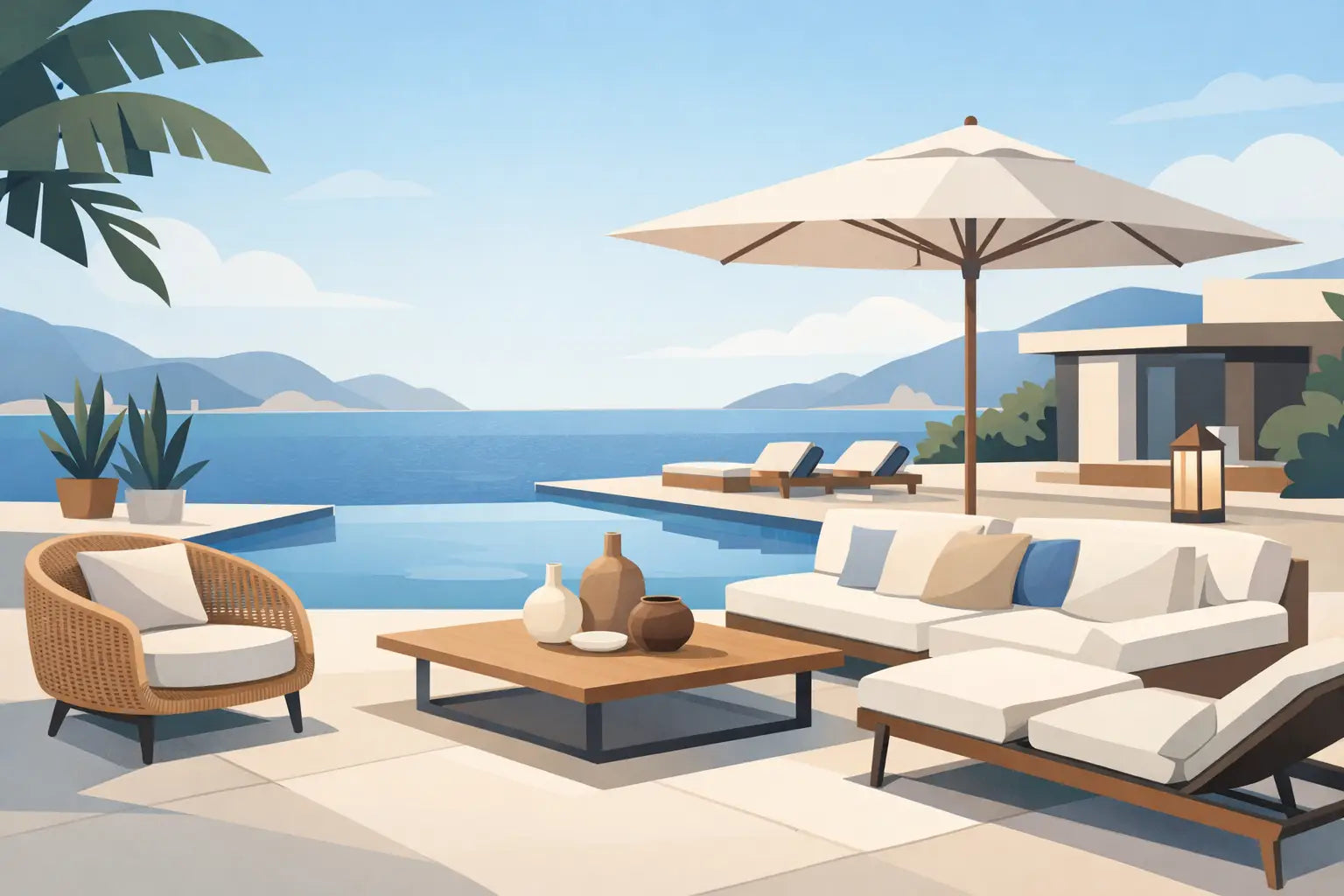
Think in distinct zones rather than treating the patio as one large furnishing project. A dining zone needs generous circulation around the table and chairs. A lounge zone benefits from deeper seating, occasional tables, and a focal point such as a fire table. By defining each area first, you can select furniture that supports the way people actually move, gather, and relax.
It also helps to choose one primary activity for the space. Trying to make a small patio function as an expansive dining room, full lounge, and outdoor kitchen can leave it feeling crowded. In a more limited footprint, a refined conversation set or a well-proportioned dining set will have greater impact than too many competing pieces.
Measure for Comfort, Not Just Fit
A furniture layout can technically fit on a patio and still feel uncomfortable. Measure the full usable area, then note doors, stairs, pool edges, planters, grills, and any fixed architectural elements. Account for the path people take from the house to the yard, especially when carrying food, drinks, or serving pieces.
For dining, allow enough room to pull chairs back without forcing guests into a wall or railing. Around a lounge arrangement, leave clear walkways so the setting feels relaxed rather than staged. If you are furnishing around a fire feature, make sure seating sits at a comfortable distance from the heat and still allows guests to converse easily.
Scale matters as much as square footage. A low-profile sectional can ground a broad modern terrace, while oversized seating may overwhelm a covered porch with a lower ceiling. Similarly, delicate café furniture can look lost around a large pool deck. Review product dimensions carefully, and use painter's tape or cardboard outlines on the ground to visualize the footprint before ordering.
Choose Materials for Your Climate and Maintenance Style
The most beautiful material is only a luxury investment if it suits its environment and the level of care you realistically want to provide. Sun intensity, salt air, wind, humidity, rain, snow, and freeze-thaw cycles should all guide your choice.
Teak for Natural Warmth and Lasting Character
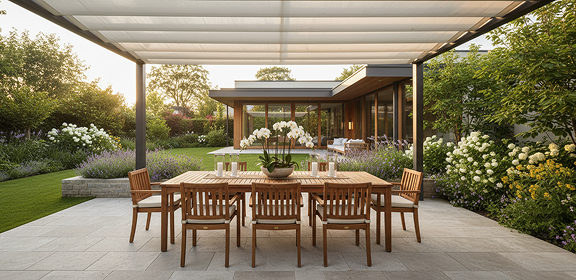
Teak remains a classic choice for luxury outdoor settings because of its natural oils and dense grain. It brings an organic warmth that works equally well with coastal, traditional, and contemporary architecture. Left unfinished, teak gradually develops a soft silver-gray patina; maintained with appropriate care, it can retain more of its original honey-toned color.
The trade-off is maintenance preference. Neither look is wrong, but the finish will change over time, and occasional cleaning is part of owning natural wood. For homeowners who appreciate material character, that evolution is often part of the appeal.
Aluminum for Refined, Low-Maintenance Versatility
Powder-coated aluminum is lightweight enough to rearrange, resistant to rust, and available in polished silhouettes that suit modern outdoor spaces. It is especially practical in wet climates or for homeowners who want a more streamlined maintenance routine.
Look for well-finished frames, clean welds, and quality hardware. In intense sun, darker metal finishes can become warm to the touch, so cushions, shade, and placement deserve consideration. A thoughtfully made aluminum collection offers a crisp architectural foundation without demanding much attention between gatherings.
Recycled Polymer for Everyday Ease
Premium recycled polymer furniture is an excellent option for exposed decks, coastal homes, and active family spaces. It will not rot, splinter, or require painting, and it delivers the substantial look and feel that lower-grade plastic furniture lacks. Collections from makers such as LuxCraft and Seaside Casual can bring tailored color, comfort, and long-term practicality to settings where weather resistance is a priority.
Polymer furniture is often heavier than aluminum, which can be an advantage in windy areas but less convenient if you frequently reconfigure your layout. Its appearance is also more structured than teak's natural variation, so consider whether your home calls for crisp consistency or organic texture.
Woven Details and Upholstered Seating
Outdoor rope, woven resin, and performance upholstery add softness and visual depth. They are particularly effective when you want an outdoor room to feel as considered as an interior living space. Choose UV-resistant, quick-drying materials and cushions with removable covers when possible.
Fabric color deserves practical attention. Pale neutrals feel serene and expansive but may need more frequent cleaning around trees, pools, pets, or frequent entertaining. Darker tones can be forgiving, though they may absorb more heat in direct sun. The right choice depends on the setting and the care routine you want to maintain.
Prioritize Comfort You Can Feel
Online shoppers naturally focus on style, but comfort determines whether furniture becomes part of everyday life. Review seat height, seat depth, back angle, arm height, and cushion thickness. Deep seating can be wonderfully relaxed for lounging, yet a shallower profile may be better for cocktail conversation or guests who prefer easier entry and exit.
For dining chairs, look for supportive proportions rather than relying on a cushion alone. For lounge seating, consider whether the cushions are made with high-performance foam and fabrics designed to release moisture and resist fading. Details such as ties, hidden zippers, tailored welting, and replacement cushion availability signal that a collection was made for continued use, not a single season.
If possible, order a swatch before committing to a large upholstered set. A fabric may read cooler or warmer in natural light than it does on a screen, particularly beside stone, decking, siding, or pool tile.
Create a Cohesive Outdoor Point of View
Luxury spaces do not require every piece to match. They do require intention. Choose a unifying element such as a warm teak tone, a charcoal frame, a woven texture, or a restrained palette of linen, sand, and slate. Then introduce contrast in a measured way: sculptural lounge chairs beside a clean-lined sofa, or a textured woven dining chair paired with a simple table.
Coordinate the furniture with the home's architecture rather than following a temporary trend. A coastal shingle home may call for weathered teak and soft neutrals. A contemporary residence can carry angular aluminum, tailored cushions, and a linear fire table. For a desert or mountain setting, earthy frames and tactile fabrics can make the outdoor area feel grounded in its surroundings.
Accessories should support the furniture, not conceal it. A few substantial planters, outdoor pillows, lanterns, and a well-proportioned rug can establish warmth. Too many small decorative items can make a premium setting feel busy and make maintenance harder.
Invest in Construction, Service, and Long-Term Value
When comparing luxury outdoor furniture, look past the initial image to the details that affect ownership. Ask about frame warranties, fabric performance, care recommendations, replacement parts, and cushion availability. A lower upfront price can become expensive when a frame fades prematurely or a damaged component cannot be replaced.
Delivery planning is equally valuable. Confirm access through gates, elevators, stairways, and doorways before your furniture arrives. Large sectionals, dining tables, and fire features often require more preparation than homeowners expect. A curated retailer such as Nokoluxe Living can help clarify dimensions, materials, and collection compatibility before you make a significant investment.
Finally, consider protection as part of the purchase. Well-fitted covers can reduce cleaning and help preserve cushions during extended periods of disuse. Covers should be breathable and used on clean, dry furniture to avoid trapping moisture. In harsh winter climates, storage may be worthwhile for cushions and smaller accessories, even when the frames are designed to remain outdoors.
The most rewarding outdoor furniture is not the set that looks impressive for one afternoon. It is the one that makes you want to step outside more often, settle in a little longer, and welcome people home with ease.