
Teak vs Poly Lumber Furniture for Your Patio
A beautifully furnished patio should feel as considered as the rooms inside your home. When choosing between teak vs poly lumber furniture, the right answer is less about declaring one material universally better and more about matching the piece to your climate, maintenance preferences, and vision for outdoor living. Both can perform exceptionally well for years. They simply create a different experience along the way.
Teak brings natural warmth, tailored craftsmanship, and a quietly luxurious presence that works especially well beside stone, stucco, water, and lush landscaping. Poly lumber offers confident color, remarkable ease, and a polished all-weather practicality that makes everyday entertaining feel refreshingly uncomplicated. The better choice is the one that lets you enjoy your outdoor retreat more often.
Teak vs Poly Lumber Furniture at a Glance
Teak is a dense hardwood prized for its naturally occurring oils. Those oils help the wood resist moisture, decay, and insects, which is why quality teak has long been a favorite for boats and fine outdoor furniture. New teak typically arrives in a honey-gold tone and gradually develops a soft silver-gray patina when left untreated outdoors.
Poly lumber is a high-density polyethylene material, often made with recycled plastic. It is engineered into substantial boards that will not rot, split, or absorb water like wood. Premium poly lumber furniture is far removed from lightweight plastic patio sets. It has considerable weight, clean joinery, saturated color, and a pleasingly substantial feel.
Both materials are capable of serving a patio, pool deck, porch, or garden setting beautifully. The distinction comes down to appearance, upkeep, tactile comfort, and the way each material responds to your particular environment.
Choose Teak for Natural Character and Craftsmanship
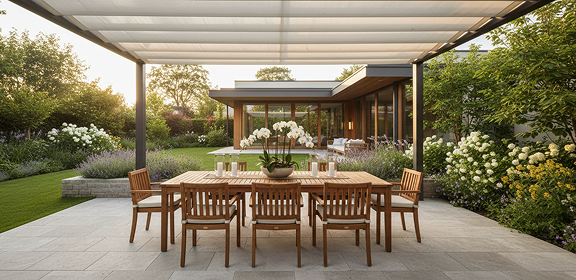
Teak is the choice for homeowners who want the organic variation that only real wood provides. Every board has its own grain, tonal shifts, and small signs of character. On a covered terrace, a teak dining table can make an outdoor meal feel as gracious as one held in a well-appointed dining room. Around a pool, teak loungers bring a resort-like calm without appearing overly formal.
Its visual flexibility is a major advantage. Golden teak complements warm, traditional, coastal, and Mediterranean architecture. Once weathered to silver, it feels equally at home in a contemporary landscape or a relaxed coastal setting. Cushions in ivory, navy, charcoal, or botanical prints all sit naturally against it.
Teak requires a little stewardship
Teak is durable, but it is not maintenance-free. If you enjoy its weathered gray finish, regular washing with mild soap, water, and a soft brush is generally enough to keep the surface looking clean. If you prefer the original golden tone, plan to use a teak protector periodically. This is a cosmetic choice, not a requirement for the wood's structural performance.
Quality matters greatly. Well-crafted furniture made from responsibly sourced, high-grade teak will have tighter grain, better natural oil content, and stronger joinery than lower-grade alternatives. Look closely at construction details such as mortise-and-tenon joints, sturdy hardware, and thick, well-finished components. A premium teak piece should feel composed and substantial, not merely attractive from a distance.
Teak is also a good fit for buyers who appreciate a material that changes gracefully. The silvering process is not a flaw. It is part of the wood's outdoor life, and many homeowners prefer that softened, established look over a freshly finished appearance.
Choose Poly Lumber for Effortless Everyday Living
Poly lumber furniture is especially compelling when convenience is part of the luxury. It can handle rain, snow, salt air, pool splashes, and frequent use with very little intervention. A quick wash with soap and water is usually all it needs after a busy season of cookouts, pool days, and family gatherings.
Because the color runs through the material rather than sitting on the surface as a paint layer, premium poly lumber can retain its appearance exceptionally well. It does not need staining, sealing, or refinishing. For a second home, a rental property, or a patio where furniture must look ready at a moment's notice, that simplicity has real value.
Poly lumber also gives you more control over color. Deep black, crisp white, classic Adirondack red, coastal blue, and refined neutrals can create a deliberate design statement. A set of coordinating dining chairs and lounge seating can anchor an open backyard with the visual cohesion of an indoor collection.
Its strengths are practical, not merely convenient
A well-made poly lumber chair is heavy enough to stay put in breezy conditions, which can be reassuring on exposed decks and waterfront properties. The material does not absorb moisture, so it will not crack or splinter from repeated wet-dry cycles. That is particularly appealing in regions with intense sun, harsh winters, or high humidity.
There are trade-offs. Poly lumber can become warm in direct summer sun, especially in darker colors. It also has a more uniform, manufactured appearance than teak, even when the design and craftsmanship are excellent. For some homes, that crisp consistency is precisely the appeal. For others, the natural irregularity of wood is worth the additional care.
Comfort, Weight, and Daily Use
Neither material should be judged by the material alone. Seat angle, back support, arm height, cushion quality, and proportions determine whether a chair invites guests to stay through dessert. Still, each material affects the experience.
Teak tends to feel naturally comfortable to the touch and remains relatively pleasant across changing temperatures. It is also lighter than many poly lumber pieces, making it easier to reposition a chaise or dining chair as the sun moves. Larger teak tables are still substantial, but they are often more manageable when rearranging for a gathering.
Poly lumber furniture is intentionally weighty. That makes it wonderfully stable, though less convenient if you regularly reconfigure your outdoor layout. Its smooth surfaces are easy to wipe down after children, pets, or a lively outdoor dinner. For homes where the patio is used constantly and casually, that ease can outweigh the desire for natural wood grain.
Consider Your Climate and Placement
In dry, sunny regions, both teak and poly lumber perform well. Teak will weather unless protected, while poly lumber will hold its chosen color with minimal care. In wet or humid climates, teak's natural oils and poly lumber's nonabsorbent construction are both strong assets, provided the furniture is made to a high standard.
For coastal homes, either can be an excellent investment. Teak has a long history in marine environments, while poly lumber is highly resistant to salt air and moisture. Hardware deserves equal attention in these settings. Marine-grade stainless steel or similarly corrosion-resistant hardware helps protect the overall investment.
Placement matters as much as geography. A covered porch reduces weather exposure and makes teak's golden finish easier to preserve. An uncovered pool deck, where sunscreen, splashing, and frequent cleaning are realities, may favor poly lumber. If your patio receives intense afternoon sun, consider lighter poly colors or add shade through a well-positioned umbrella, pergola, or canopy.
Long-Term Value Is More Than the Purchase Price
Teak and poly lumber both sit above disposable outdoor furniture, but their value takes different forms. Teak often carries a higher sense of artisanal permanence and can be refreshed over time. With thoughtful care, it can become a defining part of a home's outdoor setting rather than something replaced every few seasons.
Poly lumber delivers value through predictability. There are no oils to apply, no finish to maintain, and no concern over splinters or water absorption. Its upfront cost can be significant for premium designs, yet the low-maintenance ownership experience may be particularly worthwhile for busy households.
Before choosing, consider how you want the furniture to look five years from now. If a silvery patina, visible grain, and evolving character sound inviting, teak is likely the more satisfying investment. If you picture color-consistent seating that remains easy to clean through every season, poly lumber may better suit your routine.
A Refined Patio Can Make Room for Both
This decision does not always require a single-material patio. A teak dining table paired with tailored poly lumber dining chairs can balance warmth with easy care. Teak accent tables can soften a grouping of structured poly Adirondack chairs. The key is to repeat colors, cushion fabrics, or metal finishes so the mix feels intentional.
When you are furnishing a space meant for long lunches, evening fires, and unhurried weekends, choose the material you will be happiest living with, not simply looking at on day one. Teak rewards an appreciation for natural beauty and gentle care. Poly lumber rewards a desire for lasting color and uncomplicated use. Either can elevate every moment at home when the craftsmanship, scale, and comfort are worthy of the setting.