
Weather Resistant Outdoor Furniture Materials
A beautiful terrace can lose its appeal quickly when its furniture fades, corrodes, warps, or becomes too hot to enjoy. Choosing weather resistant outdoor furniture materials is what allows a thoughtfully designed patio, poolside lounge, or backyard dining space to feel as polished in year five as it did on day one. The right choice is not simply about surviving rain. It is about preserving comfort, color, structure, and the easy confidence of an outdoor space that is ready whenever friends arrive.
For discerning homeowners, material selection should begin with how the space is used and where it is located. A covered coastal veranda has different demands than an uncovered Arizona patio, a snowy mountain deck, or a humid Southern pool area. The best outdoor furniture balances climate performance with the texture, silhouette, and level of maintenance that suit your lifestyle.
What Weather Resistance Really Means
Outdoor furniture is exposed to more than occasional rain. Ultraviolet light can fade finishes and weaken lesser plastics. Moisture can cause swelling, rust, mildew, and freeze-thaw damage. Salt air accelerates corrosion, while high heat can make certain dark finishes uncomfortable to touch.
No material is entirely maintenance-free, and premium furniture should not promise otherwise. Weather resistance means a material has the natural properties, protective finishes, and quality construction to withstand those stressors gracefully. It should retain its structural integrity and visual appeal with reasonable care, not require constant rescue after every season.
The Best Weather Resistant Outdoor Furniture Materials
Teak: Natural Warmth With Exceptional Staying Power
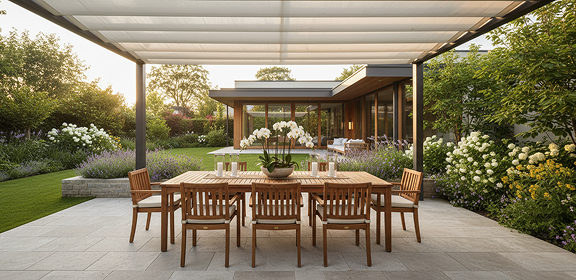
Teak is a defining material in luxury outdoor living for good reason. Its naturally occurring oils help it resist moisture, insects, and decay without relying heavily on chemical treatment. Dense grain and a rich golden-brown tone give teak dining tables, club chairs, and loungers a level of warmth that metal and synthetic materials cannot quite replicate.
Over time, untreated teak develops a soft silvery patina. Many homeowners appreciate that relaxed, coastal look, particularly around pools and landscaped gardens. Others prefer to preserve the original honey tone with a teak protectant and periodic cleaning. Neither approach changes the wood's fundamental durability, provided the furniture is made from responsibly sourced, high-quality teak and designed with proper drainage.
Teak is an excellent choice for rainy climates, humid regions, and homeowners who want their outdoor furnishings to feel closely connected to interior design. It is heavier and typically more expensive than many alternatives, but that weight also creates a substantial, enduring presence. Look for well-finished joinery, stainless steel hardware, and smooth surfaces that are comfortable against bare skin.
Powder-Coated Aluminum: Clean Lines, Easy Living
For a more contemporary or tailored setting, powder-coated aluminum is among the most versatile choices. Aluminum will not rust, and its lightweight nature makes it especially practical for movable dining chairs, chaise lounges, and modular seating. High-quality powder coating adds a durable layer of color and protection, allowing frames to hold up well against rain and everyday use.
Its design flexibility is a major advantage. Aluminum can take on slim, architectural profiles or more substantial, sculptural forms, making it easy to coordinate with a modern outdoor kitchen, fire table, or clean-lined pool deck. It also works beautifully with premium cushions, woven accents, and teak details.
The distinction is in the finish quality. Inexpensive aluminum furniture may chip, fade, or develop oxidation around joints. A well-made frame has a consistent powder-coated finish, carefully finished welds, capped legs, and hardware suited to outdoor exposure. In intense sun, lighter colors are generally more comfortable to the touch than black or deep bronze finishes.
HDPE Poly Lumber: Refined, Low-Maintenance Performance
HDPE, or high-density polyethylene, is a premium recycled plastic material often shaped to resemble painted wood planks. It has become a favorite for relaxed luxury settings because it does not rot, splinter, crack, or absorb moisture like traditional wood. It is particularly well suited to waterfront homes, pool decks, and family gathering spaces where easy cleanup matters.
Quality poly furniture feels substantial rather than flimsy. Its color is integrated throughout the material, so small surface marks are less noticeable than they would be on painted wood. It can also be made in sophisticated neutrals, classic coastal shades, and rich earth tones that stay visually grounded in a landscaped setting.
HDPE is one of the most forgiving choices for regions with heavy rain, salty air, and snowy winters. It does expand and contract modestly with temperature changes, so quality manufacturing and hardware matter. Its appearance is more casual and substantial than fine teak or slim aluminum, which makes it especially appealing for Adirondack chairs, dining sets, and deep-seating collections designed for long, unhurried afternoons.
Woven Resin: Texture Without the Worry of Natural Wicker
Natural wicker has charm, but it is not built for prolonged exposure to moisture and sunlight. All-weather wicker solves that problem by using synthetic resin fibers woven over a durable frame, most often aluminum. The result is a layered, inviting texture that suits outdoor lounges, conversation sets, and resort-inspired poolside spaces.
The best woven resin furniture uses UV-stabilized, high-density fibers that resist brittleness, fading, and cracking. A tightly finished weave should feel intentional and uniform, with no sharp ends or loose sections. Beneath it, an aluminum frame prevents rust and keeps the piece manageable when rearranging a terrace for entertaining.
Woven resin brings visual softness to a hardscaped outdoor room. It is a natural fit for homeowners who want deep cushions and a welcoming, collected atmosphere. In dusty areas or beneath shedding trees, it may need more frequent cleaning than smooth aluminum or poly furniture because debris can settle into the weave.
Stainless Steel: Sleek, Strong, and Climate-Dependent
Stainless steel offers a crisp, elevated look, particularly when paired with teak slats or tailored upholstery. It is strong enough for slender frames and has a pleasing visual weight that works well in contemporary settings. However, stainless steel is not a single standard of performance.
For coastal or high-humidity locations, marine-grade stainless steel is the wiser investment. Lower-grade stainless can show surface corrosion or tea staining when exposed to salt air and persistent moisture. Even marine-grade steel benefits from regular rinsing near the ocean. This is a material for homeowners who appreciate its precise, modern character and are willing to give it modest routine attention.
Cushions and Fabrics Matter as Much as the Frame
A weather-ready frame is only half the equation. Outdoor upholstery determines whether seating remains inviting through changing seasons. Premium performance fabrics are engineered to resist fading, moisture, mildew, and everyday spills while retaining the softness expected in a refined living space.
Look beyond the fabric cover. Quick-drying foam or reticulated foam allows water to drain through the cushion rather than remain trapped inside. Mesh bottoms and breathable construction also help cushions dry faster after a summer storm. In humid climates, these details can make the difference between cushions that stay fresh and cushions that develop odors or mildew.
Even excellent outdoor fabrics last longer when cushions are brought inside during extended periods of disuse or stored in a dry, ventilated location. Furniture covers can be useful, but they should fit properly and allow airflow. A cover that traps condensation against the furniture can create more problems than it solves.
Match the Material to Your Climate and Routine
The most beautiful material is not always the best material for every property. On the coast, teak, HDPE, and high-quality aluminum are dependable choices, while stainless steel should be marine grade. In desert climates, prioritize UV-stable finishes and lighter frame colors that stay more comfortable under direct sun. In regions with cold winters, furniture that does not absorb water offers greater confidence through repeated freezing and thawing.
Your maintenance preference should carry equal weight. Teak rewards occasional attention and ages beautifully. Aluminum and HDPE offer a lower-maintenance path without sacrificing a considered look. Woven resin adds texture but calls for periodic cleaning. There is no single winner, only the material that best supports the way you want to live outside.
Small Details That Protect a Larger Investment
Material is essential, but construction completes the picture. Check for stainless or marine-grade hardware, protected welds, reinforced joints, adjustable feet, and thoughtful drainage. Dining tables should have a way for rainwater to escape, and seating should avoid places where water collects inside the frame or beneath cushions.
A simple seasonal routine preserves almost any premium collection: rinse away pollen and salt, clean surfaces with mild soap and water, and inspect hardware before peak entertaining season. Avoid abrasive cleaners and pressure washers unless the manufacturer specifically recommends them. These small habits keep finishes looking intentional and help your furniture perform as the long-term investment it was meant to be.
The most successful outdoor spaces do not feel precious or over-managed. They feel ready for morning coffee, an impromptu dinner, and a quiet evening by the fire. Choose materials that meet your climate with confidence, then let the comfort, craftsmanship, and setting do what they should: make every moment at home feel a little more elevated.