Outdoor Living Design Trends Worth Investing In
A patio with a single dining set is no longer enough for homeowners who want to spend real time outside. The most compelling outdoor living design trends treat the backyard as a considered extension of the home: comfortable enough for a quiet morning, capable enough for a full evening of entertaining, and durable enough to look composed through changing weather.
The goal is not to fill every open square foot with furniture or chase a fleeting look. It is to create a setting that supports the way you actually live. For some homes, that means a generous conversation area beside the pool. For others, it means an outdoor kitchen that keeps the host part of the party, or a private wellness corner designed for a slower end to the day.
Outdoor Living Design Trends Start With Defined Zones
The strongest outdoor spaces now have purpose. Rather than treating a deck, terrace, or lawn-edge patio as one broad area, homeowners are creating distinct destinations for lounging, dining, cooking, and gathering around the fire.
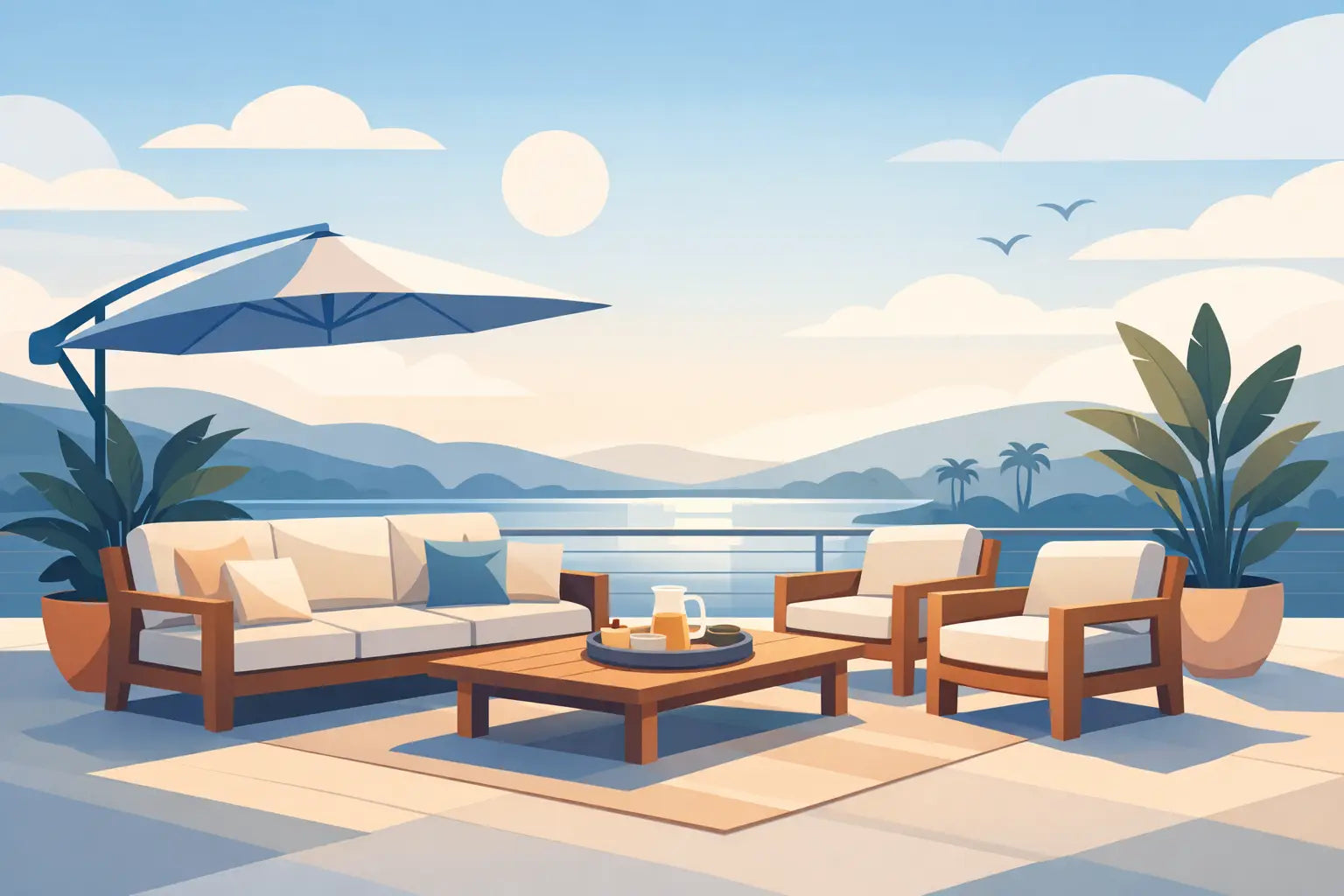
This approach brings order to a large backyard and makes a modest patio feel more generous. A deep-seating sofa and lounge chairs can establish a relaxed living room feel, while a dining table placed nearby creates an easy shift from cocktails to dinner. A grill or outdoor kitchen belongs where the cook can remain connected to guests, not isolated at the far edge of the yard.
The key is leaving room to move. A beautiful arrangement becomes frustrating if guests must squeeze past chairs or circle a fire table to reach the dining area. Before selecting a sectional or oversized table, account for walkways, doors, pool access, and the distance needed to pull out dining chairs comfortably.
Build Around Real Routines
Think beyond the occasional holiday gathering. Where do you drink coffee? Do children or grandchildren need clear space to play? Would you use a fire feature on a weeknight, even when no one is visiting? The answers should guide the floor plan.
A smaller property may need one flexible zone with swivel lounge chairs and a compact fire table. A larger estate can support separate areas, each with its own character. In either case, intentional placement feels more luxurious than simply adding more pieces.
Softer, More Residential Outdoor Furniture
Outdoor furniture is moving farther away from the rigid, matching sets that once defined the category. Current design leans toward deeper cushions, sculptural frames, tailored proportions, and layered materials that echo well-appointed interiors.
Teak remains a favorite for its warmth and graceful aging, especially when paired with ivory, sand, charcoal, or muted olive cushions. Powder-coated aluminum offers a cleaner, more contemporary profile and requires little maintenance. Recycled HDPE lumber gives homeowners an appealing option where coastal exposure, frequent rain, or low-maintenance ownership is the priority.
There is no universal best material. Teak offers unmistakable natural character but benefits from a homeowner who appreciates its evolving patina or is willing to maintain its original color. Aluminum is lighter and often easier to reposition, though it can feel less substantial in exposed, windy locations. High-quality poly furniture is exceptionally resilient, but its visual weight may suit some architectural styles better than others.
The more refined approach is to coordinate rather than match. A teak dining table can sit comfortably beside an aluminum lounge collection when color, scale, and cushion fabric relate. This creates the layered, collected quality people expect from an interior space.
Fire Features Are Becoming the Social Center
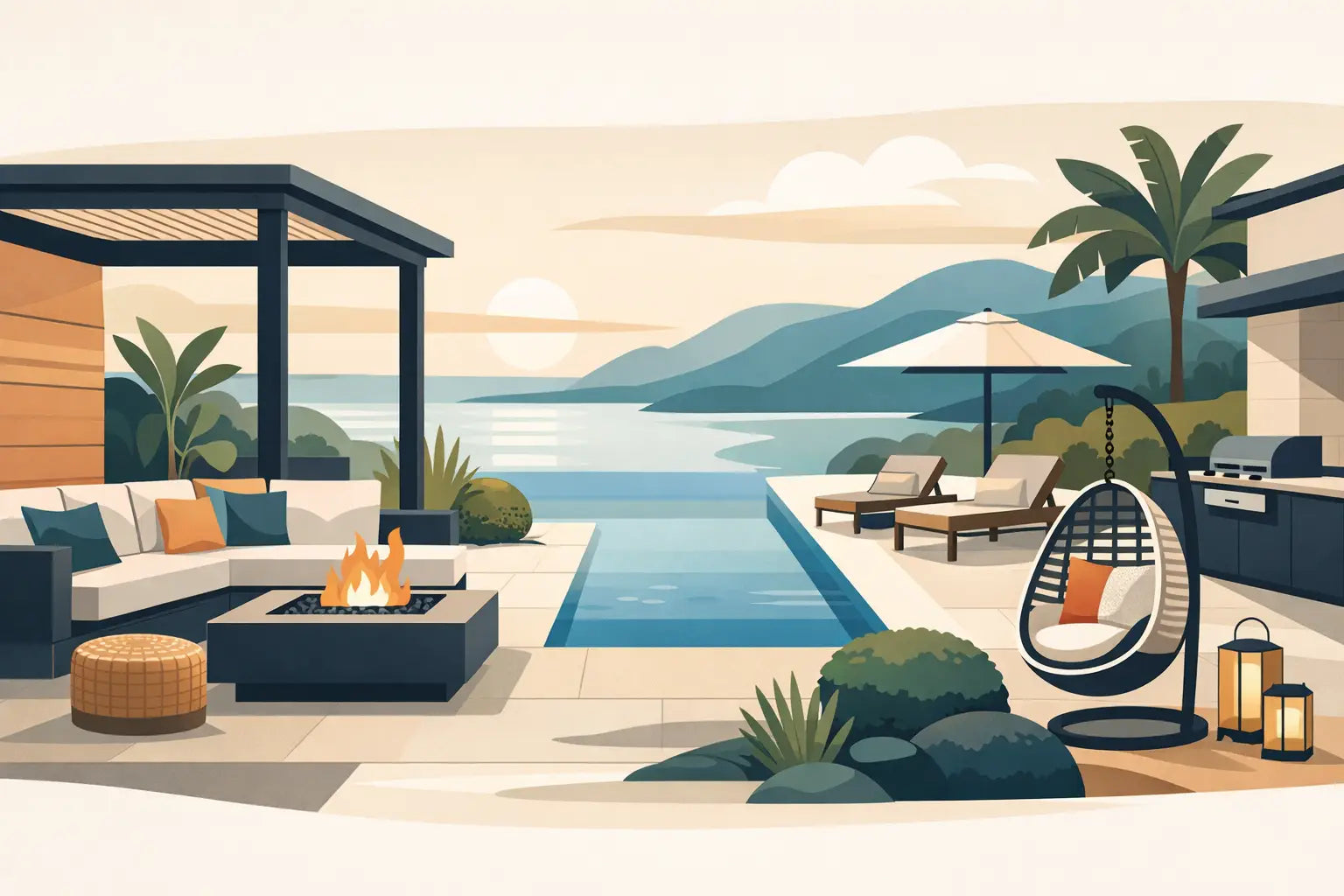
A well-proportioned fire table or fire pit offers more than heat. It gives an outdoor room a natural focal point and extends the season well beyond summer. It also changes how people gather: conversations tend to last longer when there is a warm place to settle after dinner.
Low-profile fire tables with clean stone, concrete-look, or metal finishes remain especially versatile because they provide a surface for drinks while keeping the flame at eye level from a lounge chair. Round fire pits encourage a more intimate circle, while rectangular fire tables can anchor a larger seating arrangement.
Fuel choice deserves practical consideration. Natural gas is convenient for a permanent installation and frequent use, but it requires planning and professional connection. Propane offers flexibility and a simpler path for many patios, although tank storage must be considered. Wood-burning fire pits bring a traditional sensory appeal, but smoke, ash, local regulations, and cleanup make them less suitable for every setting.
For a polished result, give the fire feature enough breathing room. It should feel central, not wedged between chairs, planters, and the back door.
Outdoor Kitchens Designed for Conversation
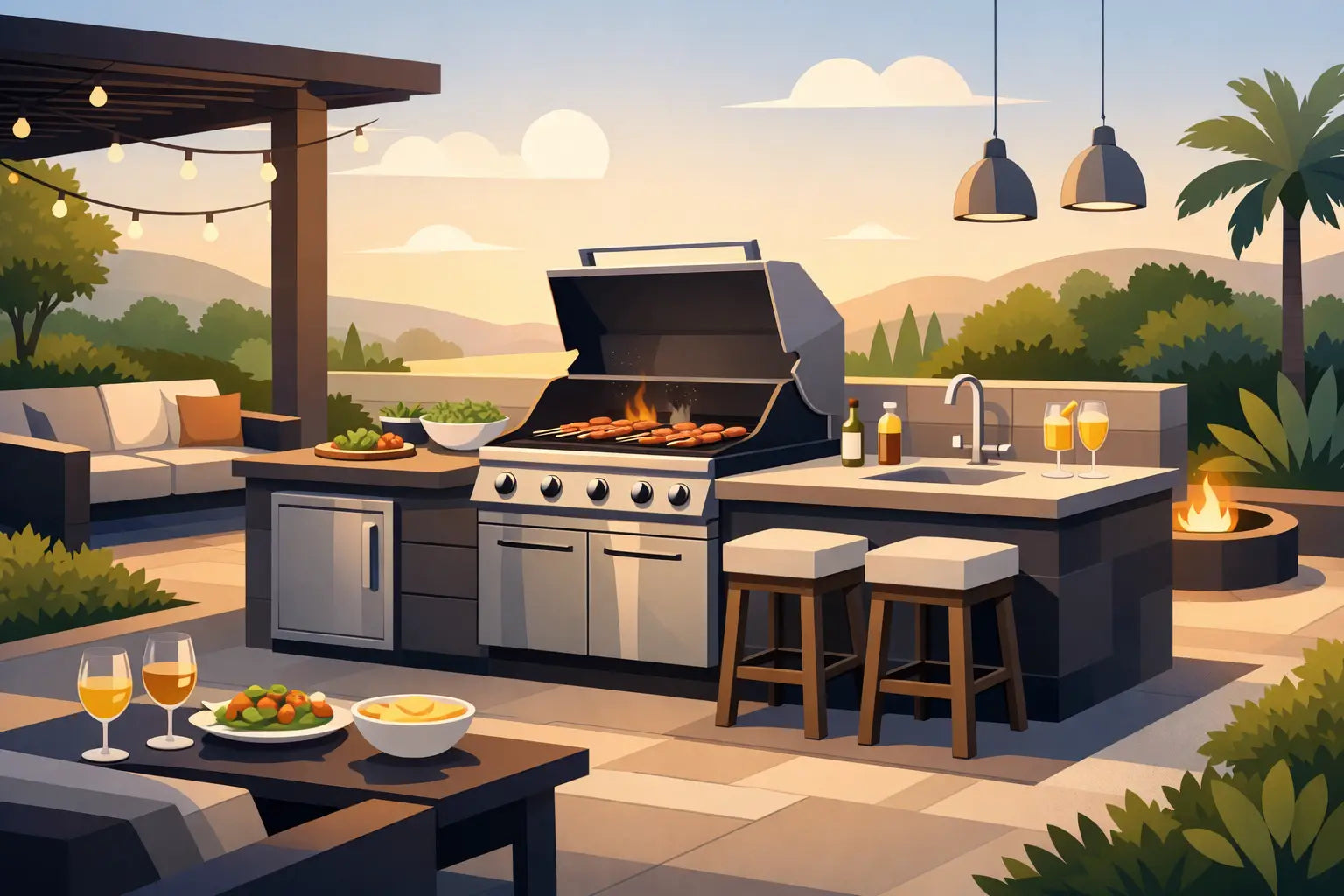
Homeowners are asking more from outdoor cooking areas than a standalone grill on a patio. The trend is toward useful, thoughtful kitchen zones with built-in grilling, prep surfaces, refrigeration, storage, and seating that invites guests to stay nearby.
A full outdoor kitchen is worthwhile when cooking outside is a regular part of your lifestyle. For occasional hosts, a premium freestanding grill paired with a weather-resistant serving cart, storage cabinet, or generous dining table may deliver more value and flexibility. The right investment depends on how often the space will be used and whether the home’s layout supports utilities, ventilation, and year-round access.
Placement matters as much as equipment. Position the cooking area close enough to the house for easy access to indoor supplies, but far enough from the main seating area that heat and smoke do not interrupt conversation. If a pool is nearby, durable surfaces and clear traffic patterns become even more essential.
Shade Is Now Part of the Architecture
Shade is no longer an afterthought reserved for a basic umbrella. Pergolas, cantilever umbrellas, cabanas, and thoughtfully placed shade structures are helping homeowners make outdoor spaces comfortable during the brightest hours of the day.
A large cantilever umbrella can be an excellent choice for renters, changing layouts, or patios where permanent construction is not desirable. It offers adjustable coverage without placing a center pole in the middle of a lounge arrangement. A pergola provides greater architectural presence and can define an outdoor room, particularly when paired with drapery, integrated lighting, or a retractable canopy.
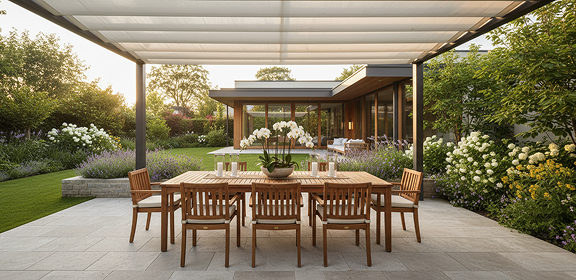
The trade-off is permanence. A pergola should complement the home’s proportions, materials, and sightlines. It is a design decision, not merely a way to avoid sun. For homeowners in hot climates, shade planning should happen before furniture selection, since the coolest portion of the patio is often where people will naturally want to gather.
Wellness Spaces Feel Personal, Not Performative
The wellness trend outdoors is becoming quieter and more personal. Instead of adding amenities for appearance alone, homeowners are creating restorative settings around spas, cold plunges, outdoor showers, and poolside lounging.
Privacy, texture, and lighting carry more weight here than excess decoration. A pair of comfortable chaises, oversized planters, a towel storage solution, and warm low-level lighting can turn a spa area into a place you will actually use. Materials should be selected for wet conditions, bare feet, and easy cleanup, especially around pools and water features.
This is also where comfort earns its place as a design priority. Quick-drying cushions, supportive chaise lounges, and surfaces that do not become uncomfortably hot in direct sun make the difference between a beautiful space and a dependable daily retreat.
Lighting and Finishing Layers Create the Evening Mood
Outdoor living is increasingly designed for after sunset. Layered lighting makes pathways safer, dining more inviting, and architectural elements more visible without turning the yard into a brightly lit stage.
Use functional lighting where it is needed - at steps, cooking surfaces, entrances, and transitions between zones. Then add atmosphere with lanterns, softly lit planters, wall sconces, or subtle string lighting where appropriate. Warm light generally flatters natural materials and encourages a more relaxed mood than harsh white illumination.
Finishing layers should be edited with the same restraint. An outdoor rug can visually anchor a lounge area. Planters introduce scale and soften hardscape. Throws, pillows, and serving pieces add personality, but they should support the space rather than compete for attention. Choose outdoor textiles designed for sun and moisture, then store or cover them when severe weather is expected.
Nokoluxe Living approaches these choices as a complete environment, helping homeowners pair design-forward pieces with the performance required for everyday outdoor use.
The most enduring trend is simple: create an outdoor space you do not need a special occasion to enjoy. Start with the moment you want more of - an unhurried dinner, a late-night fire, a quiet soak, or a lively poolside afternoon - and let that experience shape every decision that follows.