How to Design an Outdoor Retreat That Lasts
A beautiful patio can still feel unfinished if it asks one seating group to handle every occasion. The most successful answer to how to design an outdoor retreat is not simply buying better furniture. It is shaping a setting around the way you actually spend time at home: slow morning coffee, long lunches by the pool, family dinners, and the unplanned evening when friends stay late around the fire.
A refined outdoor retreat should feel as considered as your favorite room indoors, while standing up to heat, rain, sun, and daily use. Start with the experience you want to create, then choose materials, proportions, and amenities that make that experience easy to enjoy.
How to Design an Outdoor Retreat Around Real Life
Before measuring a sofa or comparing finishes, decide what your outdoor space needs to do. A compact city terrace may need to shift gracefully from quiet lounge to dinner for six. A large backyard might need distinct areas for poolside lounging, outdoor cooking, and gathering after sunset. Neither approach is better. The right plan depends on your space, household, climate, and hosting style.
Think in terms of a primary purpose and a supporting purpose. Perhaps your primary purpose is relaxed entertaining, supported by a quiet place to read. Or perhaps wellness is the priority, with room for a hot tub, cold plunge, or simply a private chaise lounge beneath a canopy. This decision prevents the common mistake of filling every available foot with furniture without creating a reason to linger.
Walk the area at the times you expect to use it most. Notice where the afternoon sun becomes intense, where wind moves through, where guests naturally enter, and where a view deserves to remain open. These observations are more useful than a generic layout rule. A seating area that looks ideal on a plan can become uncomfortable at 5 p.m. if it faces direct western sun with no shade.
Create Purposeful Zones, Not a Furniture Display
An outdoor retreat feels generous when each area has a clear role. The zones do not need walls between them. Changes in furniture scale, rugs, planters, lighting, or paving can create an intuitive sense of transition.
Begin with the conversation zone
For many homeowners, the conversation area is the heart of the retreat. Arrange deep seating so guests can speak comfortably without turning their bodies or raising their voices. A sofa paired with lounge chairs often feels more natural than a perfectly matched set, especially when the pieces share a common material or color family.
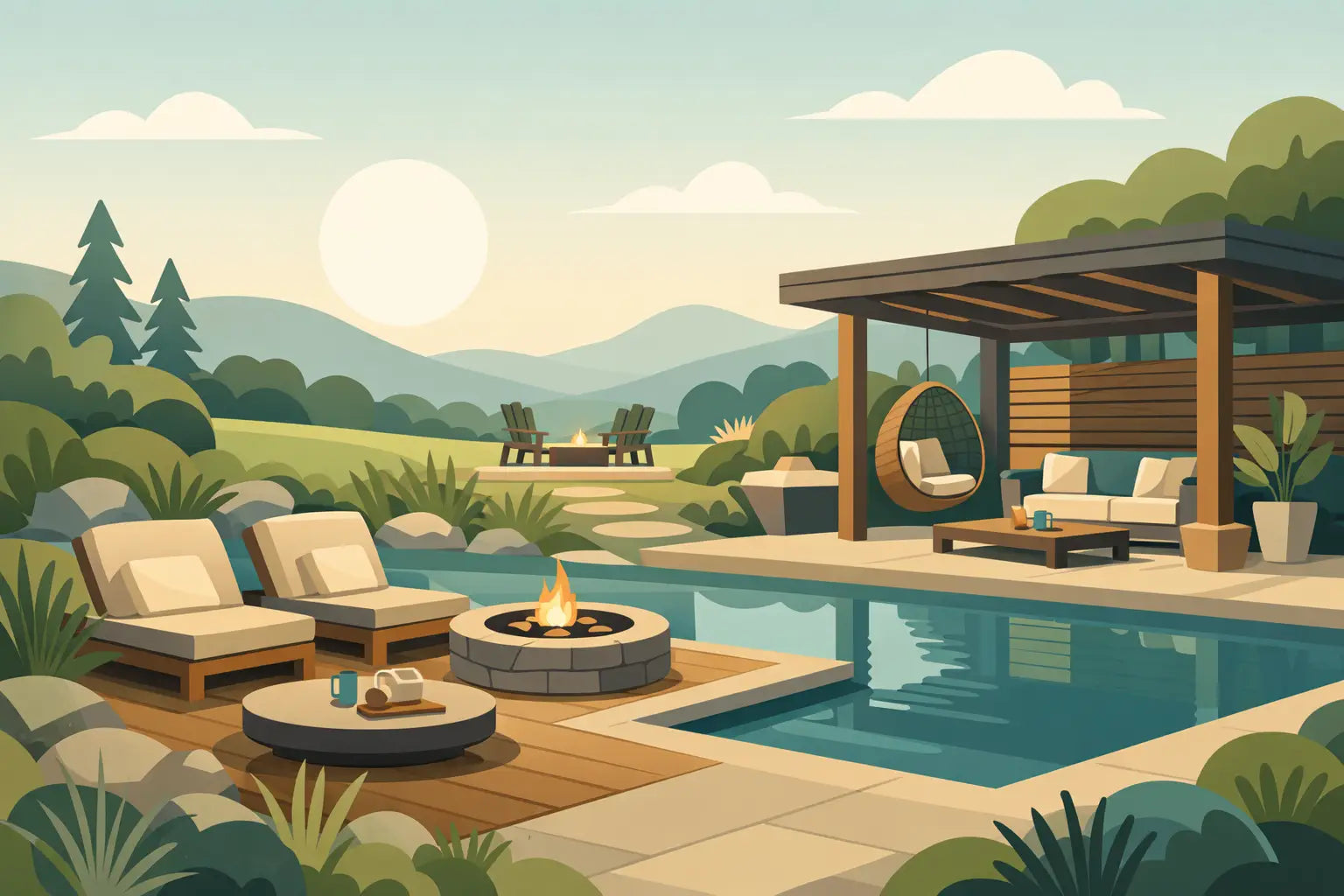
Give the arrangement an anchor. A fire table, substantial coffee table, or low-profile ottoman makes the setting feel intentional and offers a useful surface for drinks, blankets, and serving pieces. Leave enough clearance around the seating for people to move easily, particularly near sliding doors, pool paths, and grill areas.
Make dining feel worth staying for
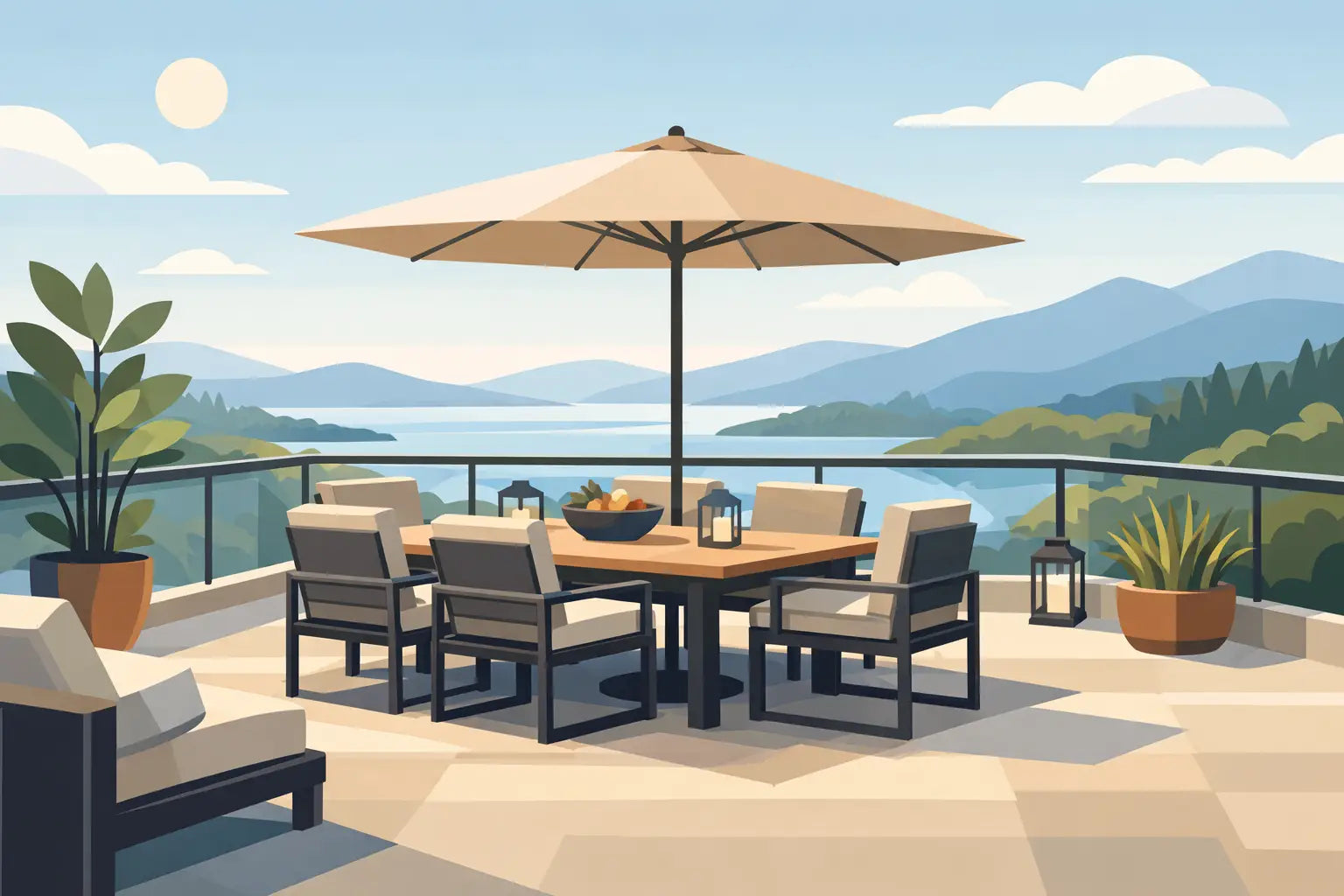
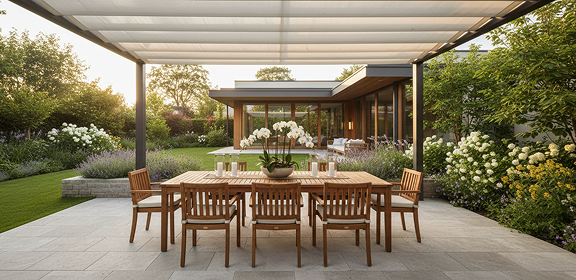
Outdoor dining works best when it feels like a destination rather than an afterthought. Choose a table size based on how you entertain most often, not on the largest party you may host once a year. A table for six with comfortable chairs and room to pull them out will serve you better than an oversized table that crowds the entire patio.
If meals are central to your home, place dining close to the kitchen or outdoor cooking area. If the view is the main attraction, orient the table toward it and place the grill or prep station nearby without making it the visual focal point. The goal is convenience with a sense of occasion.
Reserve space for restoration
Luxury is often felt in the unhurried moments. A pair of chaises near the pool, a daybed in a shaded corner, or two teak chairs facing the garden can turn unused square footage into a genuine escape. This zone should feel slightly separate from the activity of dining and cooking, even if the separation is created with only a tall planter or a change in orientation.
Wellness features deserve the same consideration. A spa can become the centerpiece of a private evening routine, but it needs thoughtful access, privacy, drainage, and a nearby place for towels and refreshments. Plan these details early so the finished setting feels calm rather than improvised.
Choose Materials for Your Climate and Your Standards
Premium outdoor furnishings earn their place through performance as much as appearance. The material that looks right for a breezy coastal home may not be the best choice for a desert-facing patio or a heavily wooded property with persistent moisture.
Teak brings warmth, substantial presence, and natural weather resistance. It can be left to develop a silvery patina or maintained for a more golden tone. It suits homeowners who appreciate natural material character and are comfortable with occasional care.
High-density polyethylene furniture offers a tailored, low-maintenance alternative, particularly for coastal environments, pool decks, and busy family spaces. Quality HDPE resists moisture, fading, insects, and splintering, while delivering a clean, architectural silhouette. It is a practical choice when easy ownership is as important as style.
Powder-coated aluminum is light enough to reposition yet durable enough for frequent use. Look for quality construction and finishes designed for outdoor exposure, especially in humid or salt-air locations. Woven resin can add texture and softness, but it should be paired with a strong frame and cushions made for real weather conditions.
Cushion fabric matters just as much as the frame beneath it. Performance textiles are designed to resist fading and make everyday cleanup easier, but no fabric is entirely maintenance-free. Lighter colors can make a space feel airy in a hot climate, while deeper tones may better disguise pollen, soil, or frequent use. Consider storing cushions during extended periods of severe weather, even when they are rated for outdoor use.
Build Comfort in Layers
The difference between an attractive patio and a retreat is usually comfort. Begin with seating deep enough for genuine relaxation, then add the elements that make guests want to remain outside after the first drink or first course.
Shade should be treated as an essential layer, not a decorative extra. A cantilever umbrella offers flexibility for smaller footprints, while a pergola, covered structure, or retractable canopy can define a larger living area. The best option depends on local wind conditions, sun direction, and whether you want seasonal flexibility or permanent architectural presence.
Add warmth for the months and evenings when temperatures drop. A fire pit creates a more casual, campfire-like gathering point; a fire table provides a polished surface for conversation and cocktails. Gas models offer immediate, low-mess ambiance, while wood-burning fire features deliver a more traditional sensory experience but require greater attention to storage, smoke, and local regulations.
Lighting should make the space usable without making it feel overlit. Use layered illumination: subtle path lighting for safety, a warm overhead source for dining, and softer table or landscape lighting to shape the mood. The goal is to see faces, food, and steps clearly while preserving the feeling of being outdoors.
Let Scale and Sightlines Set the Tone
Even exceptional furniture can feel wrong when its proportions do not suit the setting. A low, expansive sectional may disappear beside a tall home facade, while oversized seating can overwhelm a narrow balcony. Measure the footprint of each zone, including circulation space, before committing to a collection.
Keep sightlines in mind as well. Do not block the view from inside the home with tall furniture or dense planters unless privacy is the priority. Often, a lower seating profile near the house and taller greenery at the perimeter creates a more open, composed perspective.
Color should support the architecture rather than compete with it. Neutral frames in teak, charcoal, white, bronze, or soft gray give the space longevity. Introduce personality through pillows, throws, ceramics, and planters, which are easier to update than major furnishings. This approach also lets statement pieces, such as a sculptural fire table or elegant dining set, feel considered rather than crowded.
Plan for Hosting Without Sacrificing Everyday Ease
The best outdoor spaces support a Tuesday evening as beautifully as a holiday weekend. Choose pieces that can adapt: occasional stools that become extra seating, a dining bench that tucks neatly beneath the table, or a fire table that serves as a central gathering point after dinner.
Storage is one of the least glamorous decisions and one of the most valuable. A well-placed deck box or weather-ready storage cabinet keeps covers, pillows, pool towels, and grilling tools close at hand. When the essentials have a home, the outdoor area is easier to use on impulse.
For larger projects, create a phased plan. Invest first in the elements that establish comfort and function: durable seating, shade, and a surface for dining or drinks. Add decorative accents, auxiliary chairs, and specialty pieces as you learn how the space performs through changing seasons. Nokoluxe Living can help bring clarity to those higher-consideration choices, from material selection to creating a cohesive look across multiple outdoor zones.
A well-designed retreat should never feel like a room you are trying to preserve. It should invite bare feet, second glasses of wine, quiet conversations, and the easy decision to stay outside a little longer.