Fire Bowls for a Refined Outdoor Retreat
A well-chosen fire bowl changes the way a patio feels after sunset. It brings a living flame to the center of a seating area, adds warmth without visual clutter, and gives a poolside terrace or backyard lounge a natural place to gather. For homeowners creating an outdoor space with the comfort and composure of an interior room, fire bowls offer an especially elegant answer.
Their appeal is not only practical. Unlike a traditional fire pit that can feel casual or rustic, a fire bowl has a sculptural presence. The right profile, finish, and flame presentation can anchor the landscape just as a statement coffee table anchors a living room. The key is choosing one that suits the way you use your space, not simply the one that looks best in a product photo.
Why Fire Bowls Belong in Elevated Outdoor Spaces
A fire feature should earn its place in the landscape. Fire bowls do so by combining atmosphere, warmth, and architectural interest in one relatively contained form. They work particularly well in outdoor settings where furniture, paving, water, and planting have all been considered as part of a larger design.
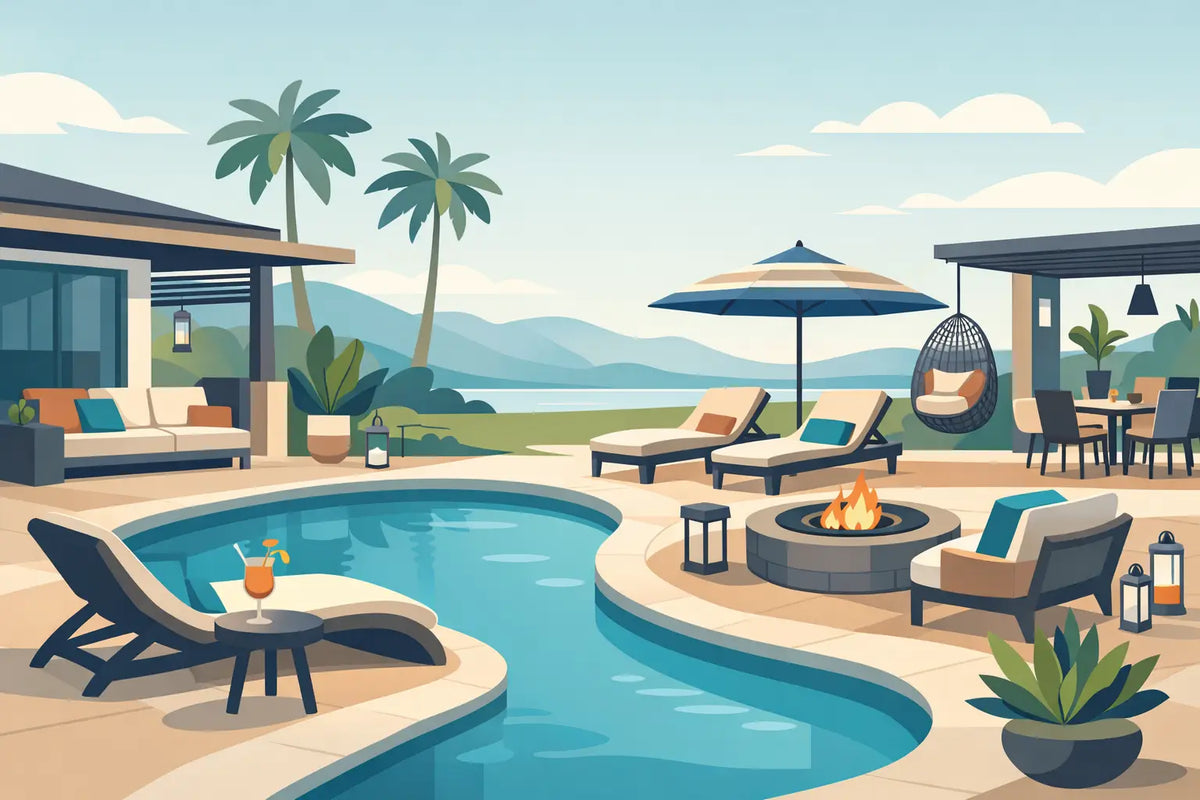
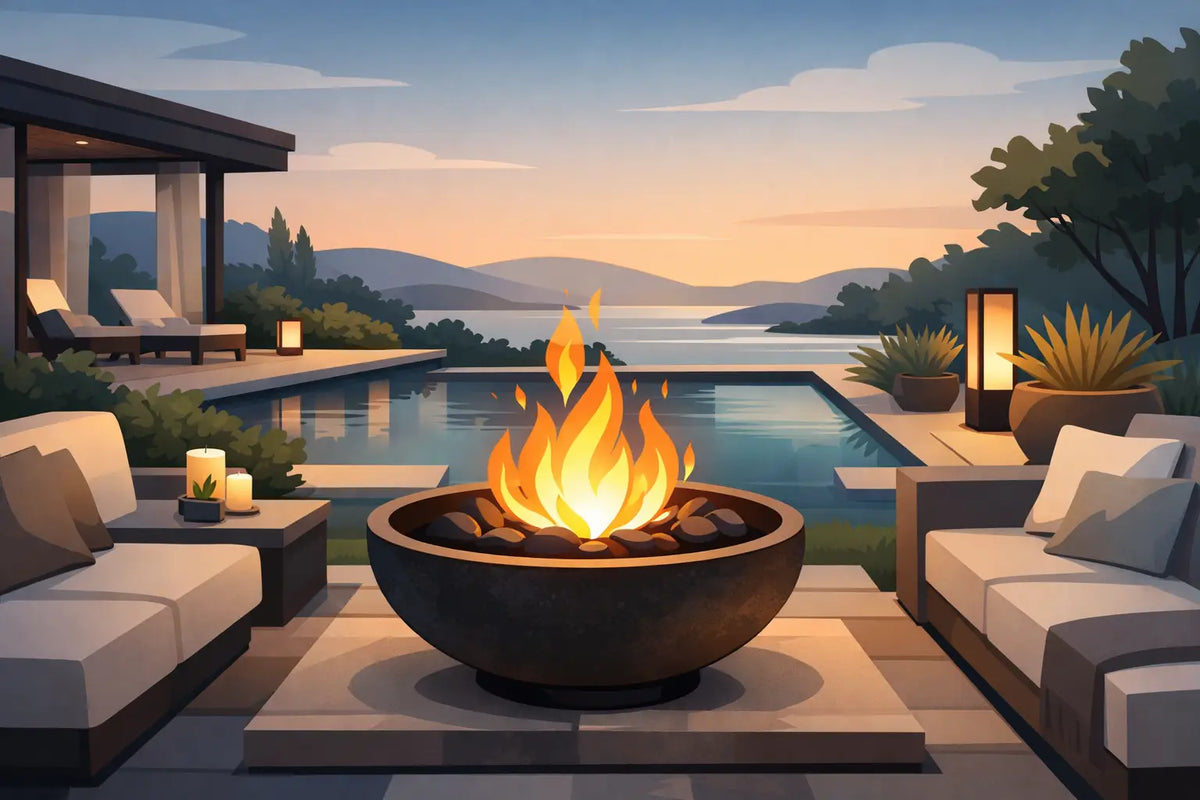
On a broad stone terrace, a substantial concrete fire bowl can create a calm focal point between two deep seating sofas. Near a pool, low-profile fire bowls offer dramatic reflection on the water while preserving sightlines across the yard. In a more compact courtyard, a smaller round bowl can bring intimacy to an otherwise underused corner.
The flame also extends the useful life of an outdoor room. A crisp evening does not have to end a dinner party or conversation early when guests can gather around a source of radiant warmth. That said, a fire bowl is best viewed as a comfort-enhancing feature, not a replacement for patio heaters in especially cold climates. Its warmth is most noticeable to those seated nearby, particularly with a low, open flame design.
Choose the Fuel That Fits Your Lifestyle
Fuel type has a direct effect on convenience, ambiance, installation requirements, and ongoing maintenance. For many luxury residential settings, gas fire bowls offer the easiest path to polished everyday use.
Natural Gas for a Permanent Gathering Place
A natural gas fire bowl connects to a dedicated gas line and is designed to remain in place. It is an excellent option for homeowners who want to light the fire frequently with minimal preparation. There are no tanks to monitor, no ash to remove, and no need to store firewood. With the right ignition system, the experience can be as effortless as turning on a built-in appliance.
Natural gas does require professional planning and installation. The line, shutoff valve, burner configuration, and clearances should be evaluated before selecting the final location. This upfront work is worthwhile when the fire bowl will be a permanent centerpiece of a patio, pool deck, or outdoor kitchen zone.
Propane for Flexibility
Propane fire bowls provide a similar clean-burning flame with greater placement flexibility. Depending on the design, the tank may be concealed within the base or stored nearby. This makes propane appealing for spaces where running a gas line is impractical, including some second homes, covered patios, and finished landscapes where excavation would be disruptive.
The trade-off is tank management. A reserve tank is wise before a weekend of entertaining, and the tank storage solution should look intentional. In a refined outdoor setting, visible equipment can quickly distract from an otherwise cohesive design.
Wood Burning for a More Traditional Ritual
Wood-burning fire bowls offer the crackle, aroma, and ritual many homeowners associate with a classic backyard fire. They can be a beautiful fit for a more naturalistic property, a mountain home, or a gathering area set well away from the house.
They also demand more from the owner. Smoke direction changes with the wind, ash needs to be removed, and firewood requires dry storage. Local burn restrictions and neighborhood regulations may further limit use. If your goal is a clean-lined, low-maintenance entertaining space, gas is usually the more natural fit.
Find the Right Size and Proportion
The most common mistake is choosing a fire bowl based on its individual appearance rather than its relationship to the patio. A bowl that looks generously sized in a showroom can feel underscaled in the middle of a large seating arrangement. Conversely, an oversized feature can make a smaller terrace feel crowded and interrupt circulation.
Start with the seating zone. The fire bowl should sit close enough to create connection and share warmth, while leaving comfortable room for chairs, foot traffic, and occasional tables. Consider the full footprint, including the bowl’s base, any surrounding hearth area, and the clearance needed for safe use.
For a compact lounge area, a lower bowl with a modest diameter can maintain an open, relaxed feel. Larger patios often benefit from a wider vessel or a pair of matching fire bowls positioned symmetrically at the edges of a pool or outdoor living room. The bowl’s height matters as much as its width. Low designs preserve views, while taller designs create more visual presence and may work better beside upright dining furniture.
Select Materials That Age Gracefully
Premium fire bowls are often made from GFRC, steel, stone, or weather-resistant composite materials. Each has a distinct character, and each should be selected with the climate and overall design in mind.
GFRC, or glass fiber reinforced concrete, is a favorite for contemporary outdoor spaces because it creates the substantial look of cast concrete without the same degree of weight. It pairs naturally with pale limestone, wood accents, black aluminum furniture, and modern pool finishes. Its tonal variation is part of its appeal, though homeowners should expect a handcrafted surface rather than a perfectly uniform factory finish.
Metal fire bowls can introduce a more dramatic, architectural look. Powder-coated finishes often suit sleek, contemporary spaces, while patina-forming steel creates warmth and character over time. A developing patina can be beautiful, but it is not for every setting. Near light-colored paving, consider whether runoff or surface changes could affect the surrounding area.
Natural stone makes a compelling statement when it complements existing hardscaping, but its weight and installation needs can be significant. In regions with freeze-thaw cycles, material selection and drainage deserve extra attention. A beautiful feature should be built to endure the climate, not merely survive it.
Flame Media Sets the Mood
The material surrounding the burner has an outsized influence on the look of the flame. Lava rock tends to feel organic and relaxed, with a texture that works well in gardens and transitional landscapes. Fire glass reflects and refracts light for a more polished, contemporary effect. Ceramic logs bring a familiar hearth-like quality to a gas bowl without the maintenance of burning wood.
There is no universally superior choice. Clear or jewel-toned fire glass can look striking against dark concrete but may feel too decorative in a restrained, organic setting. Lava rock is more forgiving visually and often better suited to homes where natural materials lead the design. The best selection echoes finishes already present in the furniture, pool tile, planters, and architecture.
Placement, Safety, and Everyday Ease
A fire bowl should feel effortless once installed, but that ease begins with thoughtful placement. Follow the manufacturer’s clearance requirements and local codes, particularly near structures, rooflines, trees, screens, and covered areas. Place the feature on a stable, noncombustible surface and confirm that drainage prevents water from collecting around the burner or base.
Wind is another consideration that is easy to overlook. An exposed deck may need a wind guard or a more sheltered placement to keep the flame steady and guests comfortable. If the fire bowl sits near a pool, leave a clear path around it so towels, children, and guests moving between seating and water are not forced into a tight passage.
For gas models, periodic inspection is part of responsible ownership. Keep the burner ports clear, check connections as recommended, and use a properly fitted cover when the unit is not in use. A cover protects the finish from debris and weather, while also helping the fire bowl remain presentation-ready for an impromptu evening outdoors.
Design a Gathering Space Around the Flame
The most inviting fire bowls are not treated as standalone accessories. They are integrated into a complete setting for conversation. Arrange seating so guests face one another as well as the fire, then add side tables within easy reach for drinks and small plates. Deep-cushioned lounge chairs, low sofas, and weather-resistant accent tables create the sense that the outdoor room has been furnished with the same care as the interior.
Materials should feel connected rather than matched. A charcoal fire bowl can balance warm teak seating. A pale concrete bowl can soften darker woven frames. If the space includes a pool, repeating one tone from the waterline tile or coping in the fire media, cushions, or planters creates a more considered visual rhythm.
Nokoluxe Living approaches outdoor fire features as part of a larger retreat: one that supports relaxed weeknights, gracious entertaining, and the quiet satisfaction of coming home to a space that feels complete. Choose a fire bowl for the moments you want to create around it, and it will become far more than a source of heat.