
Best Patio Umbrellas for Wind That Hold Up
A beautiful outdoor dining setting can lose its ease in one gust. The best patio umbrellas for wind are not simply the heaviest or the largest. They are thoughtfully engineered systems, pairing a stable frame and properly sized base with a canopy designed to release pressure rather than fight it. For a patio that feels polished from brunch through evening cocktails, that distinction matters.
A wind-capable umbrella should make shade feel effortless, not introduce another item to worry about every time the weather shifts. The right choice depends on your exposure, table layout, and how you use the space. A sheltered courtyard has very different needs from an open pool deck, rooftop terrace, or coastal second home.
What Makes a Patio Umbrella Better in Wind?
No freestanding patio umbrella is truly windproof when left open in severe weather. Even premium designs have practical limits, and closing the canopy before a storm or strong gusts remains the best protection. What separates a better umbrella is how well its materials, structure, and installation manage ordinary breezes and occasional gusts.
Start with the pole and ribs. Aluminum is a refined, low-maintenance choice that resists rust and keeps a contemporary profile, while fiberglass ribs are especially valuable in breezy locations because they have controlled flexibility. Rather than staying rigid until they bend or fail, quality fiberglass ribs can flex and return to shape under changing pressure. Hardwood frames offer a warm, resort-inspired look, but they require more care and are generally best reserved for protected settings.
Canopy construction matters just as much. Look for solution-dyed acrylic or high-quality performance fabric that resists fading, moisture, and everyday staining. A vented canopy is particularly useful for wind. The opening at the top allows rising air to escape, reducing the lifting force that can make an umbrella shudder or pull against its base. Double vents can offer further pressure relief on larger canopies, though the overall frame quality still does the real work.
Finally, consider the opening mechanism. A well-built crank lift should feel controlled, with a secure hub and dependable locking points. Tilt features are convenient for late-afternoon sun, but more moving parts can introduce play in the frame. In a notably windy setting, a fixed, non-tilting center-pole umbrella or a commercial-inspired cantilever model with a substantial base may be the more confident choice.
Choosing the Best Patio Umbrellas for Wind by Location
The most suitable umbrella is often determined by where it will live, not by its price tag or silhouette alone.
Sheltered patios and covered outdoor rooms
If walls, mature landscaping, or an adjacent structure soften the wind, you have the most flexibility. A center-pole umbrella with an aluminum frame, vented canopy, and a weighted base can provide generous shade without overwhelming the furniture arrangement. This is an elegant solution for a round bistro table, a dining table with an umbrella hole, or a pair of chaises beside the pool.
For these spaces, select a canopy that extends beyond the table edge by roughly two feet on each side. An umbrella that is too small leaves guests chasing shade, while an oversized canopy can feel visually crowded under a low roofline or between closely placed seating pieces.
Open decks, poolside settings, and breezy backyards
In exposed spaces, build your decision around stability first. A center-pole umbrella secured through a table and paired with a heavy base is often more stable than a lighter stand-alone arrangement. The table helps limit movement at the pole, while a correctly weighted base keeps the entire setup grounded.
Commercial-grade aluminum, reinforced ribs, and a wind vent are smart priorities here. Avoid treating a tilt feature as essential if it compromises the simplicity of the structure. A canopy that closes quickly and smoothly is more useful than one with every available adjustment.
Large lounges and sectional seating areas
Cantilever umbrellas create dramatic, uninterrupted shade because the pole sits outside the seating area. They are ideal for covering a conversation set, outdoor kitchen lounge, or a pair of chaise lounges without placing a pole in the center of the experience. They also demand more from their foundation.
Choose a cantilever model with a purpose-built cross base or a professionally specified in-ground mount, not a lightweight stand. Many require multiple weighted base plates, and the total ballast should follow the manufacturer’s recommendation exactly. Rotating and tilting mechanisms are wonderful for following the sun, but they should be operated with care and the canopy should be closed whenever winds build.
The Base Is Not an Accessory
A premium umbrella with an undersized base is still an unstable umbrella. Base weight should be matched to canopy size, frame type, whether the umbrella is supported by a table, and local wind exposure. A compact center-pole umbrella in a protected dining arrangement may need substantially less weight than a large offset umbrella standing beside a sofa.
As a general rule, do not rely on a decorative base simply because it looks substantial. Confirm its actual weight and whether it is designed for free-standing use or table-supported use. Filled resin bases can be practical, while cast iron, steel, granite, and modular weighted plates offer a more substantial feel. For a refined patio, the base should also complement the furniture finish instead of looking like an afterthought.
If you are furnishing an especially exposed property, an in-ground mount or surface-mounted commercial base may be worth considering. It is a more permanent decision, but it can deliver a cleaner visual result and stronger everyday confidence than repeatedly repositioning a portable stand.
Size, Shape, and Shade Coverage
An umbrella should serve the furniture plan, not compete with it. Round canopies suit round and square tables beautifully, while rectangular canopies tend to provide better coverage for long dining tables, outdoor kitchen counters, and linear lounge arrangements. Square canopies offer a tailored, architectural look and can work well over compact seating groups.
Measure the usable area, including clearance for chairs and foot traffic, before selecting a size. A canopy that seems generous in a showroom may become awkward once it is positioned near a railing, fireplace, grill, or tree canopy. Keep heat sources in mind as well. Umbrellas should be placed well away from grills, fire pits, and fire tables unless the manufacturer specifically permits the configuration.
Color also has a practical role. Soft neutrals such as sand, linen, and warm gray create an understated luxury look and coordinate easily with most outdoor collections. Darker canopies can feel more tailored and may disguise marks, but they can make the area below feel visually heavier. Performance fabric helps preserve color, yet every canopy will look its best with routine cleaning and proper seasonal storage.
Setup Habits That Protect Your Investment
Even the finest materials benefit from sensible use. Make these checks part of the rhythm of hosting and everyday patio care:
- Secure the pole fully in the base and tighten the collar before opening the canopy.
- Open the umbrella gradually, checking that the fabric is not caught on a rib or crank mechanism.
- Close it when you leave the patio, not only when a storm is forecast.
- Use a fitted cover when the umbrella is closed for extended periods or stored between seasons.
- Inspect ribs, fasteners, fabric stitching, and the base at the beginning of each outdoor season.
When an Umbrella Is Not the Right Shade Solution
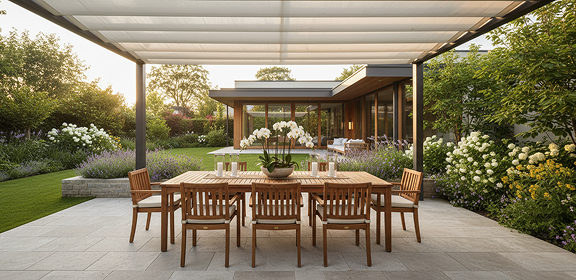
For a consistently windy terrace, a pergola, shade sail engineered for the site, or fixed roof structure may be a better long-term answer. These options require more planning, but they can create a more dependable outdoor room and reduce the need to manage a large canopy day to day.
That does not make an umbrella the lesser choice. It simply clarifies its best role: flexible, beautiful shade for a space where you want the freedom to adjust the layout, follow the sun, or create a more intimate setting for guests. Nokoluxe Living can help homeowners evaluate the details that make that choice feel considered, from canopy scale to base requirements and furniture coordination.
Choose the umbrella that respects your setting as much as your style. With the right frame, fabric, ballast, and daily care, shade becomes one of the quiet luxuries that lets every outdoor gathering linger a little longer.