
Pool Furniture That Makes Every Swim Better
A pool can be the visual centerpiece of a backyard, but pool furniture determines whether the space is somewhere people actually want to stay. The difference is felt in the details: a chaise with the right recline after a swim, a deep chair that makes conversation linger past sunset, and a dining table that handles a wet bathing suit as gracefully as a plated lunch.
For a refined outdoor retreat, furniture should do more than fill the deck. It should establish natural places to relax, gather, dry off, dine, and enjoy the view. Choosing well means balancing proportion, materials, comfort, and the way your household uses the pool on an ordinary Saturday, not just during a special occasion.
Start With the Way You Use the Pool
Before choosing a finish or silhouette, consider the rhythm of your outdoor life. A lap pool used for morning exercise needs a different setting than a family pool that becomes the center of summer weekends. If you regularly host, prioritize generous seating and surfaces for drinks, towels, and shared plates. If the pool is a private escape, fewer, better pieces can create a calmer and more intentional atmosphere.
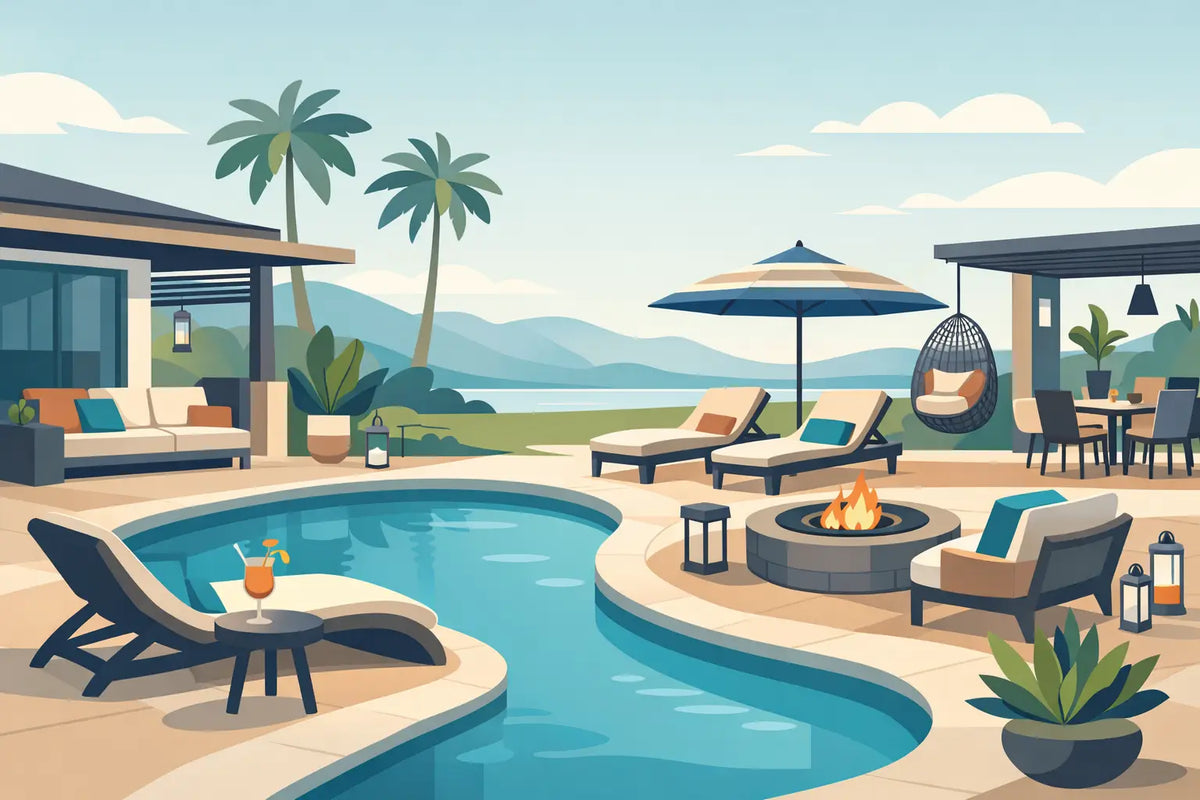
It helps to plan the pool area in distinct zones. The sun zone is for chaises, loungers, and side tables. The shade zone may include lounge chairs or a sofa beneath an umbrella, pergola, or covered patio. A dining or conversation zone can sit slightly apart from the water, giving guests a dry and comfortable place to settle in.
Leave clear circulation between these areas. Guests should be able to walk from the pool to a towel station, seating area, or back door without squeezing around a chaise or cutting through a conversation group. On a compact deck, this usually means choosing fewer pieces with stronger purpose rather than trying to fit every furniture category into one space.
Choose Pool Furniture Materials for Real Conditions
Poolside conditions are demanding. Furniture faces direct sun, rain, temperature swings, wet skin, sunscreen, and, depending on the setup, chlorinated or saltwater splashes. Premium materials earn their place because they are designed to meet those conditions without asking you to sacrifice polish.
Recycled Poly Lumber
High-quality recycled poly lumber is a strong choice for homeowners who want substantial, low-maintenance seating. It resists moisture, does not splinter or rot, and brings a clean, tailored look to pool decks in colors ranging from coastal white to deep charcoal. Its weight gives it welcome stability in windy locations, though that same heft makes frequent rearranging less convenient.
This material is particularly well suited to Adirondack chairs, upright dining seating, and deep lounge pieces where structure and easy care matter most. A quick rinse and occasional mild soap are generally enough to keep it looking fresh.
Teak
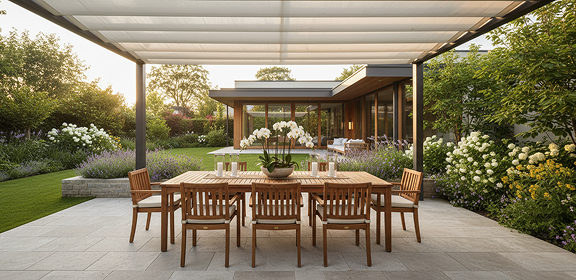
Teak brings warmth and architectural character that few materials can match. Its natural oils help it perform beautifully outdoors, and its color creates an elegant contrast against stone, concrete, and water. Over time, untreated teak will weather to a silvery gray. Many homeowners love that patina; others prefer to preserve the warmer honey tone with regular care.
Teak is an investment in craftsmanship and natural beauty, but it is not the choice for someone who wants a completely hands-off material. It rewards thoughtful maintenance and looks especially at home in settings where the pool area is designed as an extension of a sophisticated interior.
Powder-Coated Aluminum
Aluminum has a lighter, more tailored presence and is easy to reposition when entertaining. A quality powder-coated frame resists corrosion and can support sleek silhouettes that feel especially appropriate around contemporary pools. Look for well-engineered frames, refined welds, and durable finishes rather than lightweight pieces that can feel insubstantial or shift in the wind.
Aluminum is often ideal for chaise lounges and dining furniture, particularly when paired with performance cushions or sling seating. In salt-air environments, ask about the specific finish and recommended care, since coastal exposure calls for more frequent rinsing.
Woven Resin and Performance Fabric
All-weather woven resin adds texture without the maintenance concerns of natural wicker. It can soften a hardscape-heavy pool deck and make a lounge area feel more inviting. Pair it with quick-drying cushions covered in high-performance outdoor fabric, which is designed to resist fading, moisture, and everyday stains.
Cushions still need attention after a storm or a busy pool day. Choose designs with breathable construction and removable covers when possible, and give wet cushions time to dry rather than stacking or covering them immediately.
Prioritize Comfort Beyond the Chaise Lounge
Chaise lounges are the classic poolside essential, but a deck filled only with chaises can feel more like a resort row than a personal outdoor living space. The most welcoming pool areas include a mix of postures. Some guests want to lie back in full sun. Others want a supportive seat for reading, a shaded spot for conversation, or a place to perch while watching children in the water.
For chaises, look closely at adjustability, seat height, and arm placement. A low-profile lounge can create a striking resort-inspired look, while a slightly higher seat is easier for many people to get in and out of. Wheels are useful on larger decks, but they are not essential if the layout will remain consistent throughout the season.
Add side tables within easy reach of every lounge. This small decision has an outsized effect on comfort, giving people a proper place for a drink, book, phone, or sunglasses. In a conversation area, choose chairs with enough depth to feel relaxed but not so much that guests cannot comfortably sit upright with a cocktail or appetizer plate.
Create a Cohesive View From the House
Pool furniture is seen from inside as often as it is used outdoors. Consider the sightline from your kitchen, living room, or primary bedroom. The strongest arrangements create visual order: repeated frame colors, coordinated cushion tones, and a balanced distribution of height across the deck.
A limited palette is usually more luxurious than a collection of competing finishes. For example, warm teak paired with ivory cushions and matte black accents feels composed without feeling over-designed. Crisp white poly seating and navy performance fabric can create a classic coastal mood. Charcoal aluminum with soft gray textiles offers a more modern, understated direction.
Use color through cushions, pillows, umbrellas, and accessories rather than relying on furniture alone to carry every visual statement. These elements are easier to refresh, while the primary pieces remain a lasting foundation for the space.
Plan for Shade, Storage, and Everyday Care
A beautiful pool setting should also work on the hottest day of July. Position umbrellas where they shade a lounge or dining area without blocking circulation, and consider a cantilever style when a central pole would interrupt seating. The umbrella base should be properly weighted for its size and local wind conditions.
Storage deserves attention early in the process. A streamlined deck box can hold towels, sunscreen, pool toys, and cushion covers, keeping the area composed between gatherings. If cushions will be stored seasonally, make sure they are fully dry before packing them away.
Routine care is simple but worthwhile. Rinse furniture exposed to pool chemicals, wipe away sunscreen spills before they set, and clean frames with the manufacturer-recommended products. Protective covers can help during extended periods of nonuse, but they should fit properly and allow airflow. Trapping moisture under an ill-fitting cover can create more problems than it solves.
Invest Where the Experience Is Felt
When deciding where to allocate your budget, start with the pieces that receive the most body contact and the greatest exposure. Well-built chaises, dining chairs, and deep seating provide comfort every day and are more likely to retain their appearance through years of sun and use. Side tables and decorative accents can be added over time.
A curated approach also prevents the common mistake of buying matching sets without considering scale. Measure the usable deck area, account for chaise recline and chair pull-back space, then select pieces that let the architecture and water remain visible. Expert guidance can be especially helpful when coordinating materials across a pool deck, patio, and outdoor kitchen. Nokoluxe Living focuses on that larger picture, pairing elevated design with furniture made for real outdoor use.
The right poolside setting does not need to be crowded to feel complete. Give every piece room to perform, choose materials that match your climate and maintenance preferences, and let comfort guide the final decisions. The result is a backyard that invites one more swim, one more conversation, and one more unhurried hour at home.