
Patio Furniture for Coastal Climates That Lasts
Salt air has a way of revealing shortcuts. It settles into metal joints, dulls lesser finishes, stiffens outdoor fabrics, and leaves even a beautifully designed patio looking tired before its time. The right patio furniture for coastal climates is not simply furniture placed near the water. It is a carefully chosen foundation for mornings on the terrace, long poolside lunches, and evenings that feel as considered as the rooms inside your home.
For a waterfront residence, beach house, or salt-air-exposed backyard, the goal is to balance visual refinement with materials that can meet the conditions gracefully. That does not always mean choosing the most industrial-looking option. It means understanding where each material excels, where it needs care, and how thoughtful details - from cushion construction to furniture placement - protect your investment.
What Coastal Weather Actually Does to Outdoor Furniture
Coastal environments are demanding because several forces are working at once. Salt carried on the breeze settles onto furniture surfaces and attracts moisture. Humidity encourages mildew. Intense sun fades fabrics and can make lower-quality plastics brittle. In colder coastal regions, freeze-thaw cycles add another layer of stress.
The distance from the shoreline matters, but even homes several miles inland may feel the effects of salt air. A screened porch offers more protection than an open deck, while a poolside setting adds chlorine exposure to the equation. This is why a material that performs well in a dry inland climate may need more frequent attention by the coast.
A premium outdoor setting should still feel inviting, not overly precious. The most successful choices pair inherently resilient frames with removable, performance-made cushions and a realistic care routine. You should be able to host a relaxed weekend gathering without worrying that every splash or sea breeze will compromise the space.
The Best Materials for Patio Furniture for Coastal Climates
Marine-grade polymer offers the easiest long-term care
High-density polyethylene, often called HDPE or marine-grade polymer, is one of the strongest choices for exposed coastal patios. It will not rot, crack, peel, or absorb water, and its color is typically integrated throughout the material rather than applied as a surface coating. That makes it especially reassuring for families, second-home owners, and anyone who wants polished outdoor furniture without a demanding maintenance schedule.
Its visual range has expanded significantly. Premium polymer furniture can bring a clean, tailored presence to an Adirondack seating group, dining area, or poolside lounge. It is heavier than lightweight plastic furniture, which is helpful in breezy locations, although cushions and accessories should still be secured before severe weather.
The trade-off is feel. Polymer does not develop the natural patina of wood or the fine, sculptural lines possible with metal. For many coastal homes, however, its composure under constant exposure is exactly the luxury.
Teak brings warmth, with a maintenance decision attached
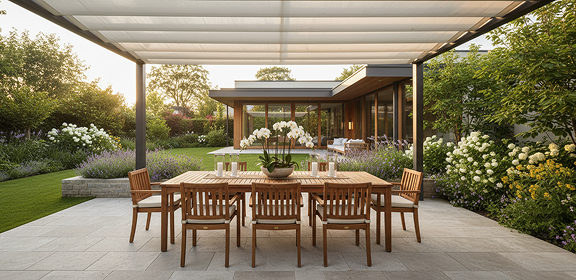
Teak remains a classic choice for coastal outdoor spaces because of its natural oils and dense grain. It has long been valued for its ability to stand up to moisture, and it introduces an organic richness that softens stone, concrete, and modern architecture. A teak dining table or deep seating frame can make an open-air terrace feel established from day one.
The key is deciding which finish you prefer. Left untreated, teak gradually weathers from honey gold to an elegant silvery gray. Neither state is more durable than the other when the furniture is well made, but maintaining the original warm tone requires periodic cleaning and a suitable teak protector. Homeowners who embrace the silver patina can keep care simpler, provided they clean away surface salt and organic debris.
Look for responsibly sourced, high-quality teak with substantial joinery and hardware designed for exterior use. Teak is an investment, and quality construction is what lets its beauty hold up over many seasons.
Powder-coated aluminum is refined when the finish is right
Aluminum is naturally rust-resistant, lightweight enough to reposition, and versatile enough for everything from crisp dining chairs to generously proportioned lounge collections. It is an excellent choice for coastal climates, but not every aluminum frame is equal.
Choose furniture with a high-quality powder-coated finish, well-finished welds, and stainless steel hardware. Powder coating creates a durable outer layer, yet scratches should be addressed promptly because exposed areas can corrode over time, particularly where salt accumulates. Rinsing the frame occasionally with fresh water is simple preventive care that makes a meaningful difference.
Aluminum is ideal when you want a more architectural look without the weight of cast iron or steel. In high-wind settings, select substantial pieces or plan to store and secure lighter chairs when storms approach.
Stainless steel can work, but grade and upkeep matter
Stainless steel has a clean, contemporary presence, especially around modern pools and outdoor kitchens. Near saltwater, however, its performance depends on the alloy. Marine-grade 316 stainless steel offers stronger corrosion resistance than the more common 304 grade and is better suited to direct coastal exposure.
Even marine-grade stainless needs regular rinsing. Salt deposits can cause tea staining, a surface discoloration that is not always structural rust but can diminish the finish. If you love the look of stainless steel, it is a sophisticated option for covered or semi-protected spaces where a light maintenance rhythm feels reasonable.
Cushions and Fabrics Deserve the Same Attention as Frames
A durable frame is only half the decision. Coastal sun can be unforgiving on cushions, and humid evenings create ideal conditions for mildew if water is trapped inside the fill.
Look for solution-dyed acrylic or other premium performance fabrics engineered for UV resistance, color retention, and easy cleaning. Because color is incorporated into the fiber rather than added only to the surface, solution-dyed materials are better equipped to withstand bright sun and repeated cleaning. Lighter neutrals stay cooler underfoot and complement a coastal palette beautifully, while saturated navy, forest green, or terracotta can create welcome contrast against pale decking and sand-toned stone.
For the cushion interior, quick-drying foam and breathable mesh bottoms are especially valuable. They allow water to drain rather than linger, helping cushions recover after rain, splashes, or morning dew. Removable covers are also worth prioritizing. They make seasonal cleaning far easier and give you the option to refresh the look without replacing an entire seating collection.
Do not assume waterproof is always better. Fully waterproof covers can trap moisture if cushions are put away damp. Water-resistant, breathable materials paired with proper drying often perform more gracefully in humid coastal conditions.
Design a Coastal Patio That Feels Intentional
The most inviting coastal outdoor spaces avoid the temptation to make everything nautical. A refined retreat can nod to its setting through texture and palette rather than obvious motifs. Teak, woven performance rope, matte white aluminum, weathered gray polymer, and tailored neutral cushions create a relaxed, elevated foundation.
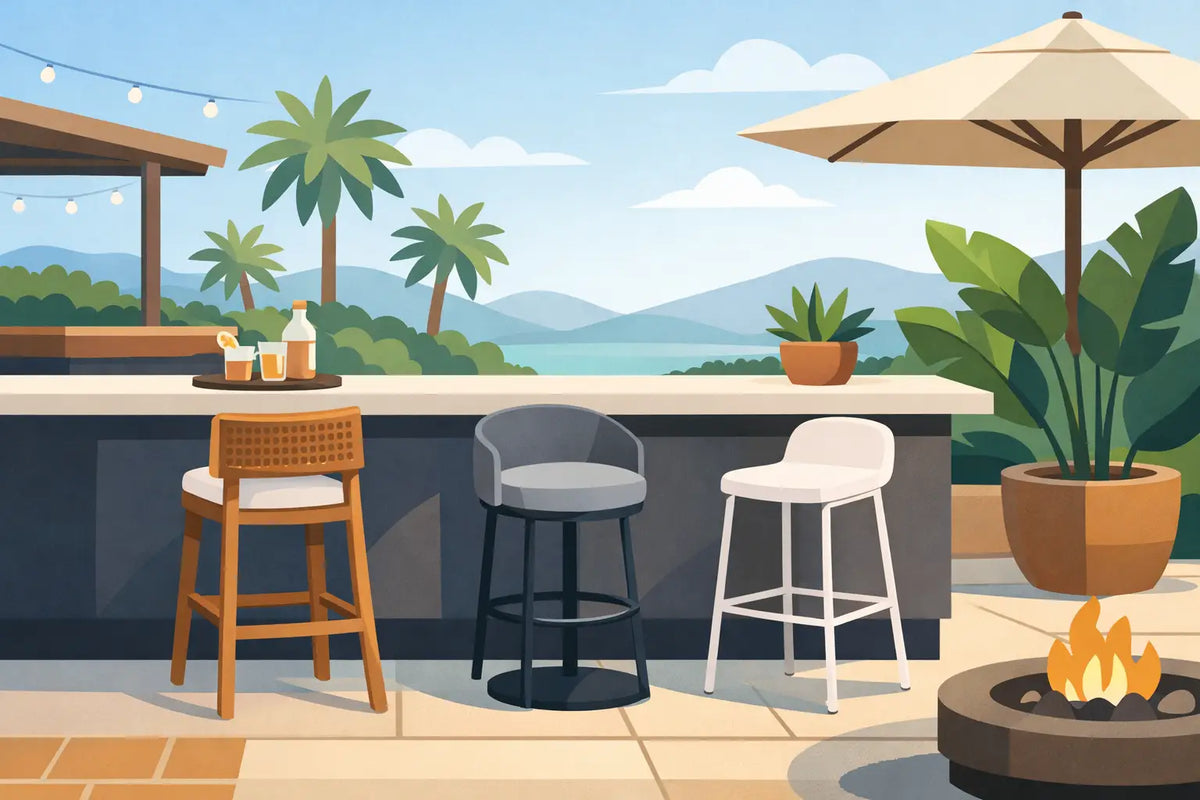
Start with how you intend to use the patio. A home built around entertaining may need a dining table with generous circulation, a separate fire table seating area, and bar-height seating near the outdoor kitchen. A quieter retreat may be better served by two deep lounge chairs, a substantial side table, and a chaise pair positioned for the view.
Scale matters outdoors just as much as it does indoors. Oversized sectionals can look beautiful on a broad terrace but overwhelm a narrow balcony. Before purchasing, map the footprint with painter's tape and leave room for chairs to pull out, guests to move comfortably, and doors to open. At Nokoluxe Living, this kind of practical planning is part of creating an outdoor space that feels effortless once it is in use.
A Simple Care Routine Protects the Finish
Even the best materials benefit from a little consistency. In salt-air locations, rinse exposed frames with fresh water every few weeks during the season, or more often after a windy stretch near the shore. Use mild soap and a soft cloth when needed, then dry metal surfaces rather than allowing salt residue to remain.
Avoid harsh abrasives, pressure washers at close range, and household cleaners that can strip protective finishes. Keep furniture feet clear of standing water, and do not place metal frames directly on wet soil or grass for extended periods. If your patio is especially exposed, furniture covers can help during long absences, but choose breathable covers and never cover cushions while they are damp.
Before hurricane season or a major coastal storm, bring in loose accessories, store cushions, and secure or relocate lightweight pieces. Furniture is built for weather, not for flying debris or storm surge. A thoughtful plan protects both the furniture and the surrounding property.
Choose for the View, Then Choose for the Years Ahead
A coastal patio should invite you outside more often, not give you another list of things to maintain. Choose materials that suit your exposure level, cushions made to dry and resist fading, and silhouettes you will still be glad to see after the first season has passed. When the furniture is equal to the setting, every coffee at sunrise and every dinner after sunset feels like a natural extension of home.