
How to Arrange Patio Seating That Invites You Out
A beautiful patio can still feel underused when the seating is placed like a showroom display: a sofa against one wall, two chairs across the way, and no clear reason to settle in. Knowing how to arrange patio seating is what turns a collection of premium pieces into a true outdoor room - one that welcomes quiet morning coffee, long dinners, and relaxed evenings around the fire.
The best layout begins with how you want to live outside. Before choosing the final position of a chair or sectional, consider the view, the sun, the paths people naturally take, and the occasions your patio needs to accommodate most often. A refined space should look composed, but it should also make comfort feel effortless.
Start With the Patio's Natural Zones
Most well-designed patios work best when divided into purposeful zones rather than treated as one large open surface. A dining area, a conversation area, and a fire feature may all coexist beautifully, provided each has enough room to function independently.
Begin by identifying the patio's anchors. These may include a pool, an outdoor kitchen, a fireplace, a garden view, or the doors leading into the home. Your seating should respond to these elements instead of competing with them. For example, a dining table belongs near the grill or kitchen for convenient serving, while a deep seating group often feels most inviting when oriented toward a fire table, water view, or landscaped focal point.
On a compact patio, one flexible zone may be the more elegant choice. A pair of lounge chairs with a small occasional table can serve as an intimate spot for cocktails, reading, or conversation without forcing too much furniture into limited square footage. Larger patios have the advantage of multiple destinations, but they still need visual order. Use outdoor rugs, planters, lighting, or a change in furniture orientation to distinguish one area from another.
How to Arrange Patio Seating for Conversation
Conversation is the foundation of a comfortable lounge setting. Position seating so guests can speak naturally without leaning forward or raising their voices. In most cases, chairs and sofas should sit about 5 to 8 feet apart. This provides personal space while keeping the group connected.
Avoid lining every piece along the perimeter of the patio. While it may seem to create more open floor area, it often leaves guests feeling disconnected and creates an empty center. Instead, bring furnishings inward to form a defined gathering area. A sofa paired with two lounge chairs is a classic arrangement because it creates a balanced, face-to-face composition without feeling formal.
A sectional can make a generous patio feel particularly welcoming, especially when it frames a fire table or low coffee table. Just be mindful of its scale. A large sectional may offer exceptional comfort, but it can overwhelm a narrow terrace or block a desirable view. If the space is long and slender, consider a loveseat with two swivel chairs instead. Swivel seating offers flexibility, allowing guests to turn toward the conversation, the pool, or the sunset without rearranging the room.
Every seating group needs a surface within easy reach. A coffee table works well for a larger arrangement, while side tables are essential beside individual chairs. Choose tables that sit approximately at seat height or slightly lower, ensuring drinks and small plates feel easy to access rather than awkwardly placed.
Protect Clear Paths Through the Space
Luxury feels relaxed when movement is easy. A thoughtfully arranged patio allows someone to carry a tray from the kitchen, walk around the pool, or join a conversation without squeezing between furniture.
Aim for a primary walkway of about 36 inches, especially between the home and frequently used destinations such as the dining area, grill, or pool. Secondary paths can be slightly tighter, but they should never require guests to turn sideways or step around a table corner. If a layout feels crowded on paper, it will feel even more crowded once cushions, drinks, and people are part of the scene.
Pay particular attention to dining chairs. Allow roughly 36 inches behind each chair so someone can pull it out and sit down comfortably. If the dining area sits near a wall, railing, or planter, a bench on one side can sometimes preserve valuable space while adding a tailored, built-in feel.
Give Dining and Lounging Their Own Rhythm
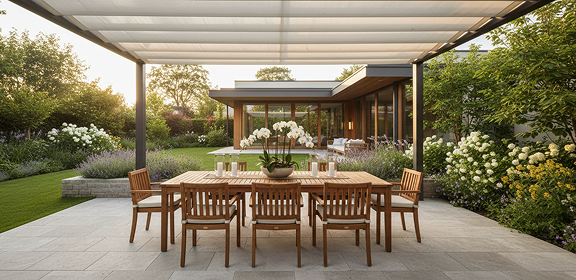
Dining seating should support lingering, not merely serving a meal. Center the table beneath a pergola, umbrella, or open sky according to the experience you want to create, then confirm that chairs can move freely. Round tables are naturally sociable and work beautifully in smaller or square-shaped areas. Rectangular tables suit long patios and larger gatherings, particularly when aligned with the architecture of the home.
Keep a little distance between dining and lounging zones. They do not need a wall between them, but each should have enough breathing room to feel intentional. When a dining table backs directly into a sofa, both areas can feel compromised. A planter, console table, or generous passage can create a graceful transition.
If you entertain often, think about the natural progression of an evening. Guests may begin near the outdoor kitchen, gather around the dining table, then migrate to comfortable seating by the fire. Arranging your patio around that flow helps hosting feel more intuitive and keeps everyone from collecting in one congested spot.
Use a Fire Feature as a Social Center
A fire pit or fire table has a remarkable ability to make an outdoor area feel like a destination after sunset. Arrange seating around it with an equal focus on warmth, sightlines, and safety. Chairs should be close enough to enjoy the flame but far enough away that heat remains comfortable. The ideal distance depends on the size and output of the fire feature, as well as local safety guidance.
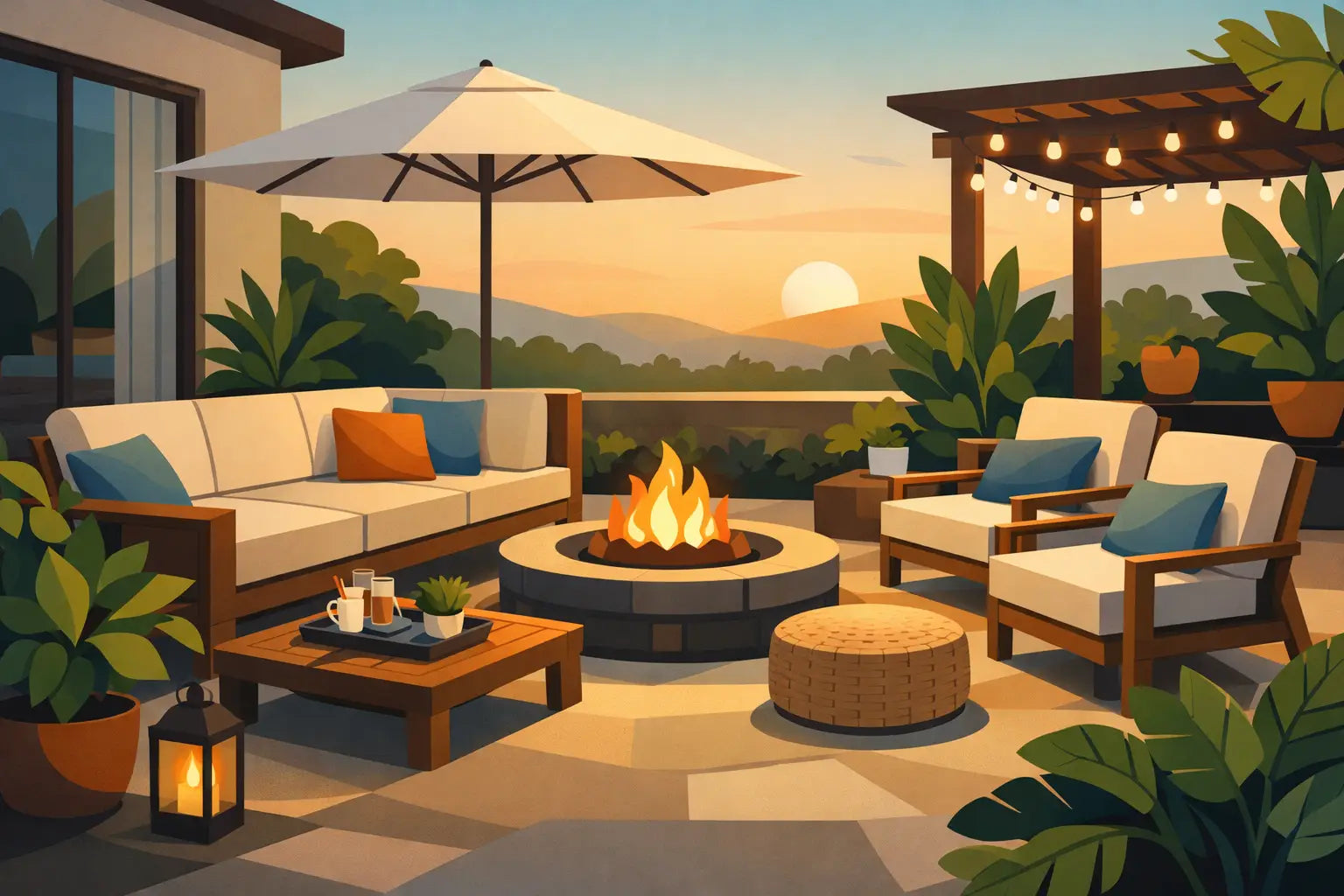
Low-profile lounge chairs, deep seating, and curved arrangements all work well around a fire table. For a more formal look, position two matching sofas opposite one another with the fire feature centered between them. If your priority is flexibility, four individual lounge chairs can be easily adjusted for a small family evening or a larger gathering.
Do not place a fire feature where it interrupts the main route through the patio. It should feel like an inviting center, not an obstacle guests have to navigate around.
Balance Views, Sun, and Privacy
The best seat on the patio should have something worth looking at. Orient your primary seating toward a garden, pool, architectural feature, or open view whenever possible. If the view is less appealing, create one with layered planters, sculptural greenery, a fountain, or a carefully placed fire feature.
Sun exposure matters just as much. A chaise lounge may be perfect in full sun near the pool, while a conversation area often benefits from afternoon shade. Consider how conditions change throughout the day before committing to a layout. An umbrella, pergola, or cantilever shade solution can expand when and where you use the patio, but it still needs adequate clearance from furniture and pathways.
Privacy also shapes comfort. If neighboring windows overlook the patio, angle chairs inward and use tall planters or screens to soften the boundary. The goal is not to close off the space completely, but to make it feel protected enough for guests to settle in.
Choose Scale Before You Choose Quantity
One of the most common patio design mistakes is buying too many small pieces. A collection of undersized chairs and tables can make a substantial patio feel scattered. Conversely, oversized furniture can crowd a modest terrace and diminish its usefulness.
Measure the patio, then map each furniture footprint before ordering. Include the space required for chair pullback, pathways, and open areas around doors. This simple exercise helps you invest in pieces that look generous without making the patio feel overfurnished.
Material and silhouette also influence visual weight. Teak brings warmth and presence, while refined aluminum can feel lighter and more architectural. Weather-resistant woven materials add texture without becoming overly formal. At Nokoluxe Living, thoughtfully curated outdoor furnishings make it easier to coordinate these elements across lounge, dining, and fire-centered spaces without sacrificing durability for style.
Finish the Arrangement With Comfort in Mind
Once the larger pieces are positioned, the details determine whether guests actually stay awhile. Add outdoor cushions with supportive fills, a few restrained accent pillows, and a rug sized large enough to ground the seating group. For a lounge area, the front legs of the sofa and chairs should generally rest on the rug rather than floating around its edges.
Lighting deserves the same consideration as seating. Soft landscape lighting, lanterns, or discreet overhead fixtures help define paths and make the patio inviting after dark. Keep illumination warm and layered. Bright, exposed lighting can make even the most beautiful arrangement feel less restful.
The right patio layout should not feel rigid. Leave room to pull up an extra chair, shift seating toward the sun, or make space for a larger gathering. When the arrangement reflects the way you truly spend time outdoors, every seat becomes an invitation to slow down and enjoy home a little longer.