Aluminum vs Teak Patio Furniture for Your Patio
A polished patio often comes down to one material decision: aluminum vs teak patio furniture. Both belong beautifully in a refined outdoor setting, but they create very different ownership experiences. One offers clean-lined ease and minimal upkeep; the other brings natural warmth, substantial craftsmanship, and a patina that evolves with the seasons.
For homeowners furnishing a poolside terrace, covered porch, or open-air dining space, the better choice is rarely about which material is objectively superior. It is about how you live outside, the climate around your home, and whether your vision calls for tailored modernity or enduring organic character.
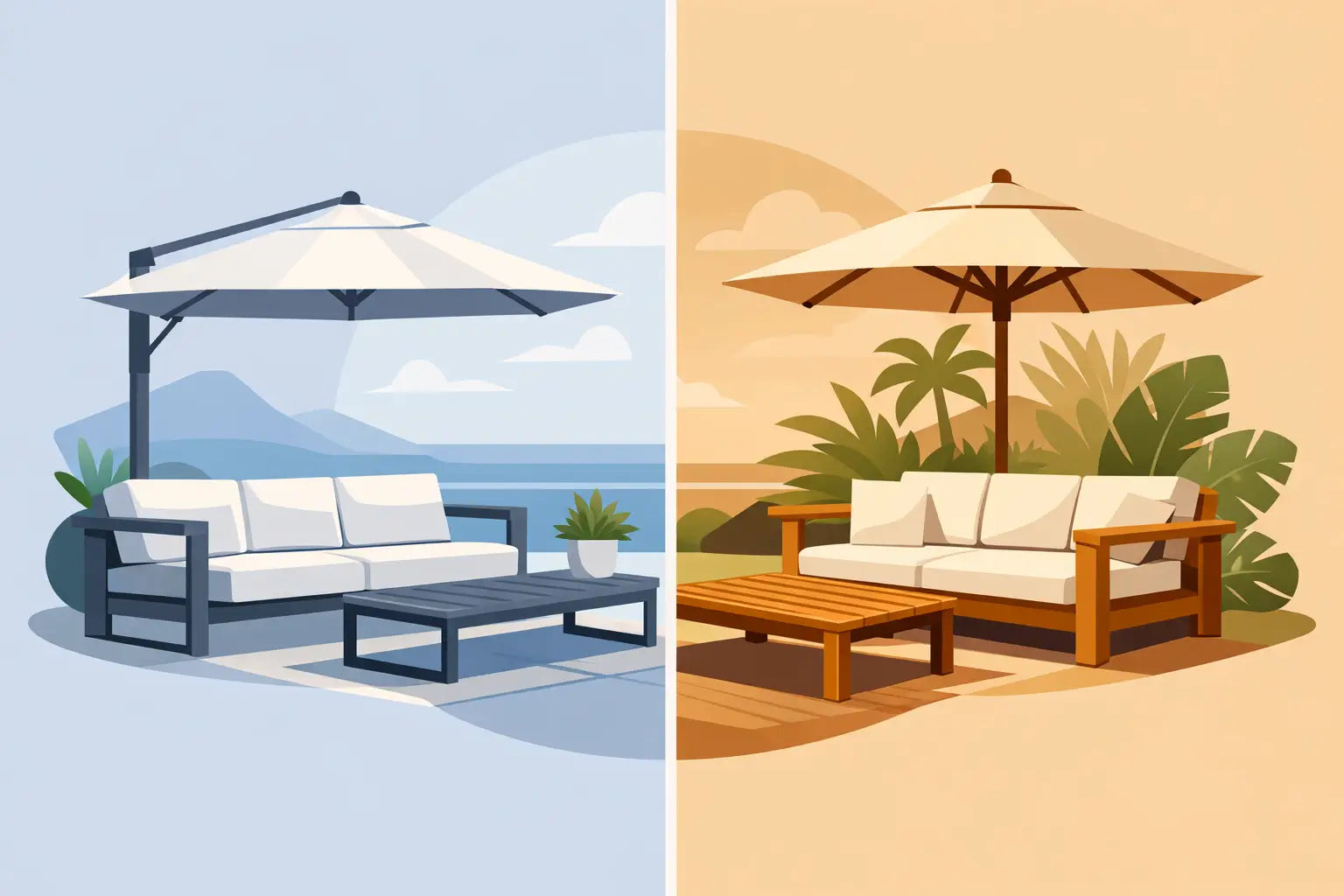
Aluminum vs Teak Patio Furniture: The Core Difference
Aluminum is a lightweight metal valued for its weather resistance, design flexibility, and low-maintenance performance. In premium outdoor furniture, it is typically finished with a durable powder coating that gives frames their color and helps protect against everyday exposure. It is a natural fit for contemporary lounges, deep seating, dining sets, and modular arrangements that need to feel airy without sacrificing presence.
Teak is a dense hardwood prized for its natural oils, close grain, and remarkable resilience outdoors. High-quality teak furniture has a visual weight and tactile richness that aluminum cannot replicate. It suits settings where the outdoor space should feel like an extension of a well-appointed interior, with materials that become more characterful over time.
The distinction is felt immediately. Aluminum reads crisp, architectural, and composed. Teak reads warm, grounded, and quietly luxurious. A patio with aluminum furniture can feel especially tailored beside stone, stucco, concrete, or a sleek fire table. Teak softens hardscape and pairs naturally with lush landscaping, coastal views, and traditional or transitional architecture.
Weather Performance and Long-Term Durability
How aluminum holds up outdoors
Quality aluminum will not rust, making it an excellent choice for humid regions, rainy climates, and poolside settings. Powder-coated frames are designed to stand up to sun, moisture, and changing temperatures with very little intervention. Aluminum is also easy to move, which matters when you reconfigure a seating area for a larger gathering or store pieces ahead of an approaching storm.
That said, not every aluminum frame is made to the same standard. Look for substantial frame construction, well-finished welds, and a high-quality powder coat. In coastal environments, salt air can eventually affect any exterior finish, especially if salt residue is allowed to sit on the furniture. A quick rinse with fresh water and occasional gentle cleaning will help preserve its finish.
Aluminum can also warm quickly in direct sun. Cushions, shade, and thoughtful placement make a meaningful difference, particularly around a south-facing pool deck or on an exposed rooftop terrace.
How teak ages outdoors
Teak has earned its reputation over generations for good reason. Its naturally occurring oils help it resist moisture, decay, and insects, while its dense structure allows it to withstand demanding outdoor conditions. Properly made teak furniture can remain in service for decades, making its initial cost easier to view as a long-term investment rather than a short-lived seasonal purchase.
Fresh teak begins with a honey-to-medium brown tone. Left untreated, it will gradually weather into a soft silvery gray. This change does not mean the wood is failing. For many homeowners, that weathered finish is part of teak's appeal, giving an outdoor space a relaxed, established character.
If you prefer the original golden color, teak can be cleaned and treated periodically with a teak protector. Expect natural checking, or small surface cracks, as the wood expands and contracts through changing weather. This is normal and generally does not compromise the furniture's structural integrity. The key is choosing responsibly sourced, premium-grade teak with sound joinery and a smooth, consistent finish.
Maintenance: Easy Care or Hands-On Ritual?
Aluminum is the clear choice for buyers who want their patio to stay polished with minimal effort. Most of the time, a soft cloth, mild soap, and water are enough to remove pollen, dust, sunscreen residue, and everyday grime. Cushions will still need seasonal care, but the frames themselves ask very little.
Teak is low-maintenance in the sense that it does not require constant protection to survive outdoors. However, it is more of a choice. You can allow it to gray naturally and clean it occasionally, or maintain its warmer original tone with periodic care. Neither path is wrong, but the decision should be intentional. If the thought of wood aging differently from one season to the next feels frustrating, aluminum may deliver greater peace of mind.
Furniture covers can help both materials stay cleaner, especially during long periods of nonuse. They should be breathable and fitted well enough to avoid trapping moisture. For teak, avoid harsh cleaners and pressure washing, which can damage the wood fibers. For aluminum, avoid abrasive pads that may dull or scratch the powder-coated surface.
Comfort, Scale, and Everyday Living
Material affects more than durability. It also shapes the comfort and function of your outdoor retreat.
Aluminum frames allow for slim profiles and generously proportioned cushions, which is why they are popular in deep-seating collections. A low-slung aluminum sectional can create a relaxed, resort-inspired lounge around a fire feature without visually crowding the space. It is especially practical for homeowners who host often and want to shift chairs or add seating with ease.
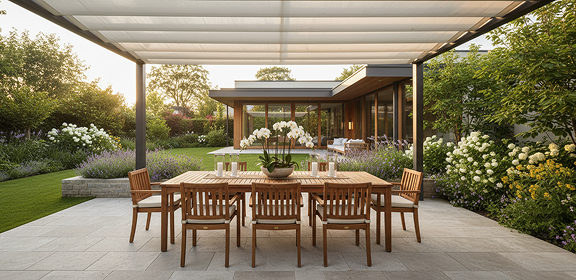
Teak tends to have more visual and physical substance. A teak dining table feels anchored for long dinners, while a sculptural lounge chair or bench can make a strong design statement even without elaborate accessories. Teak is often paired with cushions for plush comfort, but its inherent warmth means it remains inviting when cushions are removed for cleaning or after a summer rain.
Consider the scale of your patio before choosing. Aluminum can make a compact balcony or narrow terrace feel more open. Teak gives a large deck, garden, or pool house patio a sense of permanence. On an expansive property, teak's visual weight can keep a seating group from disappearing into the landscape.
Cost and Value Over Time
Premium teak usually carries a higher upfront price than aluminum, particularly for generously sized dining tables, lounge sets, and pieces made with superior-grade wood. That cost reflects the material itself, skilled construction, and its potential lifespan. For a homeowner building a forever-home outdoor setting, teak can be an exceptionally rewarding investment.
Aluminum spans a wider price range. High-end aluminum furniture with heavy-gauge frames, precision welds, and performance cushions is still a meaningful investment, but it often offers a more accessible way to furnish a larger seating area. Its low-maintenance nature can add value for second homes, rental properties, or busy households that want a sophisticated look without a care routine.
The best value is not simply the lower purchase price. It is the piece that will suit your space, hold up to your habits, and still feel right after several summers of use. A beautifully made dining set that supports weekly family meals is more valuable than a less suitable material chosen only for its price tag.
Which Material Fits Your Outdoor Space?
Choose aluminum when your priorities are contemporary style, easy rearranging, and minimal upkeep. It is particularly well suited to pool decks, covered patios, urban terraces, and homes where clean lines lead the overall design. Black, white, bronze, and warm neutral powder-coated finishes make it easy to coordinate with exterior finishes and performance fabrics.
Choose teak when you want natural material presence, heirloom-level appeal, and a look that becomes more distinctive with age. It is a compelling choice for coastal homes, garden settings, expansive decks, and dining spaces designed for lingering. Teak also works beautifully in transitional homes, where it adds softness to modern architecture and refinement to more traditional facades.
If you are drawn to both, there is no rule that says you must commit to only one. A teak dining table with aluminum dining chairs can feel collected and intentional. An aluminum lounge set can be warmed with teak side tables, planters, or a teak bench. Mixing materials brings depth to an outdoor room, especially when the color palette and cushion fabrics create a visual connection.
Before making a final selection, picture the moments the furniture needs to support: quiet coffee by the pool, a weeknight dinner outdoors, a full-house holiday gathering, or a relaxed evening around the fire. The right material is the one that makes those moments feel effortless. Nokoluxe Living curates premium outdoor pieces with that lasting balance of beauty, comfort, and real-world performance in mind.